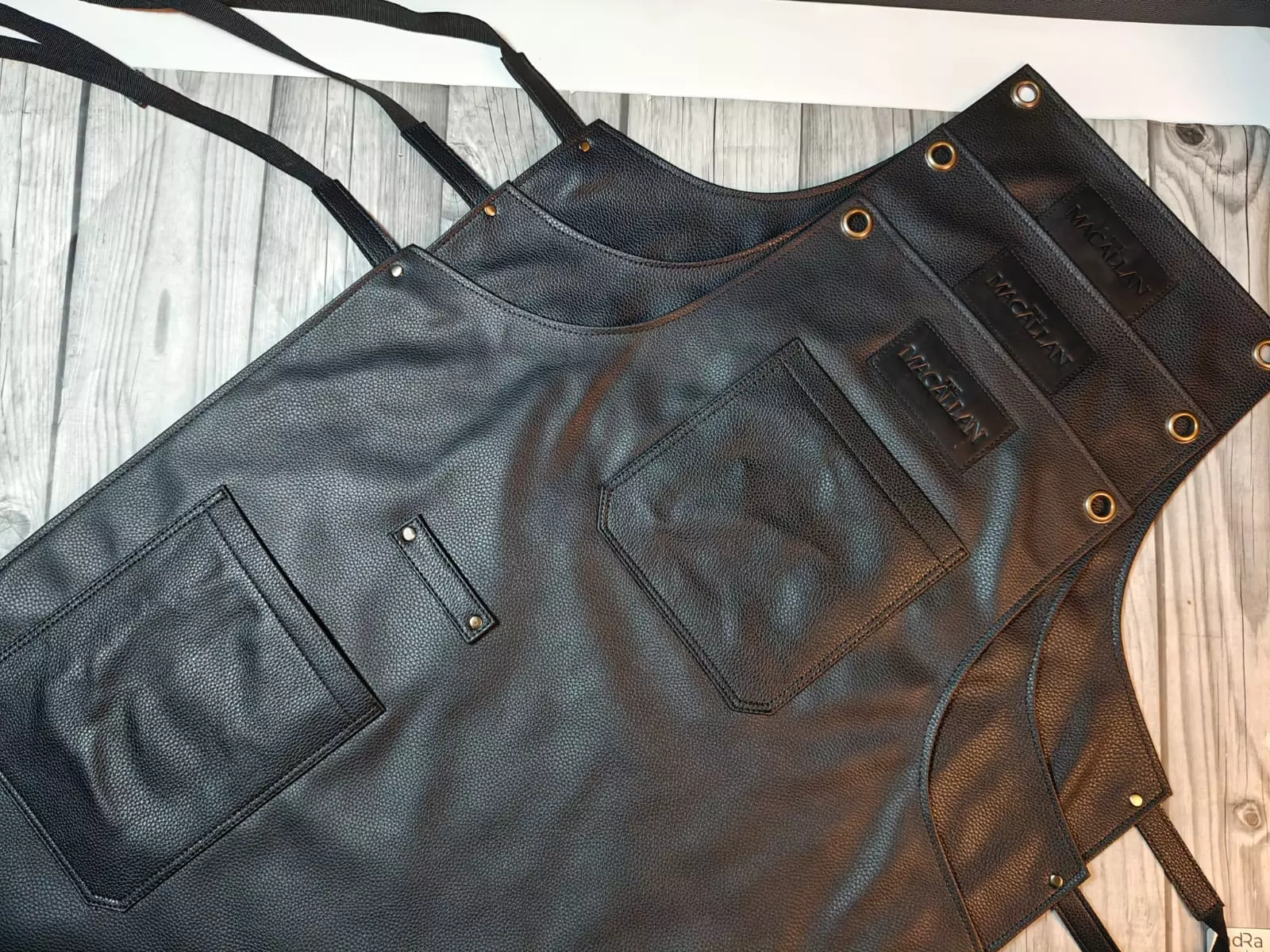
Custom Aprons for Restaurants: Turning Staff Uniforms Into Branding
Walk into a successful restaurant and look around. What do you notice first? The menu, the interior, the food, or the people serving you?
In many cases, it is the staff.
Their clothing creates an immediate impression of the restaurant. A well-dressed server can make a casual restaurant feel more polished. A sharp bartender can reinforce a sophisticated bar concept. A chef wearing a distinctive apron can make an open kitchen feel more professional.
That is where custom aprons for restaurants come into play.
A restaurant apron is no longer simply something employees wear to protect their clothes from spills, grease, flour, and food stains. With the right design, it becomes part of the restaurant's visual identity. Think of it as a small billboard that moves around your dining room all day, but one that feels natural rather than promotional.
Whether you operate a fine-dining restaurant, neighborhood café, busy bakery, cocktail bar, food truck, or casual eatery, custom aprons can help turn ordinary staff uniforms into memorable brand experiences.
Why Restaurant Uniforms Matter More Than You Think
A uniform does more than tell customers who works there.
It helps establish the atmosphere.
Imagine two restaurants. The first has employees wearing random shirts and generic aprons in different colors. The second has a coordinated team wearing well-fitted aprons featuring the restaurant's logo and signature colors.
Which one feels more established?
Most customers would probably choose the second.
Uniform consistency creates visual order. It tells customers that the business pays attention to details. And in hospitality, details matter.
Your staff may interact with hundreds of customers every week. Every interaction is an opportunity to reinforce your brand. When employees wear recognizable custom aprons, your restaurant name and visual identity naturally become part of those interactions.
The apron becomes another piece of the brand puzzle.
What Makes Custom Aprons Different?
Generic aprons are designed to do a job. Custom aprons are designed to do a job while saying something about the business.
That distinction matters.
More Than a Protective Layer
The original purpose of an apron is practical. It protects clothing and provides convenient storage for tools and essentials.
Restaurant staff may use apron pockets for pens, order pads, bottle openers, thermometers, towels, or other small items. A well-designed apron can therefore improve the working day while also looking professional.
Customizing it adds another layer of value.
Your logo, colors, employee names, tagline, or other design elements can transform a basic uniform into a recognizable part of your business.
A Walking Brand Identity
Your staff don't stay in one place.
Servers move between tables. Bartenders work behind the counter. Managers walk through the dining room. Chefs may work in an open kitchen where customers can see them.
Every movement gives your branding another chance to be noticed.
This is particularly useful for restaurants with strong visual identities. Instead of relying entirely on signs and menus, your brand appears naturally throughout the customer experience.
How Custom Aprons Strengthen Restaurant Branding
- Branding is not only about putting a logo everywhere.
- Good branding creates recognition.
- A customer should ideally be able to see your colors, logo, design style, or uniform and associate them with your restaurant.
- Custom aprons can support that process in several ways.
Creating a Consistent Visual Identity
- Consistency makes a brand easier to recognize.
- If your restaurant uses earthy colors, natural materials, and a rustic interior, a heavy canvas or leather apron may fit the environment better than a brightly colored synthetic apron.
- On the other hand, a modern café with a minimalist interior might benefit from a clean, simple apron featuring a small embroidered logo.
- The key is to make the apron feel like it belongs to your restaurant.
Making Your Logo More Memorable
- A logo on an apron can be more effective than a logo placed somewhere customers rarely notice.
- Why?
- Because employees are part of the experience.
- A server may spend several minutes at a customer's table. A bartender may interact with guests throughout an evening. A chef in an open kitchen may be visible during the entire meal.
- A subtle logo positioned on the chest or upper section of an apron can reinforce recognition without making the uniform look like an advertisement.
Communicating Your Restaurant's Personality
- Your apron can tell a story.
- A distressed leather apron might communicate craftsmanship and premium quality. A simple cotton apron may feel friendly and relaxed. A heavy canvas apron can create a hardworking, industrial appearance.
- The design should match the personality you want customers to experience.
- After all, would you dress a fine-dining restaurant exactly like a casual roadside café?
- Probably not.
- Your uniforms should speak the same visual language as your menu, interior, packaging, signage, and website.
Choosing the Right Apron Style for Restaurant Staff
There is no single best restaurant apron.
Different staff members have different responsibilities, so choosing the right style can make a significant difference.
Bib Aprons for Front-of-House Teams
- Bib aprons provide broad coverage across the front of the body.
- They work particularly well for servers, chefs, café employees, and catering teams. The larger surface also gives you plenty of space for branding.
- A bib apron can feature a logo on the chest, additional personalization near the pocket, and functional storage lower down.
- For restaurants wanting a classic hospitality appearance, this remains one of the most versatile options.
Waist Aprons for Servers and Bartenders
- Waist aprons cover the lower portion of the body and are popular in restaurants, cafés, and bars.
- They provide useful storage without covering the employee's entire shirt.
- This style can work especially well when you already have a defined shirt uniform and want the apron to serve as the finishing piece.
- For example, a restaurant might pair branded waist aprons with black shirts and trousers for a clean, understated appearance.
Cross-Back Aprons for Comfort and Style
- Cross-back aprons distribute weight across the shoulders rather than relying entirely on a neck strap.
- For employees who wear an apron for women for several hours, this design can offer a comfortable alternative.
- They also have a distinctive appearance and can give a restaurant a more modern or artisan-inspired look.
Leather Aprons for Premium Restaurant Concepts
- Leather aprons have a strong visual presence.
- They can work particularly well for upscale restaurants, steakhouses, breweries, specialty cafés, bakeries, and businesses that want to emphasize craftsmanship.
- Leather is also naturally durable and develops character with use. Instead of looking disposable, a quality leather apron can become part of the employee's professional identity.
- For a restaurant built around handcrafted food and premium presentation, that can be a powerful combination.
Choosing Colors That Match Your Brand
- Color is one of the easiest ways to connect uniforms with your existing branding.
- If your restaurant already has established colors, use them as a starting point.
Why Color Consistency Matters
- Suppose your restaurant uses deep green, cream, and brown throughout its interior and packaging. Suddenly introducing bright red aprons may create a visual disconnect.
- The apron doesn't need to exactly match every element of your branding, but it should complement the overall palette.
- Neutral colors are often practical because they hide everyday marks better than very light shades. Dark tones can also create a sophisticated appearance.
- Before choosing a color, consider your restaurant's lighting, interior design, menu design, logo, and staff clothing.
- The goal is harmony.
Selecting the Right Fabric for Custom Restaurant Aprons
The material you choose affects comfort, appearance, durability, and maintenance.
Cotton and Canvas Aprons
Cotton can be comfortable and breathable, making it a practical choice for many restaurant environments.
Canvas offers a heavier construction and a rugged appearance. It is often suitable for cafés, bakeries, workshops, food trucks, and restaurants where durability is a priority.
Both materials can provide a casual and approachable appearance.
Leather Aprons
Leather brings a different character to a uniform.
A quality leather apron can provide a distinctive appearance while handling regular use. It is particularly attractive for restaurants that want their staff uniforms to communicate craftsmanship and durability.
When Leather Makes Sense
Consider leather when your restaurant has a premium, rustic, industrial, artisan, or handcrafted identity.
It can also be useful when you want a long-lasting apron that becomes part of the team's recognizable look.
The important thing is to choose the material according to the working environment. A hot kitchen, outdoor food truck, bakery, and cocktail bar can all have different uniform requirements.
Personalization Options for Restaurant Aprons
Customization does not have to stop at the logo.
Logo Embroidery and Printing
- Your restaurant logo is usually the first customization element to consider.
- A small logo can create a polished appearance without overwhelming the apron.
- Depending on the material, you may choose embroidery, printing, patches, embossing, or other branding techniques.
- The right option depends on the apron fabric and the look you want.
Name Personalization
- Adding employee names can make uniforms feel more personal.
- For example, a server might have their name positioned below the restaurant logo.
- This can also make customer interactions feel more approachable. Instead of asking, "Who was our server?", guests can easily identify the person helping them.
Custom Labels and Brand Details
- Small details can make a major difference.
- You might include a short tagline, establishment year, location, social media handle, or a subtle brand symbol.
- However, restraint is important.
- An apron overloaded with text can quickly look cluttered. Choose the elements that matter most and give them room to breathe.
Designing Custom Aprons for Front-of-House Staff
Front-of-house employees are highly visible.
Their aprons should therefore combine branding with presentation.
Think about where customers will see the apron from. A logo positioned too low may be hidden by tables or trays. A logo placed too close to the neckline may compete with the employee's shirt.
For servers, pocket placement is also important. Employees need easy access to pens, order pads, payment devices, or other small tools.
A good front-of-house apron should look attractive at first glance and remain useful throughout a busy shift.
Designing Aprons for Chefs and Kitchen Teams
Kitchen staff need functionality above almost everything else.
Chefs and cooks may deal with heat, spills, sharp tools, heavy ingredients, and long shifts.
Their aprons should therefore offer suitable coverage and practical storage.
If your kitchen is visible to customers, branding can become especially valuable. A well-designed chef apron can turn the kitchen team into part of the restaurant's visual experience.
For open kitchens, this is a subtle but effective way to strengthen the professional image of the restaurant.
Custom Aprons for Bars, Cafés, and Bakeries
Restaurants aren't the only hospitality businesses that can benefit from branded aprons.
Coffee shops can use custom aprons to create a recognizable barista uniform. Bakeries can choose canvas or leather designs that reinforce their handmade image. Bars can use waist or bib aprons to create a polished bartender uniform.
Even a small logo can make a difference.
When customers photograph their coffee, cocktail, dessert, or meal, staff members may appear in the background. Your branded apron can become an unexpected part of that visual content.
How Custom Aprons Improve the Customer Experience
Customers notice more than businesses sometimes realize.
They notice whether staff look coordinated. They notice whether employees appear professional. They notice whether the restaurant feels organized.
A consistent apron can contribute to all three.
It also makes staff easier to identify.
In a crowded dining room, customers should not have to guess who works there. A recognizable uniform removes that confusion.
That sounds like a small benefit, but small improvements often add up.
Balancing Style, Comfort, and Functionality
A beautiful apron that employees hate wearing is not a successful uniform.
Your staff are the people who have to live in these aprons for hours.
Pocket Placement
Pockets should be practical rather than decorative.
Consider what employees actually carry during a shift. A server may need several small pockets, while a bartender may need specific storage for tools.
Talk to your team before finalizing the design. They can tell you what works and what does not.
Adjustable Straps and Fit
One size rarely fits everyone perfectly.
Adjustable straps can help employees achieve a more comfortable fit. This becomes especially important when ordering aprons for a large restaurant team.
The apron should allow staff to move naturally without constantly adjusting it.
Easy-Care Materials
Restaurants are messy environments.
Sauces spill. Drinks splash. Flour gets everywhere. Coffee finds its way onto things you thought were safely out of reach.
Choose materials and finishes that make sense for your cleaning routine.
A uniform that looks great on day one but becomes difficult to maintain after repeated use may not be the smartest investment.
Common Mistakes to Avoid When Ordering Custom Aprons
- One common mistake is focusing entirely on appearance.
- Yes, your Custom apron should look good. But it also needs to work.
- Another mistake is adding too much branding. Your logo should be visible, not overwhelming.
- Poor sizing is another problem. If aprons are uncomfortable, employees may avoid wearing them properly.
- You should also avoid choosing materials without considering the work environment. A design that looks excellent in a café may not be appropriate for a high-heat kitchen.
- Finally, don't order a large quantity before testing the design.
- Get samples first.
- Let actual employees wear them during a shift. Ask about comfort, pocket placement, straps, coverage, and appearance.
- Real-world testing beats guesswork.
How to Choose a Custom Apron Supplier
- The supplier you choose can have a major impact on the final result.
- Look for a provider that understands both customization and practical workwear.
- Check the quality of the material, stitching, straps, hardware, and finishing. Ask about available customization methods and whether they can accommodate bulk restaurant orders.
- It is also worth discussing sizing.
- If you have a team of 10, 30, or 100 employees, consistency matters. You want the finished aprons to look like one coordinated uniform rather than a collection of slightly different products.
- Most importantly, choose quality over appearance alone.
- Your aprons will be worn repeatedly. They need to survive real restaurant life.
Are Custom Aprons Worth the Investment?
- For many restaurants, yes.
- But the value isn't simply in the apron itself.
- You're investing in consistency, recognition, employee presentation, and customer experience.
- A branded apron can be seen every day by employees, customers, suppliers, delivery partners, and visitors. Compared with many traditional advertising methods, it becomes part of the business's everyday operation.
- Think of it as turning a necessary uniform into a branding asset.
- You already need your staff to wear something.
- Why not make that something work harder for your brand?
Final Thoughts
Custom aprons for restaurants are a practical way to bring branding into the heart of the customer experience.
The best apron does more than display a logo. It reflects the restaurant's personality, supports employees during demanding shifts, and creates a consistent visual identity that customers can remember.
Whether you choose canvas, cotton, or leather, the goal should remain the same: create a uniform that looks professional, feels comfortable, and works hard.
Choose the right style. Match the colors to your brand. Place your logo thoughtfully. Add useful personalization. And most importantly, involve your staff in the decision.
When those pieces come together, an ordinary restaurant apron stops being ordinary.
It becomes part of the brand.
FAQs
Are custom aprons good for restaurant branding?
Yes. Custom aprons provide a practical way to display your restaurant's logo, colors, and other brand elements while employees interact with customers. Because staff members move throughout the restaurant, the branding remains visible across different areas of the business.
What should be printed on a restaurant apron?
The restaurant logo is usually the most important element. Depending on the design, you can also add employee names, a tagline, establishment year, or other subtle brand details. Avoid adding too much information because an overcrowded design can look less professional.
Which apron material is best for restaurants?
The best material depends on the working environment and brand style. Cotton can provide comfort, canvas offers a durable casual look, while leather can create a premium and distinctive appearance. Consider heat, spills, cleaning requirements, and how long employees will wear the aprons each day.
How many custom aprons should a restaurant order?
Start by considering the number of employees who regularly wear aprons and how often the aprons need to be washed or replaced. It is usually sensible to have additional aprons available so staff have clean replacements during busy operating periods.
Can restaurant aprons be personalized with employee names?
Yes. Employee names can be added alongside the restaurant logo or placed in another visible area of the apron. Name personalization can give uniforms a more individual feel while making it easier for customers to identify members of the service team.