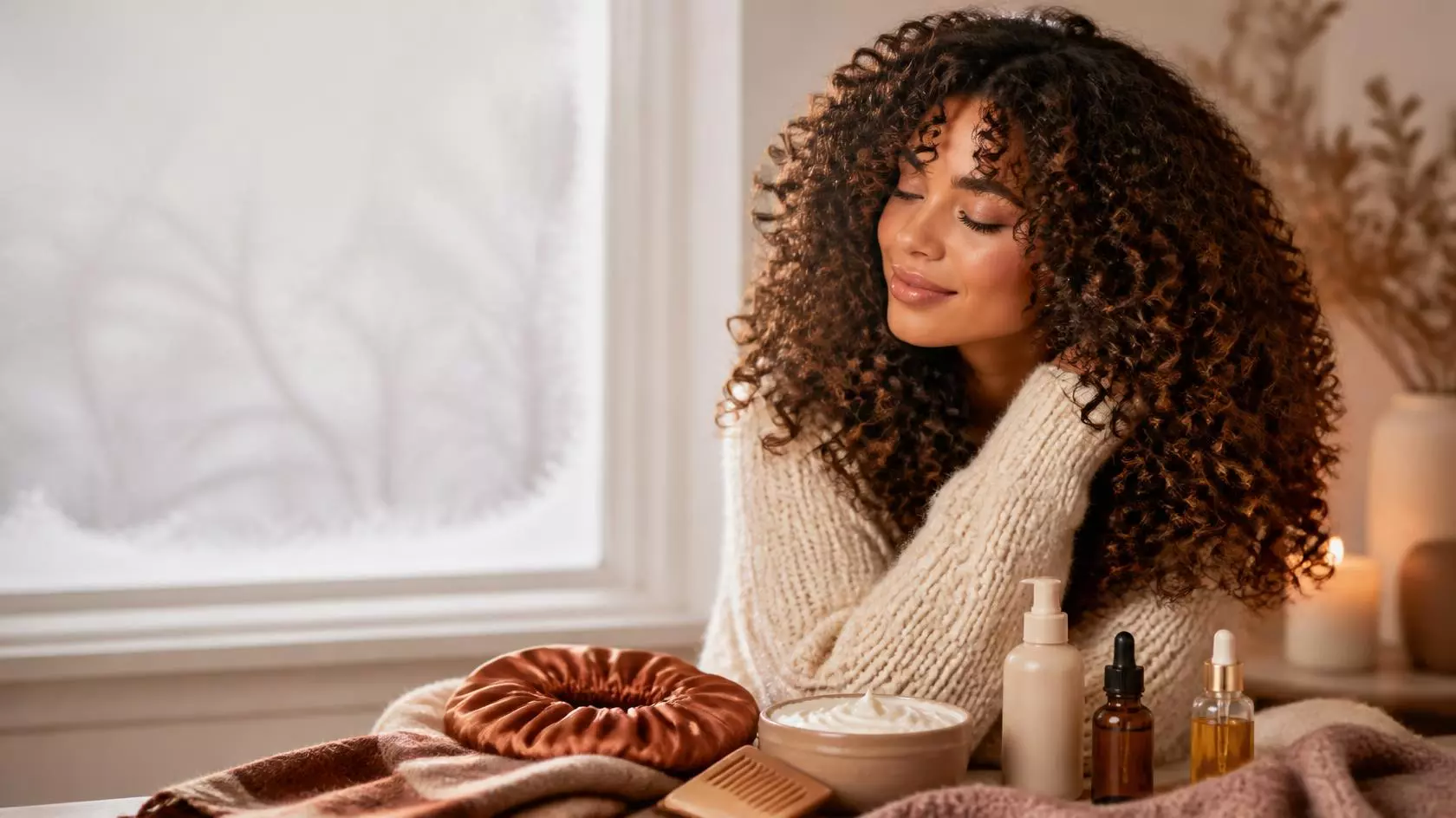
How to Care for Curly Hair During Cold and Dry Weather
Cold and dry weather can make curly hair more difficult to manage. Lower humidity, indoor heating, frequent washing and harsh weather conditions can leave curls feeling dry, rough, tangled and more prone to frizz and breakage. The good news is that you do not need an overly complicated routine to protect your curls.
By focusing on moisture, gentle handling, suitable styling products and protection from the elements, you can keep curly hair softer and more manageable throughout the colder months.
This guide explains how to adjust your curly hair routine during cold and dry weather, which habits to avoid and how to choose products without creating unnecessary buildup.
Why Cold and Dry Weather Affects Curly Hair
Curly hair can naturally be more prone to dryness because the shape of the hair strand can make it harder for natural scalp oils to travel along the entire length. When the surrounding air becomes cold and dry, hair can lose moisture more easily.
Indoor heating can contribute to the problem as well. Moving between cold outdoor air and warm, dry indoor environments can leave curls feeling less hydrated.
You may notice:
- Increased frizz
- Rough or dry-feeling curls
- More tangles
- Less curl definition
- Brittle or fragile ends
- Increased static
- Difficulty maintaining hairstyles
The solution is not necessarily to use more products. Instead, focus on maintaining moisture while reducing unnecessary manipulation.
Cold-Weather Hair Concern
What Can Help
What to Avoid
Dry curls
Regular conditioning
Excessive cleansing
Frizz
Leave-in conditioner and gentle styling
Rough towel drying
Tangling
Gentle detangling
Pulling through knots
Breakage
Protective styling
Tight hairstyles
Static
Moisturising products and suitable accessories
Excessive brushing
Product buildup
Balanced cleansing
Constantly adding more products
Adjust Your Washing Routine
During colder months, you may need to reconsider how frequently you wash your curly hair. Washing too often can strip away some of the natural oils that help keep your hair moisturized, comfortable, and conditioned.
It is also important to choose hair-care and skincare products that suit your individual needs and help maintain a healthy appearance.
However, reducing the frequency of washing does not mean neglecting your scalp. Your ideal washing schedule depends on your scalp condition, hair type, lifestyle, and styling routine.
When washing your hair, apply shampoo primarily to the scalp and allow the product to rinse through the lengths. Avoid aggressively scrubbing or rubbing your curls, as this can contribute to dryness and damage.
After cleansing, apply conditioner, paying particular attention to the lengths and ends.
If your hair is particularly dry, an occasional deep-conditioning treatment can provide additional moisture and improve softness and manageability.
The American Academy of Dermatology recommends adapting your hair-care routine to your hair type and condition while taking steps to minimize unnecessary damage.
Read: Winter Scalp Woes? Say Goodbye to Dandruff with These
Focus on Moisture Without Overloading Your Hair
When curls feel dry, it is tempting to layer several creams, oils, gels and leave-in products. However, excessive layering can create buildup and eventually make curls feel heavy or dull. You can also choose hair oils as well a per requirements.
Instead, choose products based on what your hair actually needs. A leave-in conditioner can help improve softness and manageability between washes. Depending on your curl type and hair thickness, you may also benefit from a curl cream or styling product.
If your curls become weighed down easily, start with a small amount. You can always add more, but removing excessive product may require another wash.
Be Gentle When Drying and Detangling
Cold-weather hair can become particularly vulnerable to breakage if it is handled roughly.
After washing, avoid vigorously rubbing your hair with a standard towel. Instead, gently squeeze out excess water and use a soft, suitable towel or T-shirt if that works well for your hair.
Detangle gradually, starting at the ends and working upward. A suitable wide-tooth comb or your fingers can help reduce unnecessary pulling.
Do not force a comb through stubborn knots. Add suitable conditioner or leave-in product and work through the section gently.
This is especially important for textured and tightly curled hair, where excessive tension can contribute to breakage.
Protect Your Curls While Sleeping
Your nighttime routine can make a noticeable difference during dry weather.
Friction between your hair and pillowcase can contribute to tangling, frizz and moisture loss. Consider using a satin or silk pillowcase, bonnet or other suitable protective option.
A loose pineapple-style hairstyle can also help preserve curl shape, depending on your hair length and curl pattern.
Your Hair Accessories can become useful here. Choose accessories that are soft and gentle rather than tight elastics that pull on your curls.
The goal is to reduce friction and unnecessary manipulation while allowing your hair to remain comfortable overnight.
Protect Curly Hair From Cold Weather
Covering your hair when going outdoors can help protect it from cold wind and harsh weather. However, the material of your hat or scarf can also affect your curls.
Rough fabrics may increase friction and contribute to frizz. A smoother lining or a suitable protective layer between your hair and the outer material may help.
If you regularly wear protective styles, pay attention to tension and moisture underneath the style.
For example, if you use human braiding hair, make sure the style is not excessively tight and continue caring for your natural hair and scalp.
Similarly, Crochet Hair Extensions can be useful for protective styling, but they should not be treated as a substitute for natural hair care. Your scalp and natural hair still need appropriate cleansing, conditioning and gentle handling.
If you wear wigs, keep your natural hair underneath clean and cared for. Avoid excessive product buildup and make sure the hair wig itself is maintained according to its care requirements.
Avoid Excessive Heat Styling
Cold weather can make you want to reach for a hair dryer more often, but excessive heat can contribute to dryness and damage.
Whenever practical, allow your curls to dry naturally. If you use a diffuser or hair dryer, use an appropriate setting and avoid excessive heat.
Try not to repeatedly straighten or curl your hair simply to change its texture during the colder months. Frequent heat styling can make already-dry hair more fragile.
If you do use heated tools, a suitable heat-protection product can be an important part of your styling routine.
Choose Your Products According to Your Curls
Not every curly hair type needs the same routine.
Fine curls may become weighed down by rich creams and oils, while thick or tightly coiled hair may benefit from richer conditioning products.
Instead of focusing only on product labels, consider:
- Your curl pattern
- Hair thickness
- Hair density
- Porosity
- Scalp condition
- Level of dryness or damage
- How frequently you style your hair
If a product leaves your curls soft, manageable and defined without excessive buildup, it may be a good fit for your routine.
Final Thoughts
Cold and dry weather does not have to mean unmanageable curls. The key is to protect moisture, reduce friction and handle your hair gently.
Keep your routine simple: cleanse your scalp appropriately, condition consistently, use suitable styling products, protect your curls while sleeping and minimise excessive heat.
Choose products according to your individual curl type rather than adding products simply because your hair feels dry.
With consistent care and a little extra protection from the winter environment, you can help your curls remain soft, defined and manageable throughout the colder months.
Frequently Asked Questions
Why does curly hair become so dry in winter?
Cold, dry air and indoor heating can reduce environmental humidity, while curly hair can already have difficulty distributing natural oils along its length. Together, these factors can make curls feel drier and more prone to frizz.
Should I wash curly hair less often during winter?
You may find that washing less frequently works better if your curls and scalp become dry, but there is no universal schedule. Choose a frequency that keeps your scalp comfortable while preventing unnecessary dryness.
How can I prevent winter frizz in curly hair?
Focus on conditioning, gentle drying, suitable styling products and reducing friction. Protecting your curls while sleeping and avoiding excessive heat can also help.
Should I use hair oil on curly hair in cold weather?
Hair oil can be useful for some hair types, but more is not necessarily better. Start with a small amount and see how your curls respond. If your hair becomes greasy or heavy, reduce the amount or frequency.
What is the best way to protect curly hair overnight?
Reducing friction is the main goal. A suitable satin or silk bonnet, pillowcase or gentle hair accessory can help minimise tangling and friction while you sleep.
Can protective hairstyles help during winter?
Yes, protective hairstyles can reduce daily manipulation, but they should not be excessively tight. Continue caring for your natural hair and scalp even when your hair is in a protective style.