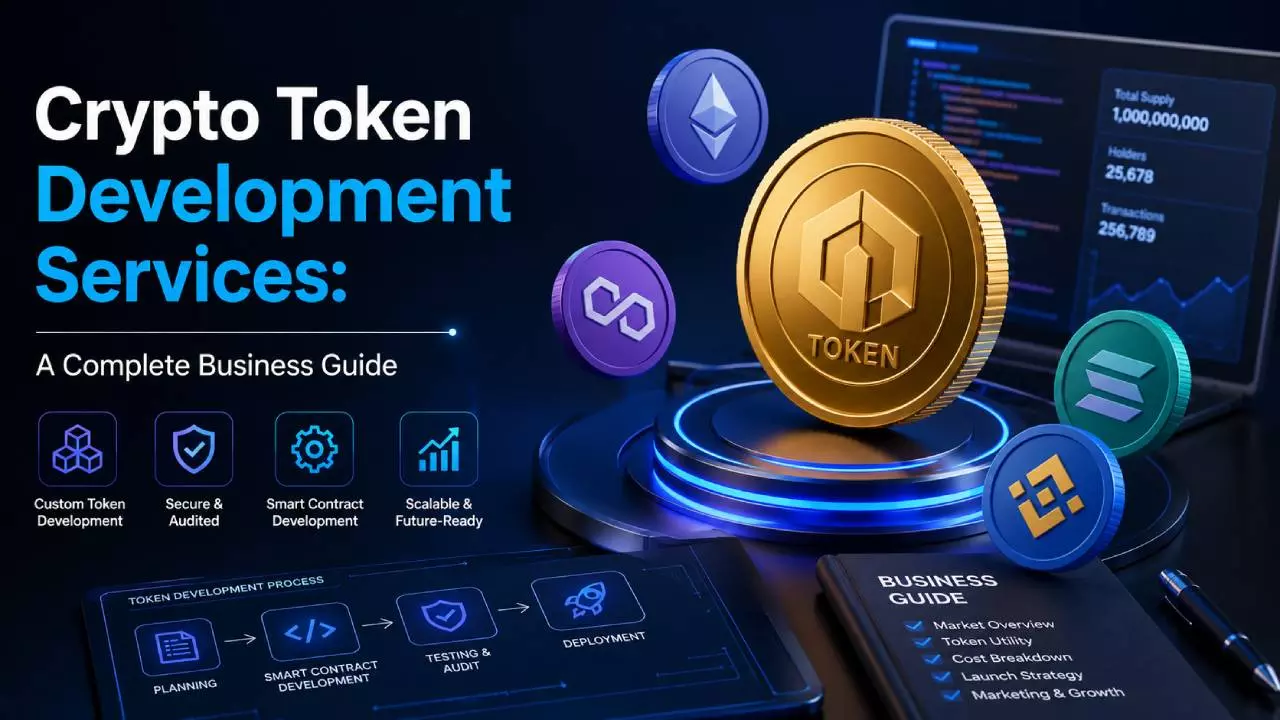
Crypto Token Development Services: A Complete Business Guide
Blockchain technology has transformed the way businesses raise capital, engage communities, and create decentralized ecosystems. Among the many innovations introduced by blockchain, crypto tokens have emerged as one of the most valuable digital assets for startups, enterprises, and entrepreneurs.
From utility tokens and governance tokens to security tokens and Real World Asset (RWA) tokens, businesses are leveraging tokenization to build scalable digital economies and unlock new revenue streams.
As the adoption of blockchain continues to expand across industries, the demand for professional Crypto Token Development Services has increased significantly. Businesses are seeking secure, compliant, and feature-rich token solutions that can support fundraising, decentralized applications, loyalty programs, gaming ecosystems, and asset tokenization initiatives.
This comprehensive guide explains crypto token development, its benefits, token types, development process, use cases, business opportunities, and the factors to consider when launching a successful token project.
What Are Crypto Tokens?
Crypto tokens are digital assets created on existing blockchain networks such as Ethereum, BNB Chain, Solana, Polygon, Avalanche, and Tron. Unlike cryptocurrencies that operate on their own blockchain, tokens are built using smart contracts and function within an existing blockchain ecosystem.
These tokens can represent:
- Utility within a platform
- Ownership rights
- Governance participation
- Rewards and incentives
- Digital collectibles
- Financial assets
- Real-world assets
Crypto tokens serve as the backbone of many blockchain projects and decentralized applications.
What Are Crypto Token Development Services?
Crypto Token Development Services involve the design, creation, deployment, testing, and management of blockchain-based tokens tailored to specific business requirements.
These services typically include:
- Token architecture design
- Smart contract development
- Blockchain selection
- Tokenomics planning
- Security auditing
- Wallet integration
- Exchange listing support
- Regulatory compliance assistance
Professional token development companies help businesses launch secure and scalable token ecosystems while minimizing technical risks.
Why Are Businesses Launching Crypto Tokens?
Businesses across various sectors are adopting blockchain-based tokens to improve operational efficiency, attract investors, and create community-driven ecosystems.
Some key reasons include:
Fundraising Opportunities
Tokens provide startups with innovative fundraising mechanisms such as:
- Initial Coin Offerings (ICOs)
- Initial DEX Offerings (IDOs)
- Initial Exchange Offerings (IEOs)
- Security Token Offerings (STOs)
Community Engagement
Tokens encourage user participation through incentives, rewards, and governance mechanisms.
Digital Ownership
Blockchain enables transparent and verifiable ownership of digital and physical assets.
Global Accessibility
Tokens can be accessed and traded by users worldwide, increasing market reach.
Business Automation
Smart contracts automate transactions and reduce operational inefficiencies.
Types of Crypto Tokens
Utility Tokens
Utility tokens provide access to products, services, or features within a blockchain ecosystem.
Examples include:
- Platform access tokens
- Payment tokens
- Membership tokens
Governance Tokens
Governance tokens allow holders to participate in decision-making processes.
Token holders may vote on:
- Protocol upgrades
- Treasury allocations
- Development proposals
Security Tokens
Security tokens represent ownership interests in assets or companies and are often subject to regulatory oversight.
Examples include:
- Equity tokens
- Revenue-sharing tokens
- Investment tokens
Asset-Backed Tokens
These tokens are backed by real-world assets.
Examples include:
- Real estate tokens
- Gold-backed tokens
- Commodity tokens
Stablecoins
Stablecoins maintain value by being pegged to external assets such as fiat currencies.
Popular examples include:
- USDT
- USDC
- DAI
NFT Tokens
Non-Fungible Tokens represent unique digital assets.
Applications include:
- Art
- Gaming assets
- Digital collectibles
- Intellectual property
Key Benefits of Crypto Token Development Services
Enhanced Fundraising Capabilities
Tokenization enables businesses to raise capital from global investors without relying solely on traditional financial institutions.
Improved Transparency
Blockchain technology records all transactions on an immutable ledger, increasing trust among stakeholders.
Increased Liquidity
Tokens can often be traded on exchanges, creating liquidity opportunities for investors.
Global Market Reach
Blockchain networks operate across borders, allowing businesses to attract users and investors worldwide.
Automated Operations
Smart contracts automate various business processes including:
- Payments
- Rewards
- Revenue sharing
- Governance activities
Stronger Community Building
Tokens create economic incentives that encourage user engagement and ecosystem growth.
Reduced Operational Costs
Automation and decentralization can lower administrative and transaction expenses.
Blockchain Networks Used for Token Development
Ethereum
Ethereum remains one of the most popular blockchain networks for token development.
Benefits include:
- Large ecosystem
- Extensive developer support
- ERC token standards
BNB Chain
BNB Chain offers faster transactions and lower fees compared to some other networks.
Solana
Solana is known for:
- High scalability
- Fast transaction processing
- Low transaction costs
Polygon
Polygon enhances Ethereum scalability while maintaining compatibility with Ethereum tools.
Avalanche
Avalanche provides high throughput and supports custom blockchain applications.
Tron
Tron is widely used for token creation and digital payment solutions.
Popular Token Standards
ERC-20
ERC-20 is the most widely used token standard on Ethereum.
Applications include:
- Utility tokens
- Governance tokens
- Stablecoins
ERC-721
ERC-721 is primarily used for NFTs and unique digital assets.
ERC-1155
This standard supports both fungible and non-fungible assets within a single contract.
BEP-20
BEP-20 is the standard token protocol used on BNB Chain.
SPL Tokens
SPL tokens are developed on the Solana blockchain.
Crypto Token Development Process
Step 1: Business Requirement Analysis
The development process begins with identifying project objectives.
Key considerations include:
- Target audience
- Token utility
- Revenue model
- Market positioning
Step 2: Blockchain Selection
Choosing the right blockchain is essential for performance, security, and scalability.
Factors include:
- Transaction fees
- Speed
- Ecosystem support
- Security
Step 3: Tokenomics Design
Tokenomics defines how the token functions within the ecosystem.
Components include:
- Total supply
- Distribution model
- Vesting schedules
- Reward mechanisms
- Governance structure
Step 4: Smart Contract Development
Developers create smart contracts that govern token operations.
Functions may include:
- Minting
- Burning
- Staking
- Transfers
- Governance
Step 5: Security Testing
Comprehensive testing helps identify vulnerabilities before deployment.
Security measures include:
- Code reviews
- Penetration testing
- Smart contract audits
Step 6: Token Deployment
After testing, the token is deployed on the selected blockchain network.
Step 7: Wallet Integration
The token is integrated with supported wallets to improve accessibility.
Examples include:
- MetaMask
- Trust Wallet
- Phantom Wallet
Step 8: Exchange Listing
Listing the token on exchanges improves visibility and liquidity.
Read: Top-Rated Blockchain Development Company
Essential Features of Modern Crypto Tokens
Smart Contract Security
Security remains a critical component of any token project.
Staking Functionality
Staking allows token holders to earn rewards while supporting ecosystem growth.
Governance Mechanisms
Governance features promote community participation.
Burn Mechanisms
Token burning helps manage supply and support token value.
Multi-Chain Compatibility
Cross-chain functionality increases accessibility and adoption.
Vesting Controls
Vesting schedules prevent excessive token supply from entering circulation at once.
Business Use Cases of Crypto Tokens
Decentralized Finance (DeFi)
DeFi platforms use tokens for:
- Lending
- Borrowing
- Yield farming
- Governance
Gaming Ecosystems
Blockchain gaming projects utilize tokens for:
- In-game purchases
- Rewards
- Asset ownership
Real Estate Tokenization
Real estate companies tokenize property ownership to improve accessibility and liquidity.
Loyalty Programs
Businesses use tokens to reward customer engagement and retention.
Supply Chain Management
Tokens help improve transparency and traceability across supply chains.
Healthcare
Healthcare organizations can use tokens for secure data sharing and patient incentives.
Education
Educational platforms utilize tokens to reward learning achievements and participation.
Challenges in Crypto Token Development
Regulatory Compliance
Businesses must comply with applicable regulations and legal frameworks.
Security Risks
Poorly developed smart contracts can expose projects to vulnerabilities.
Market Competition
The growing number of blockchain projects increases competition for user attention.
Adoption Challenges
Building a strong community remains essential for long-term success.
Liquidity Management
Maintaining sufficient liquidity is critical for token stability.
Future Trends in Crypto Token Development
Several emerging trends are shaping the future of tokenization.
AI-Powered Tokens
Artificial intelligence is increasingly being integrated into token ecosystems.
Real World Asset Tokenization
RWA projects are becoming one of the fastest-growing sectors in blockchain.
Cross-Chain Ecosystems
Multi-chain interoperability is expected to become standard.
Institutional Adoption
More institutions are entering the blockchain and tokenization market.
Decentralized Identity Tokens
Identity-focused token solutions are gaining momentum.
Tokenized Intellectual Property
Creators are exploring tokenized ownership models for digital assets and content.
How to Choose the Right Crypto Token Development Company
When evaluating Crypto Token Development Services providers, businesses should consider:
- Industry experience
- Technical expertise
- Security capabilities
- Portfolio quality
- Compliance knowledge
- Post-launch support
- Blockchain specialization
A reputable development partner can significantly improve the success rate of a token project.
Conclusion
Blockchain technology continues to create new opportunities for businesses seeking innovative fundraising, engagement, and asset management solutions. Crypto tokens have become a powerful tool for building decentralized ecosystems, enabling global participation, and supporting digital ownership models.
Professional Crypto Token Development Services help businesses transform their ideas into secure, scalable, and feature-rich token ecosystems.
From tokenomics design and smart contract development to deployment and exchange integration, these services provide the technical foundation required for long-term project success.
As industries increasingly adopt blockchain technology, demand for crypto tokens is expected to grow across finance, gaming, real estate, healthcare, education, and enterprise applications.
Businesses that invest in well-designed token ecosystems today can position themselves for sustained growth in the evolving digital economy.