Corrugated Box Buying Guide: How to Choose the Right Box for Every Business
Choosing the right packaging is important for protecting products, controlling costs, and keeping daily business operations efficient.
Whether you run an ecommerce store, retail shop, manufacturing unit, bakery, or restaurant, packaging should match the product and its delivery requirements.
A corrugated box is one of the most widely used packaging options because it offers a practical balance of strength, weight, and flexibility.
However, choosing the right box requires more than selecting a size. Businesses should consider product weight, dimensions, fragility, transportation, storage, and expected order volume.
This guide explains the key factors businesses should evaluate before purchasing packaging.
1. Start With Your Product Requirements
The product should always be the first consideration when buying packaging. Different products require different levels of protection.
Before selecting a box, identify:
- Product length, width, and height
- Product weight
- Fragility
- Number of products per package
- Required cushioning
- Shipping distance
- Storage conditions
For example, clothing may require relatively simple packaging, while glassware or electronics need stronger protection and internal cushioning.
Selecting packaging based on actual product requirements prevents businesses from using packaging that is either too weak or unnecessarily heavy.
2. Choose the Right Box Strength
Box strength should correspond to the weight and handling conditions of the product.
3-Ply Boxes
3-ply construction can be suitable for many lightweight products, retail items, and everyday ecommerce shipments where moderate protection is sufficient.
5-Ply Boxes
5-ply construction provides additional strength and can be more appropriate for heavier, fragile, or products that experience greater stacking and transportation pressure.
The right choice depends on the product and shipping environment rather than simply choosing the strongest option available.
3. Select the Correct Box Size
Box dimensions have a major impact on both product protection and packaging costs.
An oversized box creates unnecessary empty space, allowing the product to move during transportation. A box that is too small can put pressure on the product or make packing difficult.
A suitable box should:
- Fit the product comfortably
- Allow necessary protective material
- Minimize unnecessary empty space
- Be easy to seal
- Support efficient storage
For businesses shipping large numbers of orders, standardizing commonly used sizes can simplify inventory management.
Read: Creative Red Packets That Stand Out This Festive Season
4. Consider the Shipping Environment
A package may pass through several stages before reaching the customer. Ecommerce shipments can experience loading, unloading, sorting, stacking, vibration, and repeated handling.
Before purchasing, consider:
- Local or long-distance delivery
- Courier handling
- Warehouse stacking
- Vehicle transportation
- Humidity exposure
- Storage duration
A package suitable for an in-store purchase may not provide enough protection for a product traveling across India through multiple logistics facilities.
5. Add Internal Protection When Required
The outer box cannot always provide complete product protection. Fragile products may require internal materials to prevent movement and absorb impact.
Depending on the product, businesses can use:
- Paper fillers
- Corrugated partitions
- Foam inserts
- Bubble cushioning
- Protective sleeves
The objective is to provide sufficient protection without filling the package with unnecessary material.
6. Think About Other Packaging Requirements
Not every business activity requires the same packaging format. A good packaging strategy uses different materials according to the application.
For example, a paper bag can be suitable for lightweight retail purchases, customer pickups, clothing, bakery products, and other applications where rigid protection is not necessary.
Using the appropriate format can help businesses avoid unnecessary packaging costs while providing customers with convenient packaging.
7. Choose Specialized Packaging for Food Businesses
Restaurants and food businesses have different packaging requirements because food quality, hygiene, ventilation, and moisture management must also be considered.
A pizza box is specifically designed for pizza delivery and should provide enough space for the product while supporting ventilation and convenient handling.
When selecting food packaging, businesses should consider:
- Food-contact suitability
- Product size
- Moisture and steam
- Delivery distance
- Stacking
- Customer presentation
Using specialized food packaging can help maintain product quality throughout delivery.
8. Compare Quality Before Price
Price is important, but it should not be the only factor when buying packaging. A low-cost box may create additional expenses if it results in damaged products.
Businesses should compare:
- Board quality
- Strength
- Folding consistency
- Adhesive quality
- Product fit
- Supplier reliability
- Delivery performance
Requesting samples before placing a large order can help businesses test packaging under realistic conditions.
9. Calculate the Total Packaging Cost
The actual cost of packaging includes more than the purchase price.
Consider:
Packaging cost + storage + handling + shipping + damage + returns
For example, an inexpensive package that frequently causes product damage may ultimately cost more because of replacements and customer complaints.
Businesses should focus on overall value rather than simply choosing the lowest unit price.
10. Plan Packaging Inventory Properly
Packaging shortages can delay order fulfillment, while excessive stock can consume valuable warehouse space.
Businesses should monitor:
- Monthly packaging usage
- Fast-moving sizes
- Current inventory
- Seasonal demand
- Reorder points
- Supplier lead times
It is particularly important to increase stock planning before major sales periods, festivals, and promotional campaigns.
11. Consider Branding Opportunities
Packaging can also support brand recognition. Ecommerce businesses can use customized boxes to create a consistent unboxing experience, while retail businesses can use branded bags to increase visibility.
Simple branding elements can include:
- Logo
- Brand colours
- QR code
- Website details
- Product information
- Handling instructions
Branding should complement the packaging rather than making the design unnecessarily complicated.
12. Evaluate Sustainability
Businesses can improve packaging sustainability by using materials efficiently rather than simply increasing the amount of packaging they purchase.
Practical approaches include:
- Choosing right-sized packaging
- Reducing unnecessary fillers
- Avoiding excessive layers
- Using recyclable paper-based materials where suitable
- Preventing product damage
- Maintaining efficient inventory
Reducing damaged shipments is also important because replacement orders require additional packaging and transportation.
Pro Tips for Buying the Right Packaging
Before placing a bulk order, follow these steps:
- Measure your products accurately.
- Identify the most frequently used sizes.
- Match box strength with product weight.
- Test samples with actual products.
- Check how packaging performs during handling.
- Compare suppliers based on quality and reliability.
- Calculate the complete packaging cost.
- Maintain reasonable safety stock.
- Use specialized packaging for food products.
- Review packaging performance regularly.
How Boxish Packaging Can Help Businesses
Growing businesses often need multiple packaging solutions instead of one universal format. A reliable packaging supplier can make procurement easier while helping businesses maintain consistent quality.
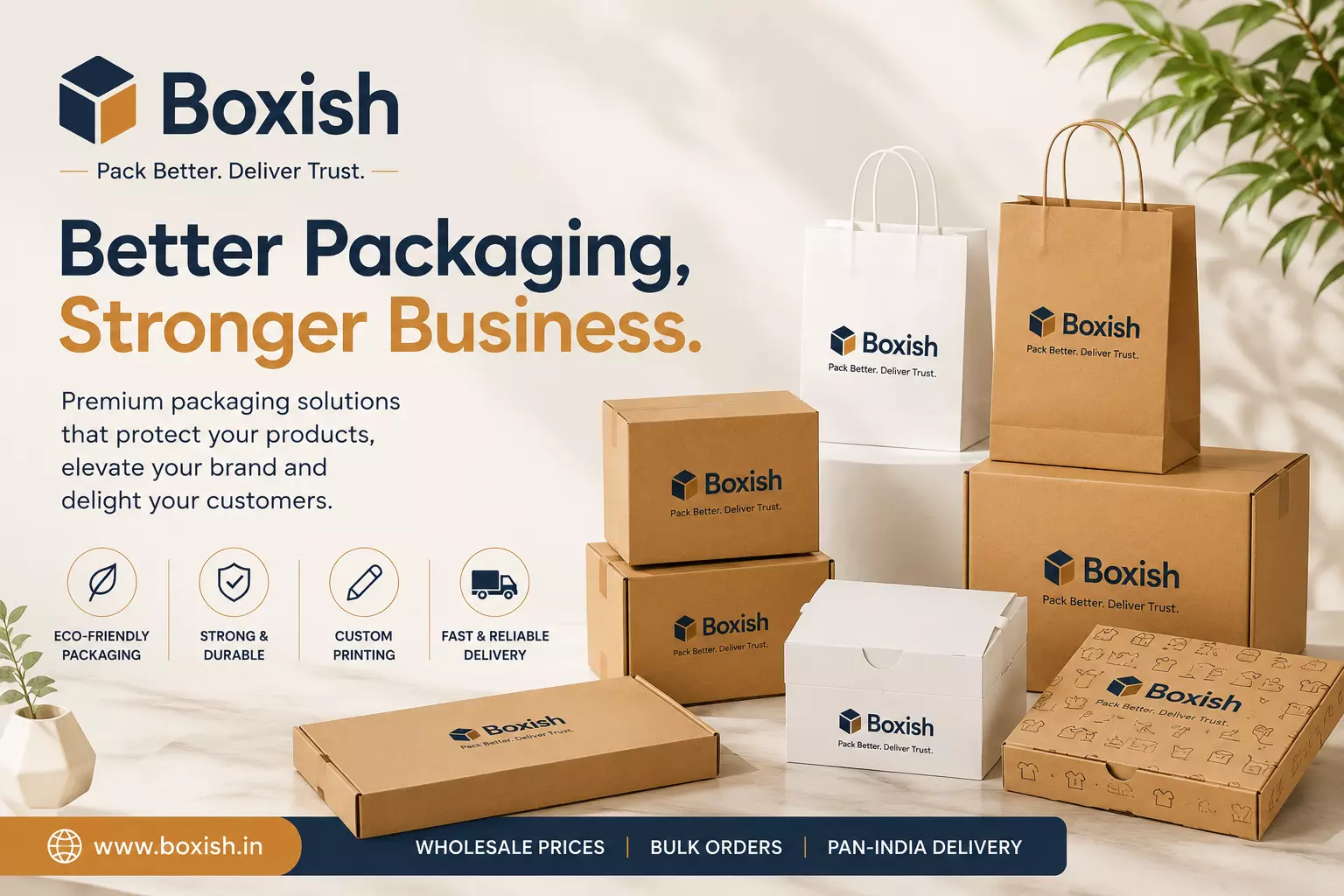
Boxish Packaging provides packaging solutions for ecommerce, retail, food service, and other commercial applications. Businesses can evaluate packaging according to product dimensions, weight, order volume, shipping conditions, and branding requirements.
The important point is to select each packaging format according to its specific purpose rather than choosing based only on price.
Conclusion
Buying the right corrugated box requires businesses to evaluate product size, weight, strength, shipping conditions, storage requirements, protection, and total cost. The right selection can reduce product damage, improve fulfillment efficiency, and make packaging procurement easier.
Businesses should also recognize that different applications require different solutions. A paper bag can work well for lightweight retail purchases, while a pizza box is designed specifically for food delivery.
By testing packaging, monitoring performance, planning inventory, and choosing reliable packaging solutions from Boxish Packaging, businesses can create a practical packaging system that balances protection, cost, efficiency, sustainability, and customer experience.