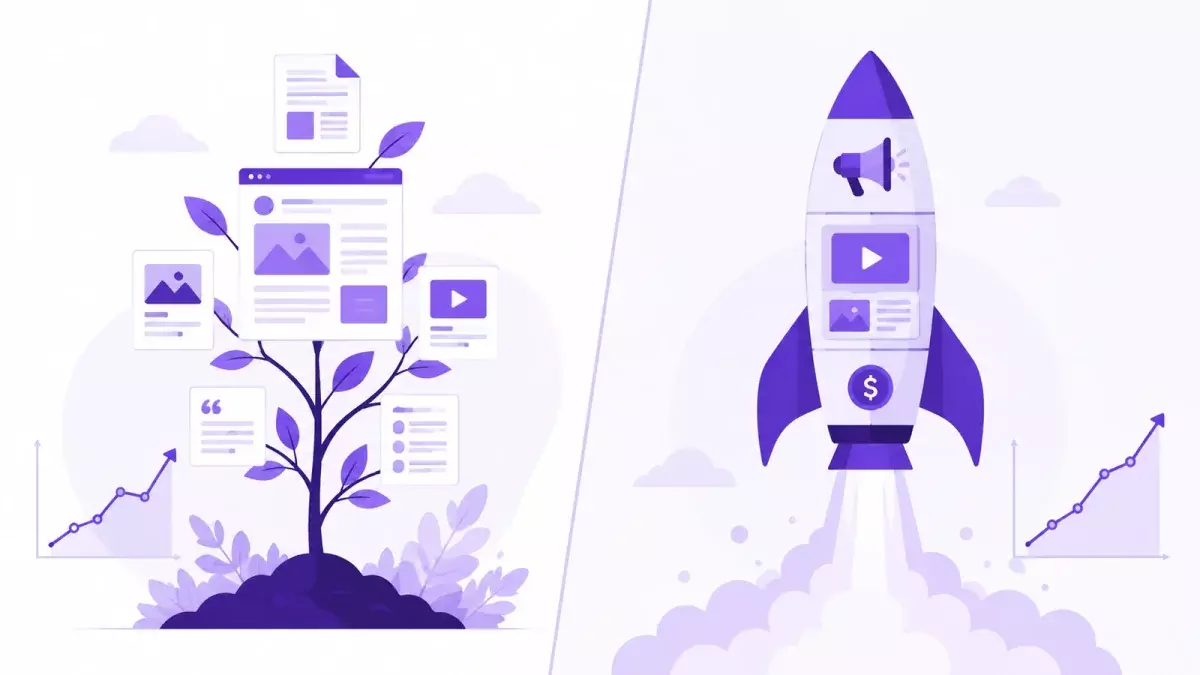
Content Marketing vs PPC Advertising ROI 2026: Which Gives Better Business Growth?
Every business wants better marketing results, but choosing the right strategy is not always simple. In 2026, many companies are comparing content marketing and PPC advertising because both can generate traffic, leads, and sales. However, the return on investment is different for each strategy.
PPC advertising is a paid marketing method where businesses pay for clicks, impressions, or conversions. It can include Google Ads, social media ads, shopping ads, display ads, and retargeting campaigns. The biggest benefit of PPC is speed. A business can launch a campaign and start receiving traffic quickly.
This makes PPC useful for product launches, seasonal promotions, limited-time offers, and lead generation campaigns.
If a company wants fast visibility, PPC can be a strong option. However, paid traffic usually stops when the ad budget stops. This means businesses need to manage their budget carefully and track results properly.
Content marketing works in a different way. Instead of paying for every click, a business creates helpful content that attracts users through search engines, social media, email, and brand discovery. This can include blog posts, guides, tutorials, comparison articles, case studies, videos, and landing page content.
The main benefit of content marketing is long-term value. A useful article or guide can continue bringing traffic for months or even years after it is published. This is why many businesses now compare content marketing vs PPC advertising ROI before deciding where to invest their marketing budget.
Content Marketing vs PPC: Main Difference
The main difference is time and cost. PPC gives faster results, but it requires continuous spending. Content marketing usually takes longer, but it can build organic traffic, brand trust, and search visibility over time.
For example, a PPC campaign may bring visitors immediately, but every click has a cost.
If the campaign is not optimized, the business may spend money without getting enough conversions. On the other hand, a strong content marketing strategy may take a few months to grow, but it can reduce dependency on paid ads in the long run.
Which Strategy Gives Better ROI?
The better ROI depends on the business goal. If the goal is quick traffic, fast testing, or immediate leads, PPC may be the better choice. If the goal is sustainable growth, brand authority, and lower customer acquisition cost over time, content marketing can be more valuable.
Many successful businesses do not choose only one strategy. They use both together. PPC helps bring fast traffic, while content marketing builds long-term visibility. When both strategies are measured correctly, businesses can understand which channel produces better leads, sales, and profit.
Read: How PPC Services Can Give Your Brand Instant Visibility
Important Metrics to Track
Businesses should not only look at clicks or impressions. Real ROI depends on conversion rate, cost per lead, customer acquisition cost, customer lifetime value, and total revenue generated from each channel.
For PPC, important metrics include cost per click, cost per conversion, return on ad spend, and landing page conversion rate. For content marketing, important metrics include organic traffic, keyword rankings, leads, assisted conversions, and long-term search visibility.
Final Thoughts
PPC advertising is best for speed, testing, and quick visibility. Content marketing is best for long-term growth, trust, and organic traffic. In 2026, the smartest digital marketing approach is to use both carefully and measure real business results.
A business should start by understanding its budget, goals, audience, and timeline. If fast leads are needed, PPC can help. If long-term growth is the goal, content marketing should be part of the strategy. When both are combined correctly, they can create a stronger and more balanced marketing system.