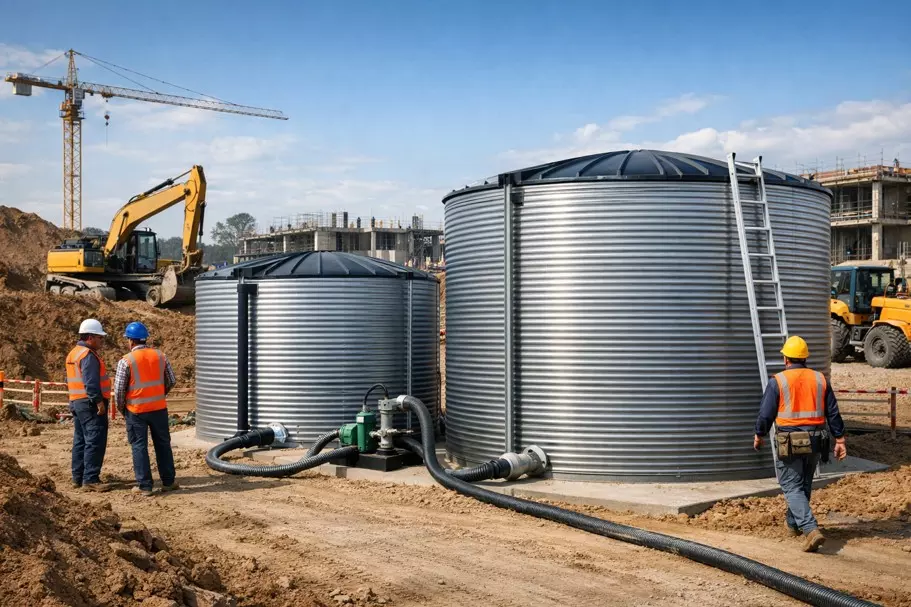
Construction Site Water Tanks Maintenance: Preventing Leaks with Water Tank Liners
Construction site water tanks maintenance is essential because a safe water supply is needed to conduct operations. A construction site needs water for dust suppression, concrete mixing, equipment cleaning, and the workforce.
However, at the heart of this system are construction site water tanks, which must remain durable, leak-free, and contamination-resistant despite harsh site conditions.
Hence, proper maintenance of these tanks is not a choice for you. But you need to understand that it is essential for efficiency, safety, and cost control.
It is not easy to maintain tanks without tank liners. One of the most effective ways to extend the lifespan of construction water storage systems is through water tank liners.
These liners prevent costly failures in the future. Apart from this, regular inspections and modern technologies, such as ROV for underwater inspection, are making the task of maintaining water tanks safer.
In this blog, we will discuss why maintenance matters, common causes of leaks, and how liners, especially concrete water tank liners, play a critical role in keeping construction operations running smoothly. Keep reading and keep exploring!
Why Reliable Construction Site Water Tanks Matter on Every Construction Site?
The sites that are being constructed in new areas have limited access to water.
However, construction site water tanks serve as temporary or semi-permanent storage solutions in environments where municipal water availability may be limited or inconsistent. Hence, these tanks often operate under extreme conditions, including:
- Constant exposure to sunlight and temperature fluctuations due to seasonal change
- Heavy machinery movement near the site
- Frequent filling and draining cycles due to extensive use.
- Contact with abrasive materials and chemicals
Therefore, without proper maintenance, even high-quality tanks can degrade quickly, leading to leaks, contamination, water loss, and operational delays. A regular maintenance session is needed to do a quality check by a professional.
Key Factors Leading to Leaks in Construction Site Water Tanks
Here are the key factors leading to leaks in concrete water tank liners. Let us dive straight into the topic. Keep scrolling and keep reading!
#1. Material Degradation
Over time, tank materials, especially concrete and steel, can crack or corrode due to water pressure, chemical exposure, and environmental stress. However, using the water tank liners can extend the life span of the water tankers.
The tanks may develop cracks if you do not use a protective layer on water tanks at the construction site. The water pressure spoils the liners with time, and only regular maintenance can keep your water tanks from depleted.
#2. Structural Movement
Construction sites are dynamic environments. Ground shifts, vibrations from heavy equipment, and uneven surfaces can compromise tank integrity. However, drilling and heavy equipment at the site can affect the quality of the water supply.
This is because drilling can create cracks in your construction site water tanks, and issues like leakage can damage them completely.
#3. Poor Waterproofing
Tanks without proper internal protection are highly susceptible to seepage, particularly during long-term water storage. Over time, even small cracks or porous surfaces can allow water to escape, weakening the tank’s structure and increasing maintenance costs.
Insufficient waterproofing can also lead to contamination, as external debris or soil may infiltrate the tank. Proper lining and sealing are essential to maintain both water integrity and tank durability.
#4. Lack of Regular Inspection
Small cracks and leaks often go unnoticed until they escalate into major problems. This ignorance is causing significant water loss and costly repairs.
However, without routine checks, issues like liner damage, corrosion, or sediment buildup can remain hidden, compromising both tank efficiency and water quality.
Hence, regular inspections help identify early signs of wear and tear, allowing timely maintenance before minor problems turn into expensive downtime.
Therefore, implementing a structured inspection schedule ensures your construction site water tanks remain safe, reliable, and fully operational.
What Are Water Tank Liners and Why Are They Essential?
Water tank liners are protective barriers installed inside water tanks to create a waterproof, corrosion-resistant layer.
However, they are designed to prevent direct contact between stored water and the tank’s structural material. Moreover, for construction site water tanks, liners provide several critical benefits:
- Prevent leaks and seepage issues
- Protect against corrosion and chemical damage
- Improve water quality by preventing contamination
- Extend the lifespan of the tank at the construction site
- Reduce maintenance and repair costs.
Therefore, by acting as a protective shield, liners significantly reduce the risk of tank failure in demanding construction environments. The tank liners are the shield that protects your tank from any structural damage.
The Role of ROV for Underwater Inspection in Tank Maintenance
Modern maintenance practices increasingly rely on ROV for underwater inspection to assess tank conditions without draining them.
However, ROVs (Remotely Operated Vehicles) are compact, camera-equipped devices designed to operate underwater.
It enables you to stop humans from losing their lives. Hence, using ROV for underwater inspection in construction site water tanks allows teams to:
- Detect cracks, liner damage, or sediment buildup
- Inspect hard-to-reach areas safely
- Reduce downtime caused by draining tanks
- Identify early signs of structural failure
Therefore, ROV inspections are particularly useful for large concrete tanks or tanks in continuous use, where draining is impractical.
Read: The Essential Guide to Tank and Pool Maintenance
How Liners and ROV Inspections Work Together?
The combination of water tank liners and ROV for Underwater Inspection creates a proactive maintenance strategy. Using both together will enhance the construction site water tanks.
- ROV inspections identify liner wear, seam separation, or punctures
- Early detection allows targeted liner repairs instead of full tank replacement
- Continuous monitoring ensures liners remain effective over time
Therefore, for construction managers, this approach minimizes risk, improves safety, and ensures uninterrupted water availability.
With theadvancement in technology, you can easily clean the water tanks at a construction site and provide a clean water supply to the workforce.
Key Pointers!
It is essential to maintain construction site water tanks. It is critical to keep construction projects on schedule and within budget.
This is because leaks, contamination, and structural damage can cause costly delays, but these issues are largely preventable.
However, by integrating durable water tank liners, especially concrete water tank liners, and leveraging advanced tools like ROV for underwater inspection, construction managers can ensure reliable water storage, reduce risks, and extend tank lifespan.
Therefore, preventing leaks isn’t just about fixing problems; it’s about building a smarter, more resilient construction operation from the inside out.