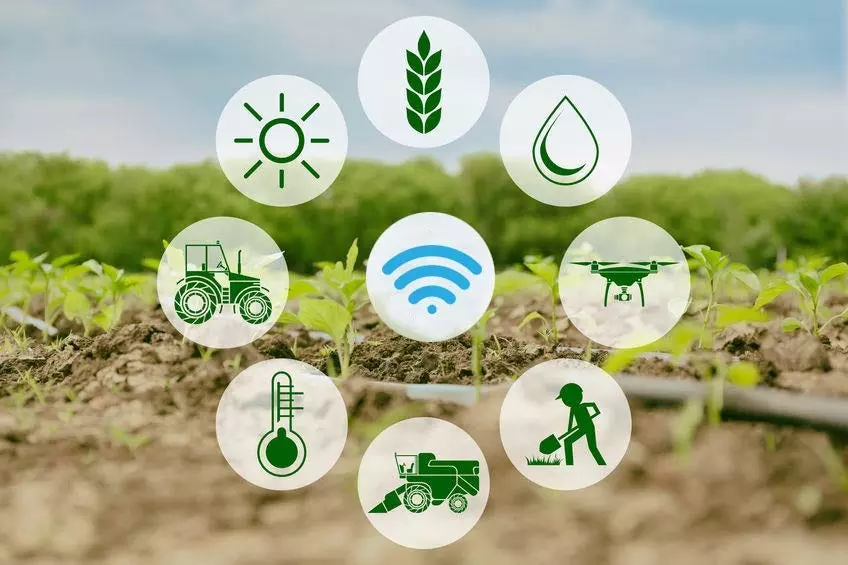
Connected Agriculture Market
The global connected agriculture market is experiencing significant growth, driven by advancements in technology and the increasing need for efficient and sustainable farming practices. Connected agriculture refers to the integration of digital technologies into agricultural practices to enhance productivity, sustainability, and profitability.
This encompasses the use of Internet of Things (IoT) devices, data analytics, and mobile applications to monitor and manage various aspects of farming, from pre-production planning to post-production management.
Market Overview
As of 2025, the connected agriculture market is valued at approximately USD 6.42 billion and is projected to reach USD 10.87 billion by 2030, growing at a compound annual growth rate (CAGR) of 11.1% during the forecast period Mordor Intelligence
. This growth is attributed to several factors, including the increasing adoption of IoT technologies, the need for resource optimization, and the demand for data-driven decision-making in agriculture.
Key Drivers of Market Growth
- Technological Advancements: The development and deployment of IoT devices, sensors, drones, and satellite technologies have revolutionized agricultural practices. These technologies enable real-time monitoring of soil conditions, crop health, weather patterns, and livestock behavior, allowing farmers to make informed decisions and optimize resource usage.
- Data-Driven Decision Making: The availability of big data analytics and cloud computing has empowered farmers to analyze vast amounts of data collected from various sources. This facilitates predictive analytics, early detection of diseases and pests, and efficient management of irrigation and fertilization, leading to increased yields and reduced costs.
- Government Initiatives and Support: Governments worldwide are recognizing the importance of digital agriculture and are implementing policies and programs to promote its adoption. For instance, the Maharashtra government in India has launched the 'MahaAgri-AI Policy 2025-2029', aiming to integrate AI and modern technologies into agriculture to improve crop monitoring, weather forecasting, and overall farm productivity.
- Sustainability and Climate Change Mitigation: With the growing concerns over climate change and environmental sustainability, connected agriculture offers solutions to mitigate adverse effects. Technologies such as precision farming and resource-efficient practices help in reducing water usage, minimizing chemical inputs, and enhancing soil health, contributing to sustainable agricultural practices.
Market Segmentation
The connected agriculture market can be segmented based on application, platform, and region:
- By Application:
- Pre-Production Planning and Management: Includes activities such as land preparation, seed selection, and crop planning.
- In-Production Planning and Management: Encompasses irrigation management, crop monitoring, pest and disease detection, and nutrient management.
- Post-Production Planning and Management: Involves harvesting, storage, transportation, and market access.
- By Platform:
- Device Management: Involves the management of IoT devices and sensors deployed in the field.
- Application Enablement: Provides platforms for developing and deploying agricultural applications.
- Connectivity Management: Ensures seamless communication between devices and platforms.
- By Region:
- North America: Dominates the market due to advanced technological infrastructure and high adoption rates of digital agriculture solutions.
- Europe: Experiences steady growth with increasing emphasis on sustainable farming practices.
- Asia-Pacific: Witnesses rapid adoption, especially in countries like India and China, driven by the need to enhance food security and agricultural productivity.
- Latin America and Middle East & Africa: Emerging markets with growing interest in adopting digital agriculture solutions to address local challenges.
Challenges and Restraints
Despite the promising growth, the connected agriculture market faces several challenges:
- High Initial Investment: The deployment of IoT devices, sensors, and other technologies requires significant capital investment, which can be a barrier for small-scale farmers.
- Data Privacy and Security Concerns: The collection and storage of vast amounts of data raise concerns about data privacy and security, necessitating robust cybersecurity measures.
- Lack of Digital Literacy: In rural areas, limited access to digital education and training can hinder the adoption of connected agriculture technologies.
- Infrastructure Limitations: Inadequate internet connectivity and electricity supply in remote areas can impede the effective implementation of digital agriculture solutions.
Future Outlook
The connected agriculture market is poised for substantial growth in the coming years. Advancements in technologies such as 5G connectivity, artificial intelligence (AI), and blockchain are expected to further enhance the capabilities of connected agriculture solutions. For instance, AI can provide predictive analytics for crop management, while blockchain can ensure transparency and traceability in the agricultural supply chain.
Moreover, the integration of wearable devices for livestock monitoring and the use of drones for precision farming are anticipated to become more prevalent, offering farmers real-time insights into animal health and crop conditions. These innovations will contribute to increased productivity, reduced environmental impact, and improved profitability for farmers.
Conclusion
The connected agriculture market represents a transformative shift in the way farming is practiced, leveraging technology to enhance productivity, sustainability, and profitability. While challenges such as high initial investment and infrastructure limitations exist, the benefits offered by connected agriculture solutions are driving their adoption across the globe.
With continued technological advancements and supportive policies, the future of connected agriculture looks promising, paving the way for a more efficient and sustainable agricultural landscape.