Why Do Conga Environments Need Ongoing Management?
Contract technology can look straightforward after implementation, but the processes surrounding agreements tend to become more complicated as an organization grows.
Templates change, approval requirements evolve, new users join, integrations expand, and legal or commercial teams need better visibility into obligations and contract status.
This is where Conga managed services can play a role. Instead of treating Conga as a system that only needs attention during implementation, ongoing support can help organizations maintain contract workflows, document generation, integrations, and Salesforce-based contract management as requirements change.
What Makes Contract Management Difficult to Maintain?
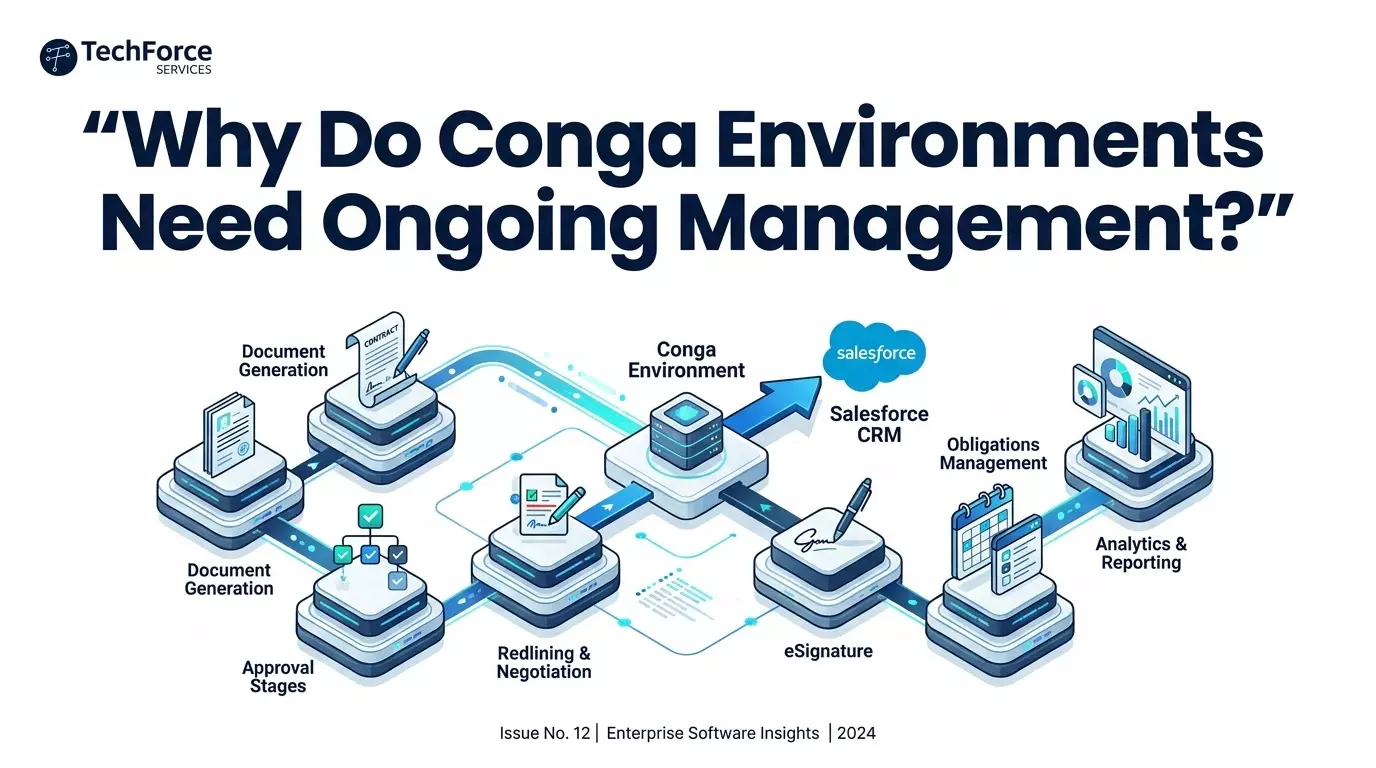
Contract lifecycle management involves more than storing signed documents. Agreements may need to move through drafting, review, negotiation, approval, execution, renewal, amendment, and expiration.
Each stage can involve different users, permissions, templates, business rules, and data.
Conga's current documentation describes CLM as a process covering contract creation, analysis, execution, and maintenance.
Its Salesforce-based capabilities include document generation, redlining, negotiation, obligation management, versioning, reporting, and integration with eSignature platforms.
That breadth creates dependencies. A change to a template can affect document output. A modified workflow can alter approvals. An integration update can affect how contract data moves between systems. Without consistent administration, small changes can create problems elsewhere.
How Can Ongoing Conga Support Help?
Conga environments benefit from regular attention because the underlying business processes continue to change.
Ongoing support can help teams review configurations, maintain templates, troubleshoot issues, monitor integrations, and make controlled enhancements.
Conga's 2026 documentation also shows continued development across CLM, Composer, CPQ integrations, APIs, document generation, and contract AI capabilities.
Keeping these capabilities aligned with an organization's existing Salesforce environment requires more than installing updates. Teams need to understand how new functionality fits their current processes.
A structured Conga support and maintenance approach can provide that continuity. TechForce Services includes Conga and Salesforce integration among its Salesforce capabilities, reflecting the close relationship between contract technology and the broader CRM environment.
Read: Top Benefits of Combining Managed IT Services with a 3CX
Can Managed Services Improve Contract Operations Over Time?
The biggest opportunity is often gradual improvement rather than a major transformation project. Teams can identify repetitive manual steps, outdated templates, inefficient approvals, integration issues, or reporting gaps and address them as part of an ongoing roadmap.
Conga's current platform capabilities also show why this matters. Contract teams can generate documents, negotiate changes, synchronize information back to Salesforce, manage obligations, and maintain contract records within connected workflows.
As these processes become more connected, maintaining the system becomes part of maintaining the business process itself.
A well-managed environment can help reduce unnecessary manual work while giving legal, sales, procurement, and operations teams better visibility into agreements.
Conga managed services are therefore most valuable when they are treated as continuous operational support rather than emergency troubleshooting.
Regular administration, controlled improvements, integration monitoring, and attention to evolving contract requirements can help organizations keep their CLM environment reliable while making room for new capabilities.
Conclusion
Conga environments need ongoing attention because contract processes rarely remain unchanged as organizations grow.
New templates, approval requirements, integrations, users, and regulatory or operational needs can all affect how contract management systems perform.
Managed services can help businesses maintain these workflows while addressing issues, improving configurations, monitoring integrations, and introducing enhancements in a controlled way.
Treating Conga management as a continuous operational responsibility rather than occasional troubleshooting can help organizations maintain more consistent contract processes while creating a stronger foundation for future automation and digital transformation.