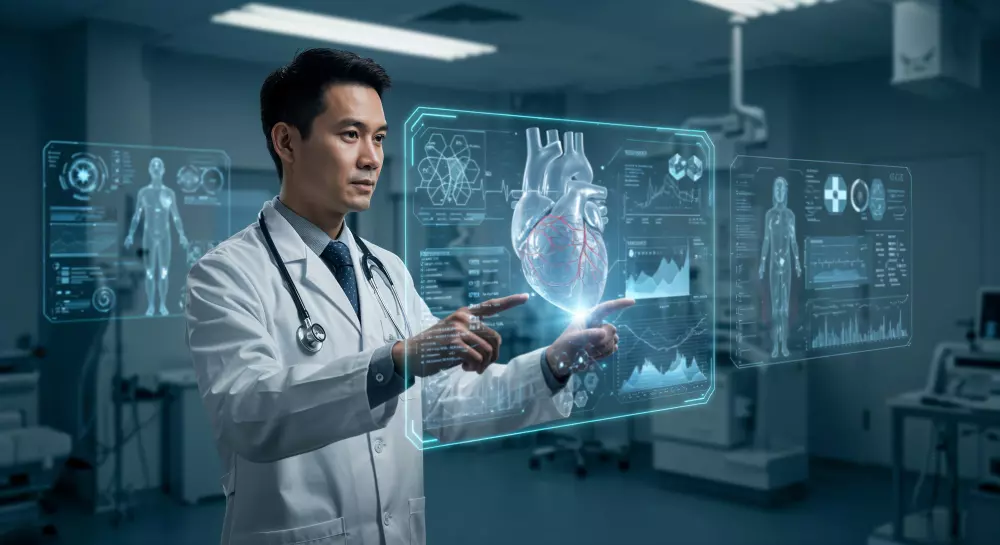
From Cameras to Care: A Beginner’s Guide to Computer Vision in Healthcare
Sounds like sci-fi, right? But honestly, it's already happening. We’re living in an era where computers are learning how to see—really see—and understand what they’re looking at. And when you combine that with medicine, you don’t just get better diagnostics. You get faster interventions, fewer mistakes, and a whole new way of thinking about healthcare.
That’s the magic behind Computer Vision in Healthcare. If you're curious about how it works, where it's headed, or what it means for doctors and patients alike, this beginner’s guide is here to walk you through it—without the jargon overload.
What Is Computer Vision?
Let’s start with the basics. Computer vision is a subset of artificial intelligence (AI) that enables machines to analyze, interpret, and understand images and video—kind of like giving eyes and a brain to a computer.
So instead of just looking at pixels, a computer trained with computer vision can “see” a chest X-ray and say, “Hey, there might be a tumor here.” Or glance at a live video feed of a hospital room and raise an alert if a patient falls.
Put simply: it’s the ability for machines to understand what they’re looking at.
Real Ways It’s Being Used in Healthcare
Now let’s dig into the cool, real-world stuff. Computer vision isn’t just some lab experiment. It’s already making waves across hospitals, clinics, and even at home.
1. Medical Imaging Analysis
Radiology has been one of the biggest beneficiaries of computer vision. Think about all the scans doctors deal with—X-rays, MRIs, CT scans, ultrasounds. These can be extremely complex, and even skilled radiologists can miss subtle patterns, especially under time pressure.
Computer vision helps by:
- Detecting tumors, fractures, and organ abnormalities
- Measuring and comparing organ sizes or lesion growth
- Flagging areas of concern for further review
It doesn’t replace the radiologist. Instead, it acts like a super-sharp assistant that never gets tired, helping catch things that might be overlooked.
2. Assisting in Surgery
Let’s say you're in the operating room. Surgeons already rely on advanced imaging and cameras to guide them. Now add computer vision into the mix. You get systems that can:
- Highlight critical tissues or blood vessels
- Alert when instruments get too close to sensitive areas
- Monitor real-time footage to provide feedback or support
It’s like having a GPS for surgery, with live updates and alerts. It helps minimize errors and can even support remote surgery assistance.
3. Patient Monitoring and Safety
Especially in critical care or elderly patient settings, computer vision is proving invaluable. Cameras in patient rooms can analyze video to:
- Detect falls
- Monitor movement patterns
- Alert staff to unusual behavior (like sudden convulsions)
It’s 24/7 surveillance, but for the purpose of care—not control. Nurses and doctors can’t be everywhere at once, but computer vision helps them be more present.
4. Dermatology and Eye Health
Your smartphone camera might soon be able to do more than just take selfies. Apps using computer vision are now trained to analyze skin conditions or even eye scans.
For skin care:
- They can evaluate moles, acne, or rashes
- Compare your skin to large databases of medical images
- Suggest whether something looks benign or potentially dangerous
For eye health:
- AI tools can detect diabetic retinopathy by scanning eye images
- They can assist ophthalmologists in diagnosis and monitoring
This is huge in rural areas or under-resourced clinics, where getting to a specialist might not be easy.
5. Enhancing Telemedicine
We all got more familiar with telemedicine during the pandemic, right? But even with video calls, doctors still face challenges without physical exams.
Computer vision steps in to:
- Analyze facial expressions for signs of pain or neurological issues
- Monitor breathing patterns or visible symptoms
- Detect movement disorders based on posture and motion
It's not perfect, but it adds a layer of insight that regular video consultations just can’t offer.
Big Players Already Using It
This isn't just a theory. Major healthcare companies and startups are already implementing computer vision tools.
Google Health developed an AI tool for reading mammograms that can detect breast cancer with higher accuracy than many human radiologists.
Aidoc uses computer vision in emergency rooms to analyze CT scans and flag life-threatening conditions like brain hemorrhages—sometimes within minutes of the scan.
SkinVision, a consumer-focused app, uses photos of moles or skin lesions to identify early signs of melanoma. You snap a photo, and the app provides a risk assessment. Simple, but incredibly powerful.
Challenges You Should Know About
It’s not all smooth sailing. Like any disruptive tech, computer vision in healthcare faces some serious hurdles.
1. Data Privacy:
Healthcare data is extremely sensitive. With images, especially video, you’re capturing patient identity and personal health details. There needs to be airtight security and regulation to avoid leaks or misuse.
2. Bias in Algorithms:
If an AI model is trained on a limited or non-diverse dataset (say, mostly images from one ethnicity or age group), it might not perform well across different populations. That’s not just unfair—it’s dangerous.
3. Overdependence on AI:
It’s tempting to lean on the machine when it’s accurate most of the time. But computers make mistakes too. Final decisions must always rest with trained professionals.
4. High Costs and Access:
While big hospitals may afford this tech, smaller clinics or rural centers might not have the resources yet. Democratizing access is going to be a major challenge.
The Future Is Already Knocking
Here’s a wild thought: In ten years, a hospital may run with more AI monitoring systems than human nurses. That doesn’t mean we’re replacing people. It means supporting them so they can focus more on care, less on paperwork or routine tasks.
Expect things like:
- Fully automated diagnostics in emergency rooms
- Personalized health monitoring at home via webcams or smart mirrors
- Augmented reality surgeries powered by live computer vision analytics
It’s not that far off. In fact, the groundwork is already being laid.
A Personal Reflection
I remember watching a demo of computer vision in healthcare where an AI system detected pneumonia on a chest X-ray. It took about four seconds. No hesitation. The system even highlighted the affected areas automatically. It was mind-blowing. Not because the doctor couldn’t have seen it—but because the system did it instantly and flagged something the physician could double-check.
That kind of backup could mean life or death in some cases.
And for people with aging parents, the idea of constant monitoring without invading privacy feels like a miracle. You don’t need a caregiver standing in the room every minute. Just a smart camera, powered by computer vision in healthcare, quietly watching for signs of distress, falls, or abnormal behavior—ready to send an alert if something’s wrong.
There’s something powerful about this kind of technology. It doesn’t make care colder—it makes it smarter, safer, and sometimes even more compassionate.
FAQ – Computer Vision in Healthcare
Q1: Is computer vision already being used in hospitals today?
A: Absolutely. From stroke detection in CT scans to post-surgery monitoring, computer vision is in real-world use today.
Q2: Will AI replace doctors in the future?
A: No. AI tools are designed to assist and support healthcare professionals—not replace them. The best outcomes come from collaboration between people and machines.
Q3: What are the risks involved?
A: Data privacy, biased training models, and potential over-reliance on AI are the biggest risks. Proper oversight and diverse data are essential.
Q4: How accurate is computer vision in diagnosis?
A: In some cases, AI models have matched or surpassed human accuracy, particularly in radiology. But it's not foolproof and should always be verified by professionals.
Q5: Can small clinics afford this tech?
A: Some solutions are becoming more accessible, especially cloud-based or mobile platforms. But high-end equipment can still be costly.
Q6: Is it safe to rely on apps that use computer vision for health checks?
A: Apps can provide early screening and risk analysis, but they should not replace professional diagnosis or treatment. Always consult a doctor.