Commodity Trading Data Platform Overview
Understanding Commodity Trading Data Platforms
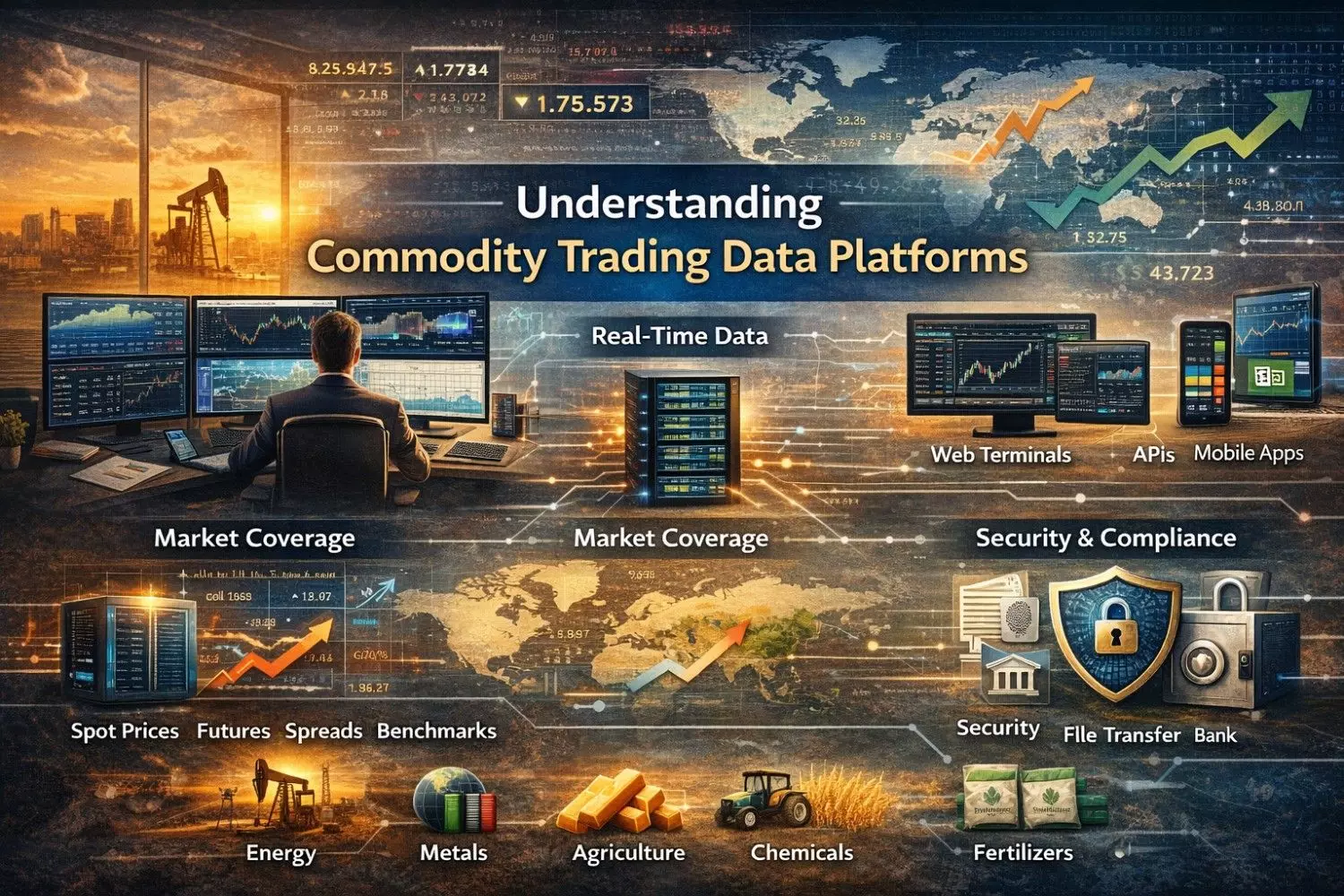
A commodity trading data platform provides the infrastructure that powers modern commodity markets. These platforms aggregate real-time and historical data across commodities, enabling traders, analysts, and institutions to monitor prices, execute strategies, and manage risk more effectively.
Real-Time Data and Latency Considerations
Speed is a defining factor in trading platforms. Real-time access to spot prices, futures, spreads, and benchmarks allows traders to respond quickly to market movements. However, low-latency data delivery requires robust systems and higher costs. Platforms must strike a balance between speed, reliability, and affordability to meet diverse user needs.
Breadth of Market Coverage
Comprehensive coverage across energy, metals, agriculture, chemicals, and fertilizers enhances cross-market analysis and diversification. Yet, aggregating data from multiple exchanges introduces challenges in standardization and consistency. Effective platforms normalize data so users can compare markets seamlessly within a single dashboard.
Access Methods and Integration
Users increasingly demand flexibility in how they consume data. Web terminals offer accessibility, Excel integration supports modeling and reporting, mobile apps provide on-the-go access, and APIs enable deep system integration for fintechs and developers.
Each access method involves tradeoffs between customization, security, and technical complexity.
Security, Compliance, and Reliability
Commodity trading data platforms often support high-value transactions and sensitive financial decisions. Strong security controls, secure file transfer protocols, and compliance measures are essential, even though they can increase implementation effort. Reliability during periods of high market volatility is equally critical.
Decision-Making Impact Across Organizations
The influence of a trading data platform extends beyond traders. Procurement teams rely on price transparency for negotiations, corporate treasuries use data for hedging strategies, and asset managers depend on timely insights for portfolio allocation. The right platform enhances coordination across these functions.
Read: Best Stock Broker in India for Equity Delivery Plans
Integrated Intelligence Platforms
Platforms like Tresmark highlight the shift toward integrated commodity intelligence. By offering real-time feeds, decades of historical data, economic indicators, and multi-channel access, such platforms support a wide range of use cases—from trading and investment research to procurement and treasury management.
Conclusion
A commodity trading data platform is more than a data source; it is a decision-support system. Organizations that evaluate platforms based on data quality, coverage, access flexibility, and security are better equipped to navigate complex commodity markets with confidence and clarity.