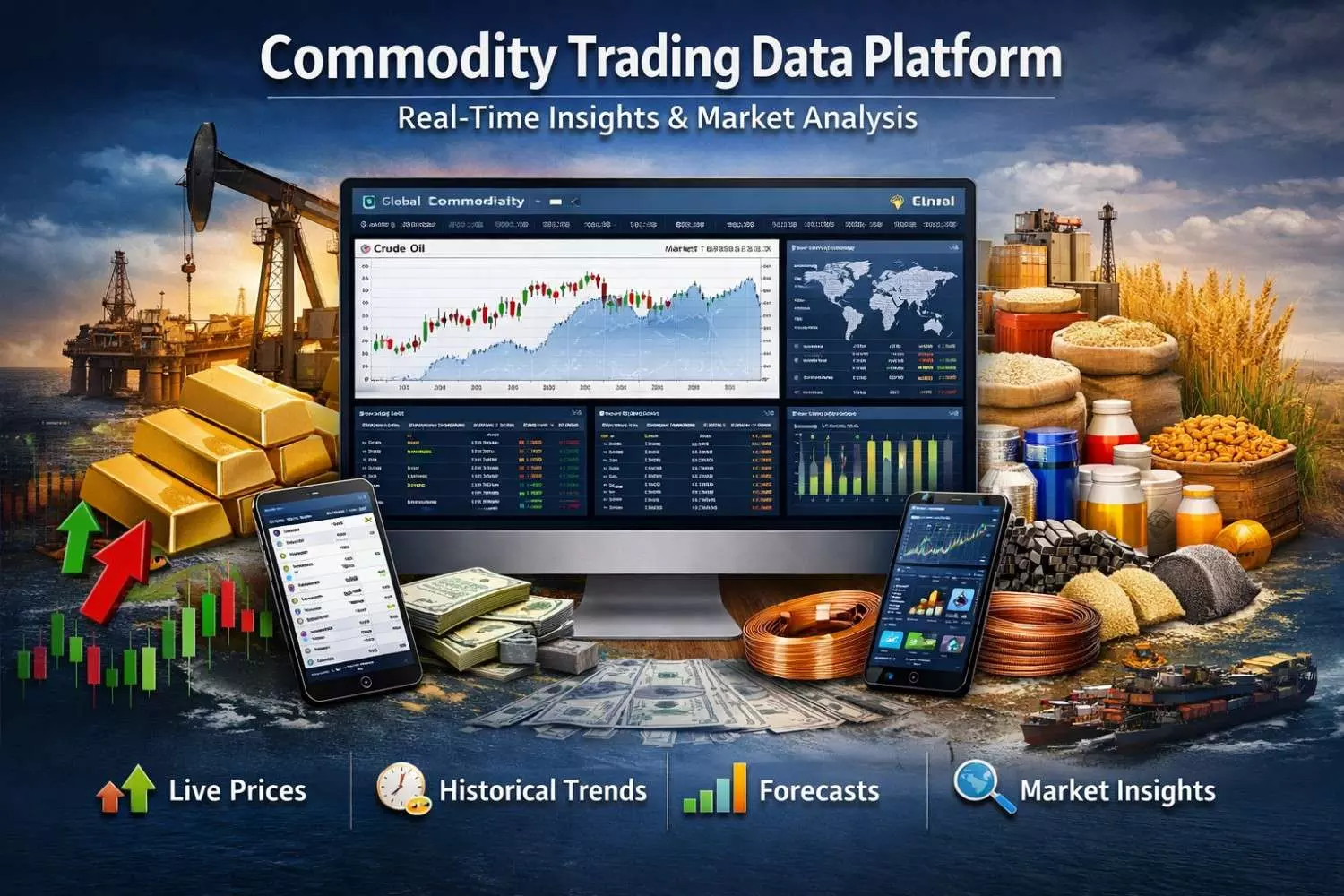
Commodity Intelligence Platform for Trading Data
In today’s fast-moving global markets, businesses need reliable and real-time information to make informed decisions.
A commodity trading data platform provides comprehensive access to market prices, historical trends, forecasts, and financial indicators in one centralized environment.
As a result, organizations can analyze market movements, manage risk, and optimize procurement strategies more effectively.
Modern platforms such as the Commodity intelligence platform offered by Tresmark allow companies to track and analyze commodities using real-time feeds supported by more than 30 years of historical data.
Consequently, procurement teams, analysts, investors, and corporate treasuries gain the insights required to benchmark prices, forecast trends, and trade with greater confidence.
Furthermore, by combining real-time market feeds with advanced analytics tools, these platforms transform raw data into actionable intelligence. Therefore, organizations can respond quickly to market fluctuations and improve their overall financial planning.
How Does a Commodity Intelligence Platform Support Better Market Decisions?
A Commodity intelligence platform brings together multiple data sources into a single global commodities dashboard.
This integration simplifies complex market information and enables decision-makers to evaluate commodity prices, spreads, and futures without switching between systems.
Tresmark’s platform, for example, offers a unified dashboard that delivers real-time and reliable data for commodities across global exchanges.
In addition, users can monitor spot prices, benchmark market performance, and analyze long-term trends. This visibility helps businesses negotiate better contracts and identify favorable trading opportunities.
Moreover, historical data combined with economic forecasts allows companies to plan budgets and sourcing strategies more accurately. As markets become increasingly volatile, such insights become essential for maintaining competitive advantage.
Who Benefits from Using a Global Commodity Data Dashboard?
Commodity data platforms are designed for a wide range of professionals across industries. Because commodity markets influence many sectors, access to accurate data is critical for strategic planning.
For instance, procurement teams can track spot prices and commodity futures to control costs and negotiate supplier contracts more effectively.
Meanwhile, analysts and researchers can study decades of market data to identify patterns and produce more reliable forecasts.
Similarly, asset managers and investors use real-time commodity feeds to monitor investment opportunities and manage portfolios. Corporate treasury teams also benefit by hedging raw material exposure and managing financial risk.
Therefore, a single platform can serve multiple use cases while providing a consistent view of market conditions across departments.
What Commodities Can Be Monitored on a Modern Commodity Intelligence Platform?
A robust Commodity intelligence platform covers a wide spectrum of global markets. By consolidating multiple commodity categories, users can track interconnected market movements more effectively.
For example, Tresmark’s platform covers several major commodity groups:
Metals
Gold, Silver, Copper, Aluminum, Iron, Stainless Steel, and other industrial metals.
Energy
Oil, Gas, Coal, and Renewable energy commodities.
Chemicals
Soda Ash, Methanol, Polymers, and Petrochemicals.
Fertilizers and Agriculture
Urea, DAP, Cotton, Wheat, Rice, Sugar, and Livestock.
FX and Capital Markets
Currency exchange rates, cryptocurrencies, stock market APIs, and money market data.
Consequently, users gain a comprehensive market overview without needing multiple data subscriptions.
How Can Businesses Access Commodity Market Data Efficiently?
Organizations often require flexible access to market data depending on their workflows and technical capabilities. For this reason, modern commodity platforms provide multiple integration methods.
Tresmark offers several access channels that make data consumption seamless. The web terminal serves as a global commodities dashboard where users can monitor markets in real time.
Additionally, Excel integration enables procurement and treasury teams to analyze data within familiar spreadsheets.
Meanwhile, the mobile application ensures that commodity insights are available anytime and anywhere. For developers and fintech firms, integration becomes even easier through a financial data API Provider, which allows automated access to market feeds.
Furthermore, large-scale users can retrieve bulk data through Secure File Transfer Protocol (SFTP), ensuring secure and efficient data distribution.
Why Is Real-Time Commodity Data Critical for Risk Management?
Commodity prices can fluctuate rapidly due to geopolitical events, supply disruptions, or economic shifts. Therefore, businesses that rely on raw materials must constantly monitor market conditions to protect their margins.
A real-time commodity feed enables organizations to hedge risk effectively. For example, procurement teams can track price movements and adjust purchasing strategies accordingly.
At the same time, treasury departments can hedge exposure using futures or other financial instruments.
In addition, historical data spanning more than three decades provides valuable context for market cycles. By analyzing past trends alongside economic forecasts, businesses can anticipate price volatility and plan budgets more accurately.
Frequently Asked Questions About Commodity Trading Data Platforms
What is a commodity intelligence platform?
A Commodity intelligence platform is a centralized system that provides real-time commodity prices, historical market data, forecasts, and analytical tools. It helps businesses monitor markets, manage risk, and make data-driven decisions.
Why do companies need a financial data API provider?
A financial data API Provider enables automated access to commodity prices, financial indicators, and market feeds.
This allows developers, fintech companies, and enterprises to integrate real-time data directly into trading systems, analytics tools, and internal applications.
How does historical commodity data help businesses?
Historical data helps organizations understand long-term market trends and price cycles. Consequently, businesses can forecast demand, build budgets, and create more resilient procurement strategies.
Who typically uses commodity trading data platforms?
Common users include procurement teams, financial analysts, asset managers, corporate treasury departments, investors, traders, and research institutions.
Can commodity platforms integrate with existing business tools?
Yes. Many platforms offer integrations such as Excel plugins, APIs, mobile apps, and secure data feeds, allowing organizations to incorporate commodity data into their existing workflows.
Read: Stock Market Courses in India: A Complete Guide for
How Can Businesses Explore the Benefits of a Commodity Data Platform?
Adopting a modern commodity intelligence platform can significantly improve decision-making across procurement, finance, and investment functions.
By consolidating real-time market feeds, historical data, and forecasting tools into one dashboard, businesses gain a clearer understanding of global commodity movements.
Tresmark’s platform illustrates how a single solution can support diverse use cases—from tracking spot prices to analyzing decades of historical data.
As a result, organizations can control costs, hedge risk, and plan strategically in an increasingly complex market environment.
For companies evaluating such solutions, scheduling a live demonstration is often the best way to understand the platform’s capabilities and explore how it can support their commodity trading and data analysis needs.