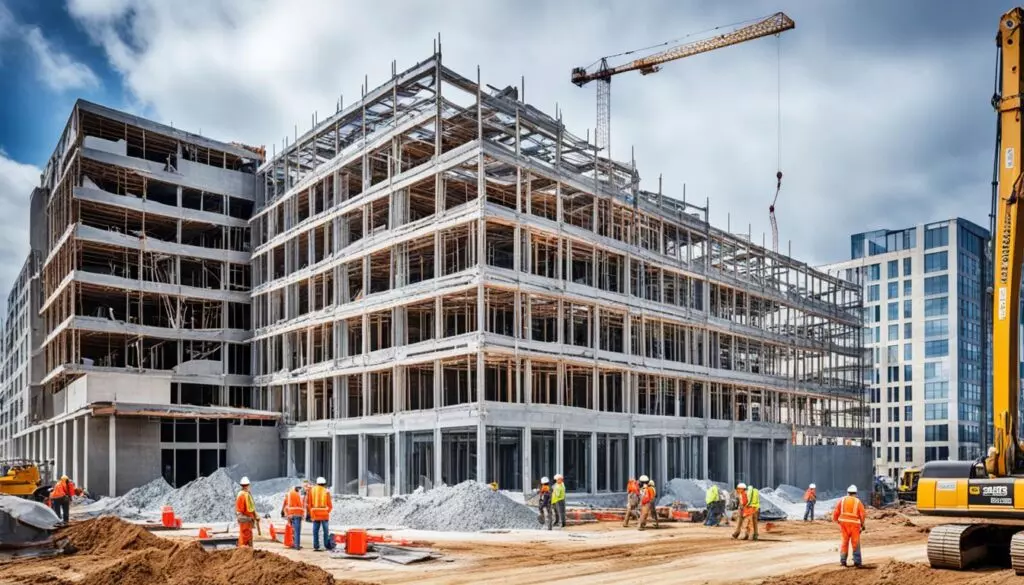
Commercial Building Contractors: End-to-End Solutions for Modern Construction Projects
Coordination is the foundation of every successful commercial building project. The design, planning, execution, and delivery must be in sync throughout. Proper execution of projects and compliance with rules and regulations are essential. It indicates that expert contractors are managing every step accurately.
Isolated services are not part of modern-day commercial construction anymore. Modern commercial construction requires end-to-end solutions that integrate planning, construction, and long-term performance. In offices and shopping venues, as well as mixed-use projects, commercial building contractors have a major role to play in the way businesses operate and thrive.
This guide outlines how building contractors in the commercial sector deliver end-to-end solutions for contemporary construction projects.
The Role of Commercial Building Contractors in Project Success
Commercial construction projects involve multiple stakeholders, tight timelines, and strict regulations. Without strong contractor leadership, these projects can quickly face delays and cost overruns.
McKinsey and Company indicate that when coordination is poor, large constructions projects are usually 20% behind schedule and up to 80% over budget.
Commercial building contractors reduce these risks by:
- Managing all construction phases
- Coordinating trades and suppliers
- Maintaining schedule control
- Ensuring quality and compliance
Commercial building contractors manage the overall communication among all parties. They serve as the central point of contact among architects, engineers, and inspectors, tracking every stage of the project. This helps detect and resolve issues early, before they become challenging, long-term risks.
This level of oversight ensures smoother execution, faster decision-making, and consistent project momentum from start to finish.
End-to-End Commercial Construction Solutions
Pre-Construction Planning and Feasibility
Sucessful projects begin with detailed planning. Contractors support early-stage decisions that shape outcomes.
Pre-construction services include:
- Cost estimation and budgeting
- Schedule planning
- Site analysis and feasibility reviews
- Value engineering
Early planning improves predictability and reduces change orders.
Construction Management and Execution
During construction, contractors oversee daily operations and ensure work aligns with plans.
Core responsibilities include:
- Site supervision and safety management
- Trade coordination
- Quality control inspections
- Progress tracking and reporting
Clear oversight keeps projects moving forward.
Post-Construction Support
End-to-end service continues even after the project is handed over. By providing quality services, contractors make buildings ready to be occupied and used in the long run.
Post-construction services comprise of:
- Final inspections
- System testing and commissioning
- Warranty coordination
- Closeout documentation
This ensures a smooth transition to operations.
Quality, Safety, and Compliance in Commercial Projects
Commercial structures must meet the highest safety and regulatory standards. Contractors play a key role in ensuring compliance during construction.
According to the United States Bureau of Labor Statistics, around 20 percent of workplace deaths are due to construction, which reaffirms the significance of safety-conscious contractors.
Commercial building contractors will focus on:
- OSHA compliance
- Fire and life safety standards
- Building code adherence
- On-site safety training
Strong safety programs protect workers and project timelines.
Cost Control and Schedule Reliability
Cost and time are critical in commercial construction. Delays can impact leasing, occupancy, and revenue.
The Construction Industry Institute (CII) notes that projects with early contractor involvement are completed up to 15% faster than those without.
Contractors improve reliability through:
- Realistic scheduling
- Efficient procurement
- Proactive issue resolution
- Transparent communication
Better control leads to predictable outcomes.
Technology in Modern Commercial Construction
Digital Tools and Coordination
Technology plays a growing role in commercial building projects.
Common tools include:
- Building Information Modeling (BIM)
- Digital scheduling platforms
- Real-time reporting systems
These tools improve accuracy and collaboration across teams.
Choosing the Right Commercial Building Contractor
Selecting an appropriate commercial building contractor is significant since it influences all the phases of the project. A contractor with experience helps prevent delays, manage costs, and meet safety and quality requirements.
They organize teams and address risks before they escalate.
When selecting a contractor, consider:
- Proven commercial construction experience
- Strong project management processes
- Commitment to safety and quality
- Ability to deliver end-to-end solutions
The right partner adds long-term value.
Read: How Indian Real Estate Is Changing in 2025
Final Verdict
A contemporary commercial building project requires organization, responsibility, and experience. Commercial building contractors offer the overall solution required to make the project safe and efficient.
Their participation at the very beginning and throughout the complete construction process influences the quality of the building and its future functionality.
Risks are minimized, and the results are better when contractors are involved throughout the construction lifecycle.
With an established strategy in commercial construction and project delivery, firms like Arrant Construction offer end-to-end solutions that meet the requirements of today's commercial building projects.
Frequently Asked Questions (FAQs)
Who are commercial building contractors?
They handle the planning, construction, coordination, and delivery of commercial buildings.
What is the significance of end-to-end construction services?
They minimize risk, enhance efficiency, and ease project management.
Are contractors involved in pre-construction?
Yes. Initial participation enhances budgeting, scheduling, and design coordination.
What measures are taken by contractors to contain costs?
Contractors minimize the overall cost through planning, efficient procurement, and ongoing cost monitoring.
Are commercial contractors responsible for compliance?
Yes. They make sure that the construction is done in accordance with the safety codes and regulatory requirements.