Column Jacketing Methods for Damaged RCC Columns
Buildings and industrial structures are exposed to continuous loads, environmental conditions, equipment vibrations, and material deterioration throughout their service life.
Over time, these factors can reduce the strength of structural columns and other load-bearing elements.
Retrofitting services help improve the structural performance of existing buildings without necessarily requiring demolition or complete reconstruction.
Techniques such as column jacketing, micro concrete jacketing, and steel jacketing are used to address specific structural deficiencies and support the continued use of existing infrastructure.
What Are Structural Retrofitting Services?
Structural retrofitting services involve modifying or strengthening an existing structure to improve its load-bearing capacity, stability, or performance.
These services may be required when a building develops structural damage, its intended use changes, additional equipment loads are introduced, or an engineering assessment identifies inadequate structural capacity.
Unlike ordinary repair work, retrofitting focuses on improving structural performance through suitable engineering interventions rather than simply covering visible damage or restoring the surface appearance of concrete.
Retrofitting solutions are selected according to the condition of the structure, the type of damage, the expected loads, and the requirements of the building. Industrial plants, warehouses, commercial buildings, parking structures, and infrastructure facilities may require strengthening during their operational life.
A structural assessment helps determine whether column jacketing, steel jacketing, micro concrete jacketing, or another strengthening method is appropriate for the identified problem.
Why Do Existing Structures Require Retrofitting?
Several conditions can make structural retrofitting necessary. Concrete columns may develop cracks, reinforcement may corrode, or the original structural design may no longer meet current loading requirements.
Industrial buildings can also experience increased loads after installing heavier machinery, expanding production areas, or changing the purpose of existing spaces.
In such situations, an engineering evaluation helps establish whether strengthening is necessary and which method can address the underlying structural limitation.
Ageing alone does not automatically mean that a structure needs retrofitting. However, prolonged exposure to moisture, chemical environments, temperature changes, and inadequate maintenance can contribute to deterioration.
Previous construction defects or alterations may also affect structural performance. Identifying the actual cause of a problem is essential before selecting a strengthening technique,
because an unsuitable intervention may fail to address the underlying issue or introduce additional stresses into the existing structural system.
Understanding Column Jacketing in Structural Strengthening
Column jacketing is a structural strengthening technique in which an existing column is enclosed with an additional layer of strengthening material.
Depending on the engineering requirements, the jacket may consist of reinforced concrete, micro concrete, structural steel, or another suitable system. The objective is to improve the column's ability to resist the required loads and address identified deficiencies.
Column jacketing is commonly considered when an existing column requires greater capacity, improved confinement, or rehabilitation following deterioration.
The design of a column jacket depends on several factors, including the existing column dimensions, concrete strength, reinforcement arrangement, structural loads, and condition of the foundation and connected members.
Engineers must also consider how the new jacket will transfer loads and interact with the original column. Surface preparation, reinforcement detailing, connections, and construction quality are important parts of the process.
A properly designed system should work with the existing structure rather than function as an isolated outer layer.
Micro Concrete Jacketing for Existing Concrete Columns
Micro concrete jacketing is a strengthening method that uses specially formulated, flowable cementitious material around an existing structural column.
It can be suitable for locations where conventional concrete placement is difficult or where the jacket requires material that can flow around closely spaced reinforcement.
The material is selected according to the project specifications and placement requirements. This method can help increase the effective column section when designed and executed as part of a suitable structural strengthening system.
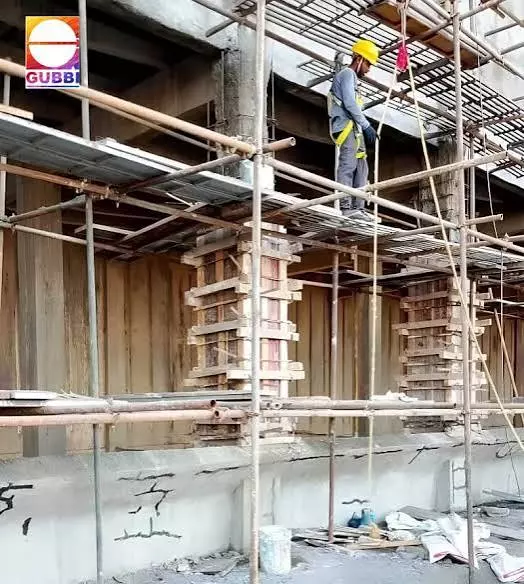
The work generally involves removing unsound concrete, cleaning the exposed surface, preparing reinforcement, installing additional reinforcement where specified, and fixing the required formwork.
The micro concrete is then placed using the approved procedure to achieve the intended jacket dimensions and fill the available space. Curing and quality checks are important after placement.
The final result depends on material selection, surface preparation, reinforcement detailing, placement conditions, and compliance with the approved engineering design.
When Is Micro Concrete Jacketing Suitable?
Micro concrete jacketing may be considered when a reinforced concrete column needs additional section capacity or rehabilitation and the available working space makes conventional concrete placement challenging.
It can be useful in industrial facilities, commercial buildings, and existing structures where access around columns is restricted.
However, suitability depends on the actual structural condition, the required jacket thickness, reinforcement congestion, and the performance characteristics of the specified material.
This technique should not be selected simply because the material is flowable or convenient to place. Engineers need to determine whether the existing concrete can remain, whether damaged material must be removed, and how the new jacket will connect with the original column.
Load transfer, interface preparation, reinforcement anchorage, and curing conditions require attention.
Where deterioration is caused by ongoing water ingress or chemical exposure, the underlying cause should also be addressed as part of the rehabilitation plan.
Steel Jacketing for Structural Columns
Steel jacketing involves strengthening an existing column by installing structural steel plates, sections, or an engineered steel enclosure around it.
The steel components are detailed to improve the column's structural performance according to the identified requirements. D
epending on the design, the system may provide additional confinement, improve resistance to particular loading conditions, or help address deficiencies in the existing column.
Steel jacketing can be considered for industrial facilities and commercial structures where a carefully designed strengthening intervention is required.
Installation may involve preparing the column surface, positioning steel components, providing designed connections, and completing specified welding, bolting, grouting, or other connection details.
The actual procedure depends on the selected system and site conditions. Engineers must verify the connection between the steel jacket and the existing column, as well as the effects of the strengthening on connected structural members.
Corrosion protection, fire protection where required, inspection access, and long-term maintenance should also be considered during planning.
Micro Concrete Jacketing vs Steel Jacketing
Micro concrete jacketing and steel jacketing can both be used to strengthen existing columns, but their materials, installation requirements, and structural behaviour differ.
Micro concrete jacketing adds a cementitious section around the column, generally incorporating designed reinforcement. Steel jacketing uses structural steel components configured to meet the engineering objectives. Neither method is universally better.
The appropriate solution depends on the column's condition, the required performance, access restrictions, installation programme, and overall project requirements.
Micro concrete jacketing may be suitable when increasing the column section with cementitious material is practical.
Steel jacketing may be considered when a steel-based strengthening system meets the structural requirements and the site can accommodate its connections and installation. Both methods require detailed engineering, appropriate surface preparation, and quality control.
Comparing material costs alone is insufficient; designers should also evaluate construction access, equipment needs, operational disruption, corrosion protection, maintenance, and the expected service conditions of the strengthened structure.
Read:Retrofitting: The Smart Way to Extend Building Life
Common Signs That a Column May Need Strengthening
Visible cracks, concrete spalling, exposed reinforcement, rust staining, and local crushing can indicate deterioration in a structural column.
Changes in column alignment or unusual deformation may also require immediate professional evaluation. However, not every crack indicates structural failure, and the absence of visible damage does not guarantee adequate load-bearing capacity.
The location, pattern, width, development, and likely cause of any observed defect should be examined before deciding whether structural strengthening is necessary.
Industrial facilities should pay particular attention to columns supporting heavy machinery, elevated platforms, storage systems, and other concentrated loads.
Alterations to the building layout or installation of additional equipment can change how loads are transferred through the structure.
If a column shows signs of distress or the loading arrangement has changed, the affected area should be assessed by a qualified structural engineer. Uncontrolled loading and cosmetic patching should be avoided until the structural implications have been understood.
The Structural Assessment Process Before Retrofitting
A structural assessment establishes the existing condition of a building and helps determine whether a proposed strengthening method is appropriate.
Depending on the project, the assessment may include a visual inspection, review of available drawings, measurement of structural dimensions, concrete testing, reinforcement detection, and evaluation of applied loads.
Additional investigations may be necessary where damage is extensive or the original construction details are unavailable. The findings provide the basis for deciding what intervention is technically justified.
After assessing the existing structure, engineers can evaluate possible strengthening methods and prepare the required design details.
This stage should consider the load path, connection requirements, construction sequence, temporary support, and effects on adjacent structural elements.
For industrial facilities, the assessment may also need to account for machinery operation, access restrictions, production schedules, and safety arrangements.
A documented engineering approach helps reduce uncertainty and ensures that the selected retrofitting method responds to the actual structural problem.
The Column Jacketing Execution Process
Column jacketing begins with site inspection, measurement, and confirmation of the approved strengthening design.
The work area is prepared, and temporary support is provided wherever the engineering assessment requires it. Unsound concrete is removed according to the specified procedure, and exposed surfaces and reinforcement are cleaned.
Any additional reinforcement, connectors, or anchorage components are installed as detailed in the design. These preparation stages are important because the new jacket must achieve the intended interaction with the existing structural member.
The next steps depend on the selected jacketing system. For micro concrete jacketing, suitable formwork is installed before the specified material is placed and cured.
For steel jacketing, steel components are positioned and secured using the designed connections, with grouting or other interface treatments where specified.
Quality inspections should verify dimensions, reinforcement, connections, material placement, and curing or protection requirements. The column should only be returned to its intended loading condition in accordance with the approved construction and engineering procedures.
Benefits of Retrofitting Existing Industrial Structures
One important benefit of structural retrofitting is the possibility of improving an existing structure without undertaking complete reconstruction. For industrial buildings, this can help preserve useful infrastructure while addressing identified structural deficiencies.
Retrofitting may also support changes in equipment loading or building use when the existing structure can be strengthened to meet the revised requirements.
The actual benefits depend on the condition of the building, the chosen strengthening system, and the results established by engineering assessment.
Retrofitting can also help project teams plan rehabilitation in stages and coordinate work with ongoing facility requirements. In suitable circumstances, strengthening selected structural members may be more practical than replacing large portions of a building.
Nevertheless, the decision should consider the condition of the entire structural system, the extent of deterioration, construction disruption, and future maintenance.
Retrofitting is not automatically the least expensive or most suitable option; its value comes from selecting an intervention that meets the required performance and operational objectives.
Factors Affecting Column Jacketing Cost
The cost of column jacketing depends on the number and dimensions of columns, the extent of existing damage, the type of jacket, material specifications, and reinforcement requirements.
Site accessibility and working height can influence labour, equipment, and installation arrangements.
Additional expenses may arise from concrete removal, temporary supports, steel fabrication, surface preparation, testing, protective coatings, and restrictions on work within operating facilities.
Therefore, a meaningful estimate requires project-specific information rather than a standard rate applied to every column.
When evaluating structural retrofitting services, building owners should compare the complete scope of work instead of considering only the quoted material or installation price.
The assessment should identify the proposed method, design responsibilities, material specifications, inspection requirements, and any exclusions.
A suitable recommendation from Gubbi Civil Engineers Limited should be considered alongside the project's technical findings, operational requirements, and clearly defined scope. This approach helps decision-makers evaluate the suitability and overall value of the proposed strengthening solution.
How to Choose Structural Retrofitting Contractors
Selecting structural retrofitting contractors requires attention to technical capability, relevant project experience, site safety, and the ability to follow approved engineering specifications.
Building owners should confirm whether the proposed team understands the particular strengthening method and can coordinate with structural engineers, facility managers, and other contractors.
Clear documentation of the existing condition, proposed intervention, material requirements, and inspection stages helps establish accountability throughout the project.
For industrial and commercial structures, the contractor should also understand site access limitations, equipment movement, restricted work areas, and the need to coordinate construction activities with facility operations.
Before work begins, responsibilities for design approval, testing, temporary support, and quality checks should be clearly defined. Choosing a contractor solely on the lowest quotation can overlook important technical requirements.
A properly scoped proposal makes it easier to compare options and assess whether the planned intervention meets the project's structural and operational needs.
Preventing Future Structural Deterioration
After strengthening work is completed, planned inspection and maintenance help monitor the condition of the repaired or retrofitted structure. Industrial buildings should be checked for water ingress, corrosion, concrete cracking, impact damage, and changes in loading conditions.
Protective coatings and waterproofing systems should be maintained where specified, particularly in areas exposed to moisture or aggressive environments. Any new defects should be evaluated promptly to determine whether they indicate a recurring durability issue or a structural concern.
Maintenance planning should also account for changes in building operations. Installing heavier equipment, adding platforms, modifying openings, or altering the use of a floor can affect the original design assumptions.
Such changes should be reviewed before implementation rather than after problems develop.
Periodic inspections, updated structural records, and appropriate engineering advice help owners make informed decisions about the continued use of their facilities and the need for additional rehabilitation or strengthening measures.
Retrofitting services play an important role in maintaining the performance of existing industrial, commercial, and infrastructure structures.
Column jacketing, micro concrete jacketing, and steel jacketing offer different approaches to addressing structural deficiencies, but each requires careful assessment and engineering design.
Understanding the cause of deterioration, the required load capacity, and the limitations of the existing structure helps ensure that the chosen intervention is suitable for the project.
For building owners and facility managers, the right strengthening decision begins with a clear understanding of the structural problem.
A detailed assessment, suitable material selection, correct installation, and ongoing maintenance all contribute to the effectiveness of a retrofitting project.
Rather than relying on a standard solution for every damaged column, project teams should evaluate the structure's actual requirements and select a method that supports safety, operational continuity, and the intended service life of the facility.