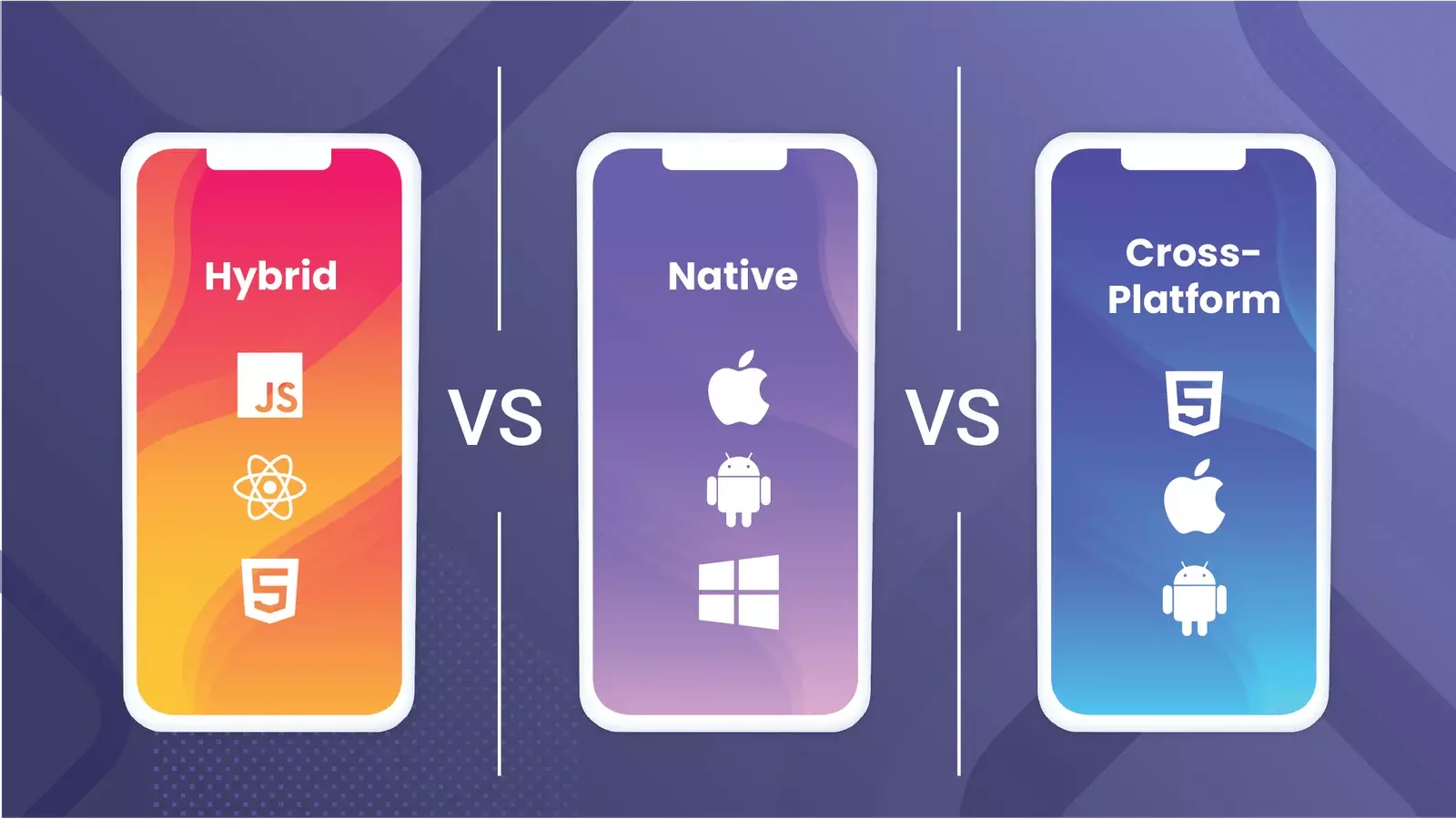
Choosing the Right Tech Stack for Your Mobile App: Native vs Hybrid vs Cross-Platform
First, a major decision when coming up with a new mobile application is tech stack choice. A technology choice impacts a lot of things, like operands, scalability, UX, development cost, and long-term maintenance. At Designpluz, we combine expert mobile app design and development to help companies make the right tech choices, which results in a product that's quick, easy to use, and expandable.
In essence, the article elaborates on the three technology paths: Native, Hybrid, and Cross-Platform, thus making it easier for readers to pick the one that aligns with their objectives.
Native App Development: The Gold Standard for Performance
In short, native development refers to constructing separate applications for iOS and Android by stringently employing platform-specific languages (Swift/Objective-C for iOS and Kotlin/Java for Android).
Since native applications are designed specifically for each operating system, they can achieve the highest level of performance, stability, and UI responsiveness.
Perfect for:
- Apps requiring heavy use of device hardware (camera, GPS, sensors)
- Technology-aided applications like gaming, AR, or streaming
- Firms that put UI at the forefront of platform-specific design
In case your company demands utmost speed along with the finest user experience, teaming up with specialist Android apps developers or an iOS application development company is the best way to go.
Read: Hybrid Development Environments Using Java and .NET
Hybrid App Development: A Faster, Budget-Friendly Option
Hybrid apps utilize web technologies (HTML, CSS, JavaScript) for development and are enclosed in a native wrapper. Thus single codebase may be the app for both iOS and Android.
The hybrid route has a development cost that's less than half, and the time-to-completion is twice as much, thus, it is appropriate for businesses with a small budget or simple feature requirements.
Pros:
- Both platforms have only one codebase.
- Faster-to-market
- Cost-effective for early-stage startups
Inadequate for performant-level native apps, hybrid apps are still good enough for MVPs, content-based apps, or simple business tools.
Cross-Platform App Development: The Best of Both Worlds
The best choice for those who want to balance performance and productivity are the cross-platform frameworks such as React Native and Flutter. They generate native components, so most of the time, you get near-native performance from a single shared codebase.
Why businesses go cross-platform:
- Development is quicker than with native.
- Cost is lower without performance being compromised.
- UI is consistent for both iOS and Android.
- Great for scaling in the long run
Cross-platform apps work perfectly for most modern businesses, especially those looking to launch quickly without compromising quality, and partnering with an experienced iOS application development company ensures the app delivers a smooth, high-performance user experience across all devices.
Which Tech Stack Should You Choose?
Now, to make the decision, you first have to consider:
- The scope and difficulty of the project
- Time and money available
- Performance expectations
- Scalability points
- The long-term feature roadmap
Designpluz’s team of professionals strategically selects the best functional technology for your future business needs. Whatever your choice is, be it going native, hybrid, or cross-platform, we make sure the product is user-friendly, efficient, and durable.
A well-thought-out tech stack results in improved user retention, less costly maintenance, and sustained long-term growth. So, think carefully, your app's success is at stake.