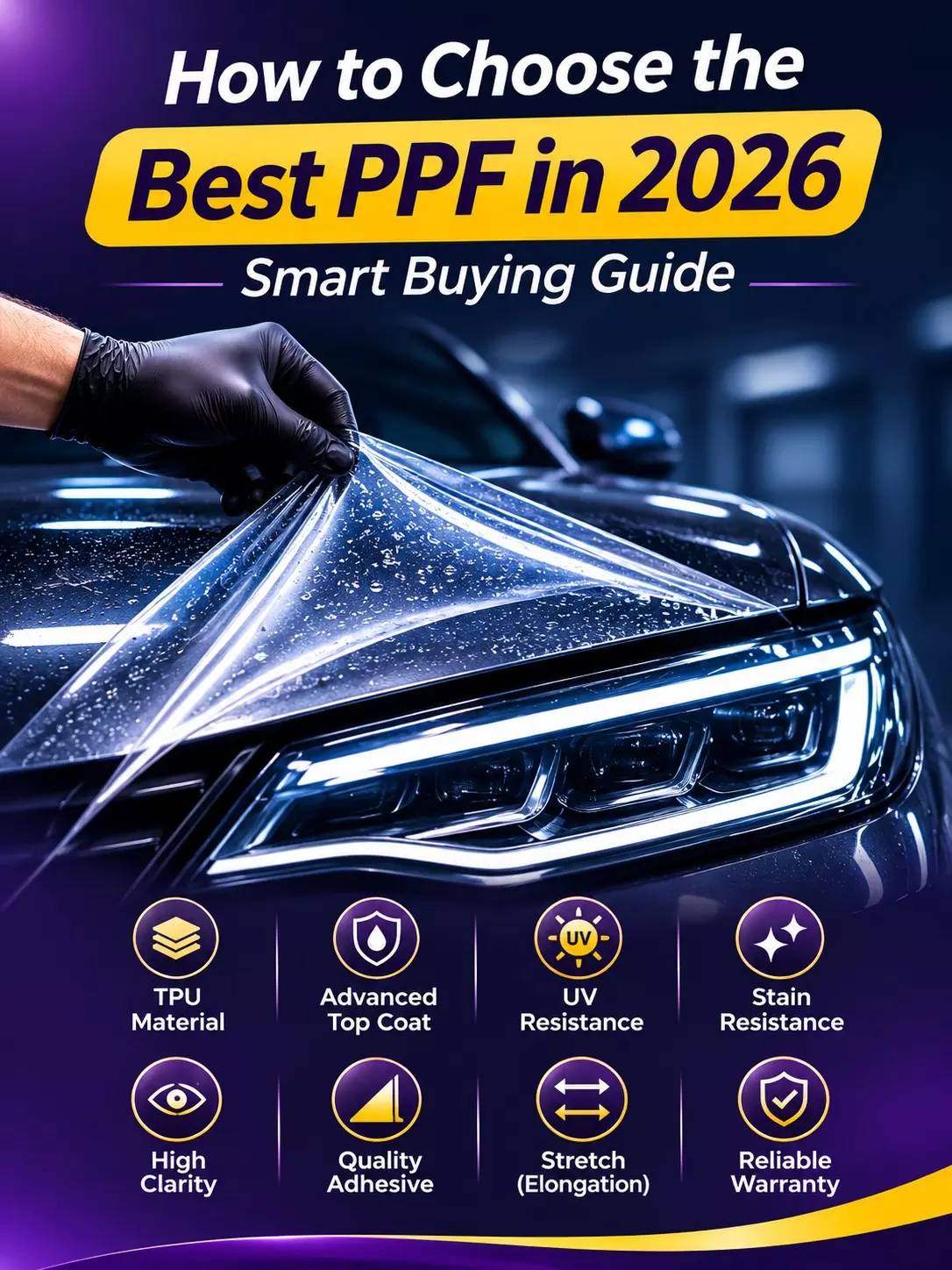
Choosing the Best PPF in 2026: What the Brochures Don't Tell You
Buying the best PPF in 2026 is harder than most people expect. Brands keep talking about thickness, self-healing and warranty. Those three are just a small part of what makes a film good.
You can end up with two films that share the same numbers but look very different three years later. This PPF buying guide 2026 explains what really counts, without the heavy terms.
What Makes the Best PPF in 2026?
The best PPF in 2026 is made with good TPU and has a tough top coat. It fights UV and stains, looks crystal clear, and uses an adhesive you can trust. It also needs a skilled installer. Thickness is helpful, but it is only part of the answer.
Keep an eye on these:
- Base material
- Top coat
- UV and stain resistance
- Clarity and finish
- Adhesive
- Stretch (elongation)
Looking for the best car PPF in 2026? Discover our premium car PPF installation service, designed to keep your vehicle's original paint safe from scratches, UV damage and everyday road contaminants.
Which Is the Best Paint Protection Film for Cars: TPU or TPH?
- Material Quality: For long-term protection, TPU (Thermoplastic Polyurethane) is normally the better choice compared to TPH and PVC.
- Flexibility: TPU is highly flexible, so it can stretch around complicated curves without cracking.
- Durability: TPU copes better with daily wear, road debris and small scratches.
- Self-Healing: High-end TPU films can heal minor scratches when heat is applied.
- Yellowing Resistance: Good-quality TPU is generally more resistant to yellowing under UV.
- Optical Clarity: TPU keeps the gloss and appearance of your original paint with very little distortion.
- Chemical Resistance: Quality TPU defends against bird droppings, tree sap and road chemicals.
- Long-Term Performance: TPU tends to stay flexible and protective longer than lower-grade TPH or PVC.
- Cost Consideration: TPH and PVC are usually cheaper, so they make sense for tighter budgets or shorter-term protection.
- Manufacturer Specifications: Make sure you read the manufacturer's datasheet. Look at the material, UV resistance, tensile strength, elongation, adhesive quality and warranty before you choose.
Which PPF Technical Specifications Matter Most?
Picking the best PPF in 2026 means looking past thickness to three PPF technical specifications: top coat, adhesive and elongation. They decide how the film looks, bonds and stretches on your car. Most brochures don't cover them, so ask for the numbers.
- Top coat: the thin surface layer that repels water and dirt and makes self-healing work
- Adhesive: should hold well and still peel off later without leaving residue
- Elongation: higher stretch makes bumpers and mirrors simpler to wrap
How Do PPF UV Resistance and Stain Resistance Work?
UV resistance saves the film from yellowing under strong sun. Stain resistance keeps bird droppings, tree sap and road tar from leaving spots. Both depend on the film's chemistry and top coat. If either is poor, the film looks aged long before it is actually worn out.
Pune's heat, dust and monsoon rain test both of these features daily.
How Should You Do a PPF Film Comparison?
Go by facts, not claims. Compare base material, top coat, clarity and warranty side by side, and match them to your budget. Here is a five-step way to do it:
- Get the datasheet for every film
- Compare the base material and top coat
- Look at what the warranty covers, not just the number of years
- Ask who honours the claim: the brand or the installer
- See a finished car or sample where possible
A long warranty with vague terms means very little.
Which Advanced PPF Features Are Worth Paying For?
- Hydrophobic Top Coat: Repels water and stops dirt from sticking, so your car is simpler to clean.
- Real Self-Healing Technology: Fixes small surface scratches when heat or sunlight touches the film.
- High Optical Clarity: Preserves your paint's colour, gloss and look without any haze.
- UV and Stain Resistance: Protects against yellowing and keeps stains from bird droppings, tree sap and road contaminants away.
- Finish and Adhesive Quality: Choose gloss, satin or matte to match your style. Quality adhesive bonds properly and removes cleanly.
Conclusion
The best PPF in 2026 isn't about a single number. Consider TPU quality, top coat, UV and stain resistance, adhesive and the installer. Use this PPF buying guide 2026 as your checklist, and you'll dodge costly mistakes.