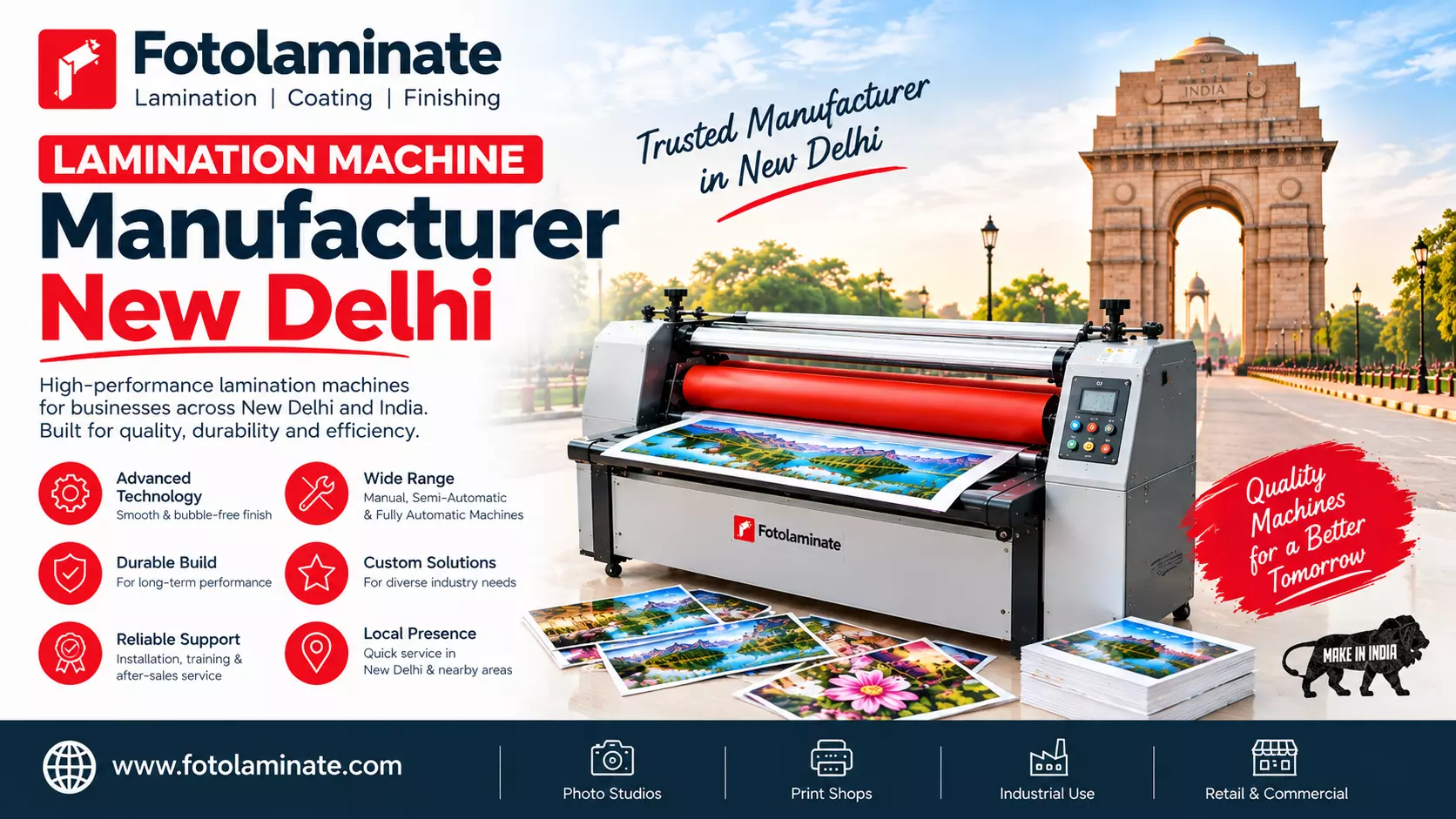
Choosing a Photo Lamination Machine in India: Understanding the Different Types
Lamination has become a useful finishing process for photo studios, digital printing businesses, photo labs, advertising companies, and commercial printers.
A suitable laminating film can add another layer over a printed surface, helping it handle everyday use while also giving the finished print a more polished appearance.
For businesses planning to invest in equipment, finding a suitable photo lamination machine manufacturer India is only one part of the process.
It is equally important to understand the types of lamination machines available and what each one is designed to do.
The right choice depends on the materials being processed, print size, film, production volume, and available workspace.
What Does a Photo Lamination Machine Do?
A photo laminator applies a film over a compatible photograph or printed material. The film can help protect the surface from everyday handling, dust, moisture, and minor scratches.
Photo studios and printing businesses may use laminators for:
- Portrait photographs
- Wedding and event prints
- Digital photo prints
- Promotional images
- Posters
- Display graphics
- Advertising materials
The appearance of the final print can also change depending on the type of film and surface finish selected.
Understanding the Types of Lamination Machines
There are several types of laminating machines available, and they aren't all designed for the same type of work.
The most common categories include cold laminators, hot laminators, roll laminators, and large-format machines.
Cold Lamination Machines
Cold laminators use pressure-sensitive adhesive film. Instead of heat activating the adhesive, rollers apply controlled pressure to bond the film to the printed surface.
They can be considered for applications involving:
- Photographs
- Digital prints
- Vinyl graphics
- Posters
- Promotional graphics
- Suitable signage materials
Cold lamination can be useful where a pressure-based application is preferred, but the film and substrate should always be checked for compatibility.
Hot Lamination Machines
Hot laminators use heat to activate the adhesive on a compatible laminating film. The film and material are then bonded under controlled pressure.
This type of equipment is used for various printing and finishing applications. However, the machine should only be used with materials and films recommended for that particular process.
Roll Laminators
Roll laminators use rolls of film and are commonly used for continuous or larger printed materials.
Depending on the machine's working width, they can be used for:
- Photographs
- Digital prints
- Posters
- Graphics
- Promotional materials
- Display prints
Their size and configuration can vary significantly, so the machine should be selected according to the work being handled.
Large-Format Laminators
Large-format machines are designed for wider printed materials. They are commonly considered by signage companies, advertising businesses, digital printers, and commercial graphics providers.
They may be suitable for applications involving:
- Large photographs
- Wide-format posters
- Advertising graphics
- Vinyl graphics
- Display materials
- Signage
A business that rarely handles large prints may not need this type of equipment.
Read: Fargo Printers in Pakistan – The Smart Choice for
How Do You Choose Between Them?
Understanding the different types of lamination machines makes the selection process easier, but the decision should still begin with your actual workload.
Ask yourself:
- What material do I laminate most often?
- What is the largest print size?
- How many items are processed each day?
- Which films are available for my application?
- Do I need cold or hot lamination?
- How much workspace do I have?
These questions can quickly eliminate machines that don't fit your requirements.
Choosing a Photo Lamination Machine Manufacturer in India
When searching for a photo lamination machine manufacturer India, don't look only at the number of models available.
A manufacturer should be able to provide clear technical information and explain how each machine is intended to be used.
Important things to compare include:
- Machine working width
- Film compatibility
- Material compatibility
- Roller configuration
- Pressure control
- Production requirements
- Machine dimensions
- Maintenance
- Technical support
This becomes especially important when the equipment will be used for regular commercial production.
Why Working Width Matters
Working width determines the approximate maximum material size the machine can accommodate.
A small photography studio may mainly handle standard-size photographs. A commercial photo lab or digital printer may need a much wider machine.
Before purchasing, make a list of the sizes you regularly process.
It can include:
- Standard photographs
- Large photo prints
- Posters
- Promotional graphics
- Wide-format prints
Choosing the width around your normal work can prevent unnecessary limitations later.
Consider Your Production Volume
Production volume is another factor that is easy to overlook.
A machine used for a few prints every week doesn't necessarily need the same specifications as equipment operating throughout a busy commercial day.
Higher-volume businesses should pay closer attention to:
- Operating convenience
- Material handling
- Machine construction
- Production capacity
- Maintenance
- Technical support
The goal is to select equipment that can comfortably fit into the normal workflow.
Don't Forget the Laminating Film
The machine is only one part of the process. The film also affects the final result.
Before purchasing, check:
- Film thickness
- Adhesive type
- Surface finish
- Material compatibility
- Recommended application
- Storage requirements
A suitable combination of machine, film, and substrate is important for achieving consistent results.
Questions to Ask a Manufacturer
If you're comparing a photo lamination machine manufacturer India, prepare a few practical questions before contacting the supplier.
For example:
- Which films are compatible with the machine?
- What materials can be processed?
- What is the maximum working width?
- Is the machine suitable for regular commercial use?
- What maintenance is required?
- Are spare parts available?
- Is technical support provided?
- Can the machine be demonstrated?
These questions can reveal more about the equipment than a basic product description.
A Simple Example
Consider two businesses.
A small photo studio mainly produces portraits and standard-size event photographs. It may need a relatively compact laminator with straightforward operation.
A digital printing company, on the other hand, may produce photographs, posters, advertising graphics, and signage. It could benefit from wider equipment and greater production capacity.
Both businesses need lamination equipment, but their requirements are clearly different.
That is why there isn't one machine that can be called the right choice for every business.
Final Thoughts
Understanding the types of lamination machines is a good starting point for any business planning to invest in print-finishing equipment. Cold, hot, roll, and large-format laminators can serve different applications and production environments.
If you're looking for a photo lamination machine manufacturer India, compare equipment based on working width, film compatibility, materials, production volume, maintenance, and technical support.
Instead of starting with a machine name or price, start with the work you need the equipment to perform. Once those requirements are clear, finding suitable laminating equipment becomes much easier.