How to Choose the Right HVAC System for Your Buisness
Choosing an HVAC system for a business requires careful consideration of the building, the number of people using the space, and its daily operating requirements.
Unlike residential properties, commercial buildings often have larger areas, multiple rooms, and different heating and cooling demands throughout the day.
The right HVAC system helps maintain comfortable working conditions while supporting energy efficiency and consistent indoor temperatures. Poor equipment selection, however, can lead to uneven cooling, higher utility bills, and frequent service interruptions.
Whether you operate an office, retail store, restaurant, or warehouse, understanding your building's requirements can help you select an HVAC system that supports daily business operations.
Assess Your Building's Size and Requirements
The first step in selecting commercial HVAC equipment is understanding the size and layout of your building. A small office has different heating and cooling requirements than a large retail store or industrial facility.
Factors such as ceiling height, floor space, occupancy levels, insulation, and the number of windows all influence the system's required capacity.
Businesses with several departments or separate work areas may also need different temperature settings across the building.
A professional HVAC assessment can help determine the appropriate equipment size and identify areas that require separate temperature control.
Compare Different Commercial HVAC Systems
Commercial buildings can use several types of HVAC systems depending on their layout and operational needs.
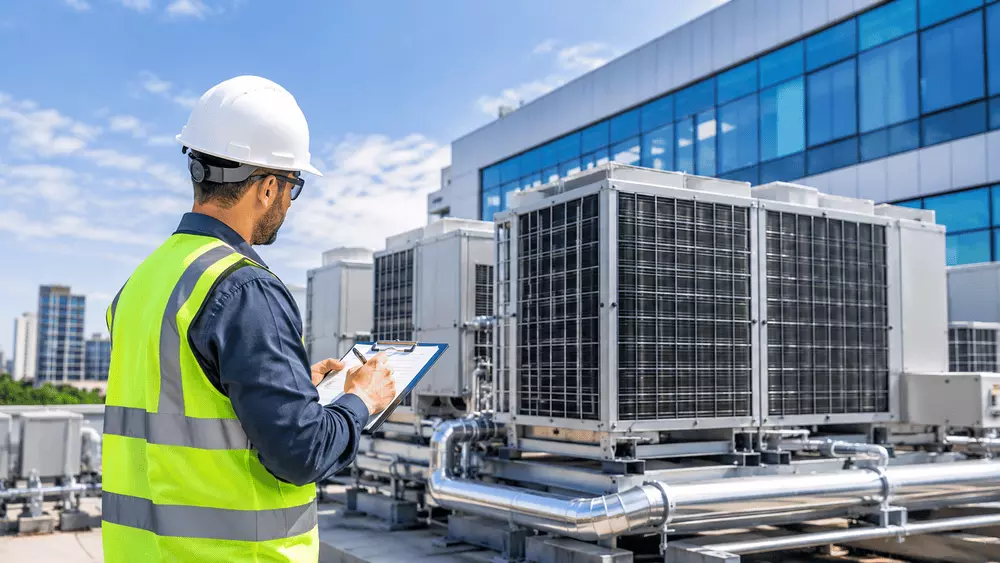
Rooftop units are commonly installed on commercial buildings because they combine heating and cooling equipment in one package without taking up valuable indoor space. Split systems are another option, with separate indoor and outdoor components serving designated areas.
Variable refrigerant flow (VRF) systems allow different zones within a building to maintain individual temperature settings. Chillers are often used in larger commercial facilities where centralized cooling is required across multiple floors or extensive indoor spaces.
Comparing these options with your building's requirements can help narrow down the most suitable system.
Consider Energy Consumption and Operating Costs
Commercial HVAC systems can account for a substantial share of a building's energy expenses, particularly in properties that require heating or cooling throughout business hours.
When comparing equipment, review efficiency ratings such as IEER for commercial cooling equipment and COP for heating and cooling performance. ENERGY STAR-certified equipment can also help businesses identify models that meet established efficiency standards.
Programmable thermostats, occupancy sensors, and zoning controls can further reduce unnecessary energy use by adjusting temperatures according to building activity.
Looking beyond the initial purchase price and considering long-term operating expenses can help businesses make a more practical investment.
Choose Equipment That Matches Your Industry
Different businesses have different indoor temperature requirements. An office needs comfortable working conditions for employees, while a restaurant may require additional ventilation and temperature control because of cooking equipment and kitchen activity.
Retail stores need consistent cooling to maintain a comfortable shopping environment, especially during busy hours. Warehouses and industrial facilities may have large open areas, high ceilings, and specific ventilation requirements.
Understanding how your business uses its space helps determine the heating, cooling, and ventilation features your HVAC system should support.
Pay Attention to Indoor Air Quality and Ventilation
Indoor air quality is an important consideration in commercial buildings where employees, customers, and visitors spend several hours each day.
A suitable ventilation system helps bring fresh outdoor air into the building while removing stale indoor air. Air filters can capture dust and other airborne particles, while additional filtration equipment may be useful in buildings with specific air quality requirements.
Restaurants, healthcare facilities, and manufacturing environments may have additional ventilation needs depending on their activities. Businesses should consider applicable building codes and industry requirements when selecting ventilation equipment.
Consider Maintenance and Service Requirements
Commercial HVAC equipment operates under different demands depending on building occupancy and operating hours. Without regular maintenance, clogged filters, dirty coils, worn components, and airflow problems can affect system performance.
Before choosing a system, consider how easily technicians can access its components and whether replacement parts and professional servicing are readily available. It is also worth reviewing warranty conditions and the manufacturer's recommended maintenance schedule.
Planning routine inspections and addressing minor problems early can help reduce unexpected breakdowns and interruptions to business activities.
Conclusion
Selecting a commercial HVAC system involves more than finding equipment with sufficient heating and cooling capacity. Building size, industry requirements, energy consumption, ventilation, and maintenance needs all influence the final decision.
By assessing these factors and consulting experienced commercial HVAC contractors, businesses can choose equipment that suits their premises and daily operations.
Proper installation and regular servicing can help maintain comfortable working conditions while keeping operating expenses under control.