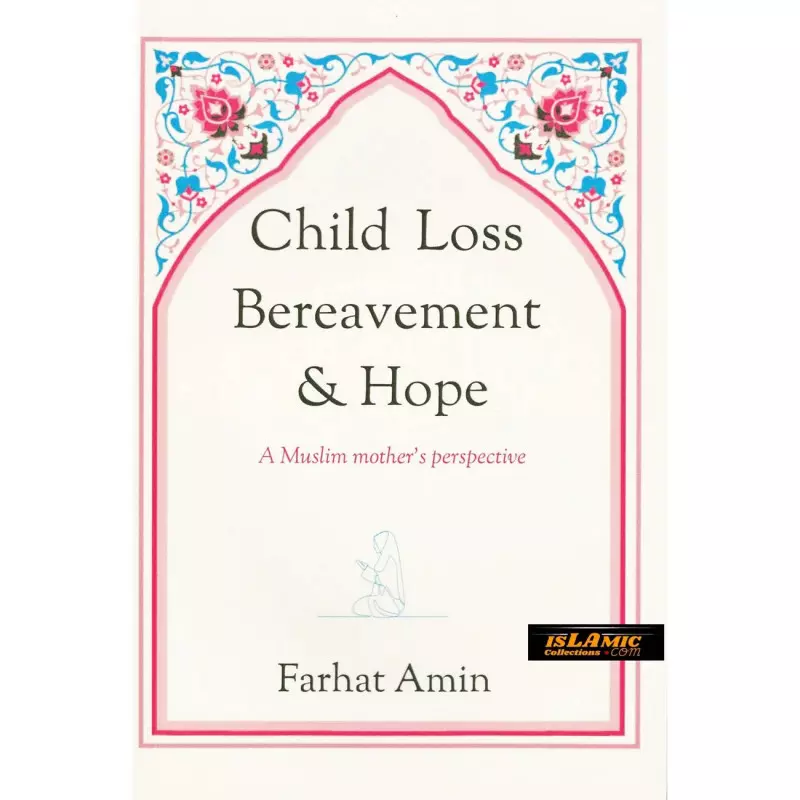
Child Loss Bereavement & Hope Farhat Amin
Child Loss: Bereavement & Hope by Farhat Amin is a very poignant, faith-based guide for Muslim mothers and fathers trying to make sense of the most devastating experience of their lives losing a child.
Based on Islamic principles and penned with compassion, this book presents not just a place for sorrow, but also a way towards healing, acceptance, and restored trust in Allah’s qadr (divine will). It does not mince words and sugarcoat the suffering, nor does it provide vacuous platitudes. Rather, it speaks softly, but firmly, in truth and mercy.
For most bereaved parents, the loss of a child is a solitary experience. Friends are not always sure what to say. The community sometimes goes quiet after the funeral. But Farhat Amin knows this silence and shatters it with wisdom, memory, and a sisterly voice that says: You are not alone. Your child is not forgotten. And there is still hope after heartbreak.
Talking to a Wound Many Fear to Name
Death of a child is one of life’s toughest tests. It can break patterns, challenge faith, and anesthetize feelings. For Muslim parents, it also brings heavy questions: Why did Allah do this to me? How do I stay patient? How do I deal with the pain?
Farhat Amin doesn’t present dry theology. She starts with the acknowledgment of raw sorrow, confusion, guilt, and even anger that arise after the death of a child. She doesn’t judge the feelings she confirms them. But she also redirects the heart discreetly to sabr, du’a, and Allah’s company, without negating human experience of sorrow.
Based on Qur’an and Sunnah
What makes this book particularly significant is its basis in true Islamic teachings. Farhat reminds us of the Qur’anic accounts of loss like the account of Prophet Ya’qub (AS) losing Yusuf, and the Prophet Muhammad ﷺ burying his own children. These are not shown as far-off history, but as actual, lived sorrow sorrow greeted by patience, trust in Allah, and a timeless perspective of life and the Hereafter.
The writer correctly employs Hadith to console the grieving, such as the lovely account of when the Prophet ﷺ promises that a child who passes away will plead on behalf of their parents on the Day of Judgment. They are not presented as trite clichés instead, they are presented with sensitivity and seriousness, providing consolation without overly forcing an artificial sense of closure.
Balancing Emotion and Spiritual Healing
Farhat Amin is aware that healing is not instantaneous. That is why this book does not hurry the process. It recognizes that bereavement is a path, not a deadline. In the course of the chapters, she invites readers to shift from pain to peace not by concealing feelings, but by opening the heart to reconnect with Allah and the eternal vision of the akhirah (Hereafter).
She writes about realistic ways of coping with grief as a Muslim praying for the child, seeking solace in Qur’an, counseling, and open discussion of the bereavement with family. She has a section on marriage, describing how one can assist the other through the test without caving in due to untold bereavement.
A Voice That Understands
What distinguishes Child Loss: Bereavement & Hope from other books on this topic is the voice of the author true, earthy, and empathetic. Farhat Amin writes like a person who truly knows the Muslim mother’s heart. She is not lecturing. She is sitting alongside the reader, softly grasping their hand throughout each page. Her words are gentle, but they are strong.
She reminds people that the Prophet ﷺ cried when he buried his son Ibrahim, and said, “The eyes shed tears, the heart grieves, but we do not say except what pleases our Lord.”
This equilibrium mourn but have faith in Allah is the spiritual and emotional heart of the book. It invites readers to permit themselves to weep, to request healing from Allah, and to be reassured that paradise is not too far away. Indeed, a child who has died before his or her parent is already there—at the gates of Paradise.
For Those Who’ve Lost, and Those Who Support Them
Though the book was originally written for grieving parents, it’s also a necessary read for family members, friends, and community leaders. It shows how to support grieving parents in respectful, Islamic, and emotionally intelligent ways. Farhat explains what not to say, how to listen, and why it still matters to show up months and even years after the loss.
The book shatters the toxic myths around bereavement, like “You should be over it by now” or “If you had more imaan, you won’t weep.” It makes a space where sorrow is a part of being human, where healing is possible with pain.
Helping the Heart Remember and Rebuild
Later in the book, Farhat moves from sorrow to optimism. She explains how loss can make someone closer to Allah than comfort ever would. The reminds us that paradise exists and people who die young are safe and innocent and that Allah’s mercy is greater than His wrath.
She exhorts parents to turn their love into action by constantly making du’a for their child, by doing sadaqah jariyah (ongoing charity) on their behalf, and by allowing the memory of the child to drive good in the world. These actions, she writes, don’t eliminate the sorrow but they convert it into legacy and reward.