Child Care Insurance: Coverage, Benefits, Costs & How to Choose the Right Policy
Running a child care business comes with significant responsibilities. Whether you operate a daycare center, preschool, nursery, or in-home child care service, protecting your business from unexpected risks is essential. Child Care Insurance provides financial protection against accidents, property damage, legal claims, and other unforeseen events that could impact your operations.
The right insurance policy not only helps safeguard your business but also gives parents confidence that their children are in a safe and professionally managed environment.
What Is Child Care Insurance?
Child Care Insurance is a type of business insurance designed specifically for child care providers. It combines multiple coverage options to protect daycare centers, preschools, after-school programs, and home-based child care businesses from common risks.
A policy can help cover legal expenses, medical costs, property damage, and employee-related incidents, depending on the selected coverage.
Why Is Child Care Insurance Important?
Working with children naturally involves certain risks. Even with strict safety procedures, accidents can happen.
Child Care Insurance helps protect your business by:
- Protecting against lawsuits
- Covering accidental injuries
- Safeguarding business property
- Reducing financial losses
- Helping maintain business continuity
- Providing peace of mind for owners and parents
What Does Child Care Insurance Cover?
Coverage varies depending on your policy, but common options include:
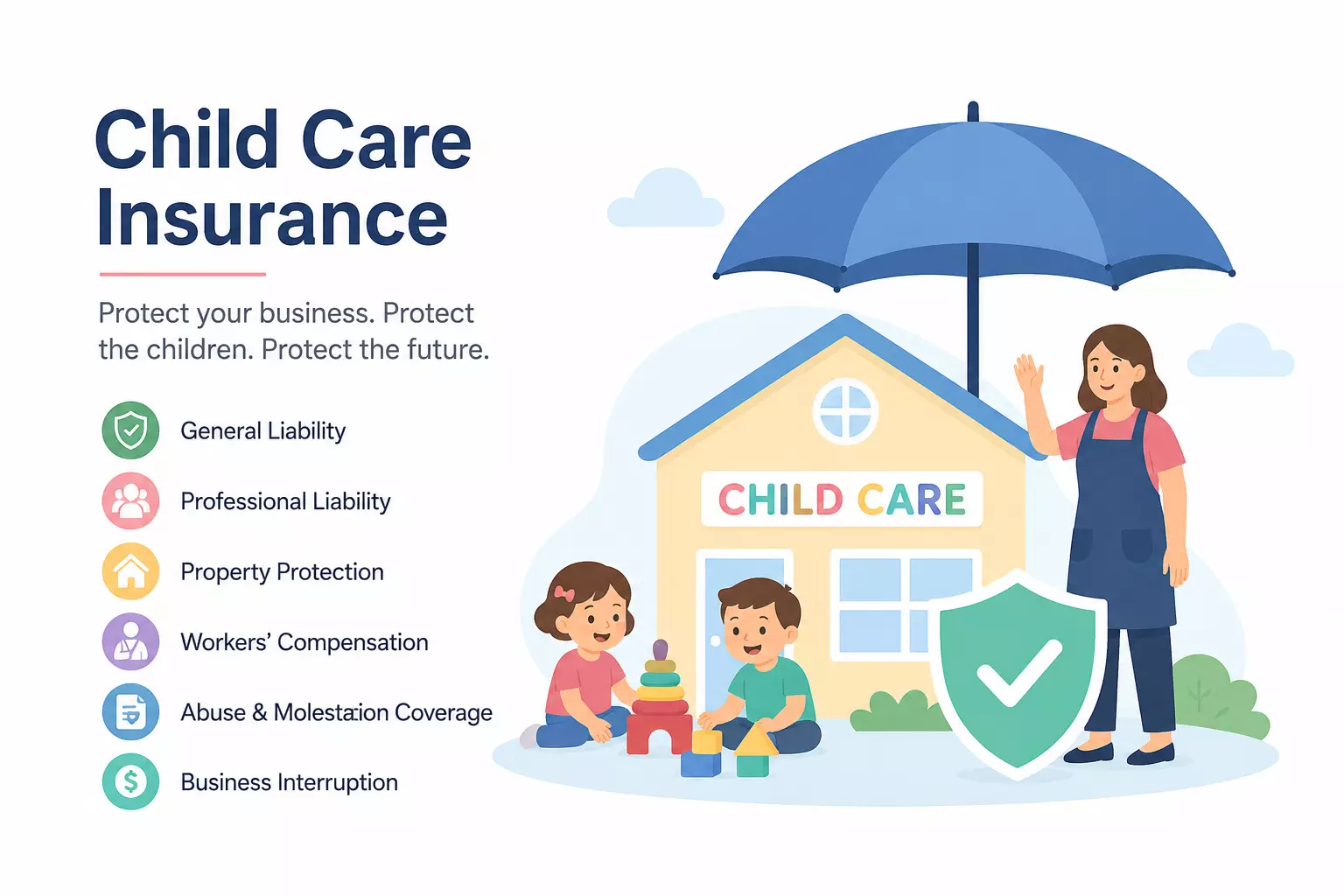
- General Liability Insurance: Protects your business if a child, parent, or visitor is injured on your premises or if your business causes property damage.
- Professional Liability Insurance: Provides protection if your business is accused of negligence, errors, or failure to provide proper care.
- Commercial Property Insurance: Covers your building, furniture, toys, educational materials, playground equipment, and other business property against covered events.
- Workers' Compensation Insurance: Helps cover medical expenses and lost wages if an employee is injured while working.
- Abuse and Molestation Coverage: Provides protection for legal defense and certain claims related to allegations of abuse, depending on the policy terms.
- Business Interruption Insurance: Helps replace lost income if your child care facility temporarily closes due to a covered event.
Who Needs Child Care Insurance?
Child Care Insurance is suitable for:
- Licensed daycare centers
- Home-based daycare providers
- Preschools
- Nursery schools
- Early learning centers
- After-school programs
- Child development centers
- Montessori schools
- Summer camps
- Child care franchises
Key Benefits of Child Care Insurance
- Financial protection against unexpected claims
- Helps cover legal defense costs
- Protects business property and equipment
- Supports employee protection
- Builds trust with parents
- Helps meet licensing or contractual requirements
- Provides long-term business stability
Read: Top 10 Best Corporate Healthcare Service Providers in India
Factors That Affect Child Care Insurance Costs
- Insurance premiums depend on several factors, including:
- Business location
- Number of children enrolled
- Number of employees
- Type of child care services
- Building size
- Safety measures
- Claims history
- Coverage limits
- Deductible amount
How to Choose the Right Child Care Insurance Policy
When comparing policies, consider:
The types of coverage included
- Coverage limits
- Policy exclusions
- Deductible amounts
- Experience with child care businesses
- Claims support and customer service
- Ability to customize coverage
Review your policy regularly to ensure it continues to meet your business needs as you grow.
Tips to Reduce Insurance Risks
Implementing strong safety practices may help reduce risks and improve your operations.
- Some best practices include:
- Conduct regular safety inspections
- Train staff on emergency procedures
- Perform employee background checks
- Maintain secure playground equipment
- Keep accurate incident records
- Follow local licensing regulations
- Update emergency contact information
Why Child Care Insurance Matters
Child care providers are responsible for the safety and well-being of children every day. Having comprehensive insurance allows your business to respond more effectively when unexpected situations arise, helping protect your finances, reputation, employees, and the families you serve.
Conclusion
Whether you operate a small home daycare or a large child care center, Child Care Insurance is an essential investment in your business.
It provides valuable protection against common risks while supporting the long-term success of your child care operation. Choosing the right coverage ensures you're prepared for the unexpected and can continue providing quality care with confidence.
FAQs
1. What is Child Care Insurance?
Child Care Insurance protects daycare businesses from liability claims, property damage, and other business risks.
2. Who needs Child Care Insurance?
Daycare centers, preschools, nurseries, and home-based child care providers should consider this coverage.
3. What does Child Care Insurance cover?
It may cover liability, property damage, employee injuries, and business interruptions, depending on the policy.
4. How much does Child Care Insurance cost?
Costs vary based on your location, business size, coverage limits, and claims history.
5. Why is Child Care Insurance important?
It helps protect your business financially while giving parents greater confidence in your services.