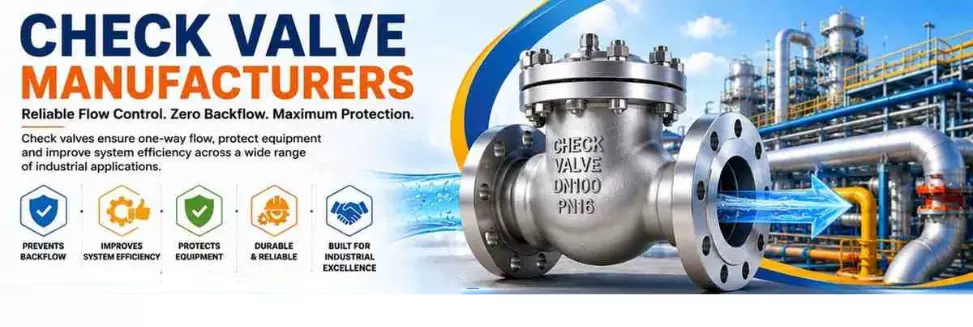
Check Valve Manufacturers: Delivering Reliable Flow Control Solutions for Industrial Applications
Check Valve Manufacturers
Check Valve Manufacturers play a vital role in producing valves that prevent backflow and protect piping systems, pumps, compressors, and other equipment from damage. These valves are widely used across industries such as oil and gas, water treatment, power generation, chemical processing, HVAC, marine, and manufacturing.
High-quality check valves ensure that fluids flow in one direction only, helping improve system efficiency, reduce maintenance costs, and enhance operational safety.
Quick Highlights
- Prevents backflow and protects equipment
- Improves system safety and efficiency
- Available in multiple designs and materials
- Suitable for various industrial applications
- Supports long-term operational reliability
- Manufactured according to global standards
- Low maintenance and durable performance
- Essential for modern piping systems
What Is a Check Valve?
A check valve, also known as a non-return valve (NRV), is an automatic valve that allows fluid to flow in one direction while preventing reverse flow.
Unlike manually operated valves, check valves function automatically based on fluid pressure and flow conditions.
Key Functions of Check Valves
- Prevent backflow in pipelines
- Protect pumps and compressors
- Maintain system efficiency
- Reduce equipment damage
- Improve operational safety
- Prevent contamination in fluid systems
These benefits make check valves essential components in many industrial processes.
Why Choose Reputable Check Valve Manufacturers?
Selecting experienced Check Valve Manufacturers ensures long-lasting performance, product reliability, and compliance with industry standards.
Benefits of Leading Manufacturers
- Precision engineering
- High-quality materials
- Strict quality control procedures
- Reliable performance under pressure
- Compliance with international standards
- Custom valve solutions
- Technical support and after-sales service
A trusted manufacturer helps ensure consistent performance and reduced downtime.
Common Types of Check Valves
Different industrial applications require different check valve designs.
Swing Check Valve
One of the most widely used check valve types.
Advantages:
- Simple design
- Low pressure drop
- Suitable for horizontal pipelines
Lift Check Valve
Uses a disc that lifts vertically when fluid flows.
Advantages:
- Excellent sealing performance
- Suitable for high-pressure applications
- Reliable operation
Dual Plate Check Valve
Features two spring-loaded plates.
Advantages:
- Compact design
- Lightweight construction
- Fast closing action
Ball Check Valve
Uses a ball to block reverse flow.
Advantages:
- Simple maintenance
- Durable construction
- Suitable for wastewater applications
Wafer Check Valve
Designed to fit between pipe flanges.
Advantages:
- Space-saving design
- Lightweight
- Easy installation
Materials Used by Check Valve Manufacturers
Material selection affects durability, pressure handling, and corrosion resistance.
Common Materials Include
- Carbon Steel
- Stainless Steel
- Cast Iron
- Ductile Iron
- Bronze
- Brass
- Duplex Stainless Steel
- Alloy Steel
The choice depends on operating conditions, fluid type, temperature, and pressure requirements.
Industries Served by Check Valve Manufacturers
Check valves are widely used across various industrial sectors.
Key Applications
- Oil & Gas
- Chemical Processing
- Petrochemical Plants
- Water Treatment Facilities
- Wastewater Management
- Power Generation
- Marine & Shipbuilding
- HVAC Systems
- Food & Beverage Industry
- Pharmaceutical Manufacturing
- Mining Operations
Their versatility makes them indispensable in modern industrial systems.
Features of High-Quality Check Valves
Reliable Check Valve Manufacturers focus on delivering products with advanced performance characteristics.
Key Features
- Backflow prevention
- Leak-tight sealing
- Corrosion resistance
- High-pressure capability
- Low maintenance requirements
- Long service life
- Fast response time
- Durable construction
These features help maintain smooth and efficient system operation.
Read: Understanding Different Types of Valves Used in Industries
Important Standards Followed by Check Valve Manufacturers
Top manufacturers adhere to globally recognized standards.
Common Standards
- ISO 9001
- API Standards
- ASME Standards
- ANSI Standards
- DIN Standards
- BS Standards
Compliance ensures product quality, safety, and international acceptance.
How to Choose the Right Check Valve Manufacturer
Selecting the right supplier is essential for long-term system reliability.
Consider These Factors
- Industry experience
- Product quality certifications
- Material options
- Manufacturing capabilities
- Testing and inspection processes
- Customization support
- Delivery performance
- Technical assistance
- After-sales support
A reputable manufacturer provides both quality products and expert guidance.
Future Trends in Check Valve Manufacturing
The valve industry continues to evolve with technological advancements.
Emerging Innovations
- Smart monitoring systems
- Automated valve solutions
- Advanced sealing technologies
- Corrosion-resistant materials
- Energy-efficient flow control systems
- Improved testing and quality assurance methods
These innovations help improve operational efficiency and equipment protection.
Conclusion
Check Valve Manufacturers are essential partners in delivering reliable flow control and backflow prevention solutions for industrial applications. From water treatment and power generation to chemical processing and oil and gas operations, high-quality check valves help protect equipment, improve efficiency, and enhance system safety.
By choosing a trusted manufacturer, businesses can ensure dependable performance, reduced maintenance costs, and long-term operational reliability.
FAQs
1. What is the main purpose of a check valve?
A check valve allows fluid to flow in one direction while preventing reverse flow that could damage equipment or disrupt operations.
2. Which industries commonly use check valves?
Check valves are widely used in oil and gas, water treatment, power generation, chemical processing, marine, HVAC, and manufacturing industries.
3. What materials are commonly used for check valves?
Common materials include stainless steel, carbon steel, cast iron, ductile iron, bronze, brass, and duplex stainless steel.
4. How do I choose the right check valve?
Consider factors such as pressure rating, temperature, fluid type, pipe size, installation requirements, and operating conditions.
5. Can check valves be customized?
Yes. Many Check Valve Manufacturers offer customized designs, materials, pressure ratings, and connection options to meet specific industrial requirements.