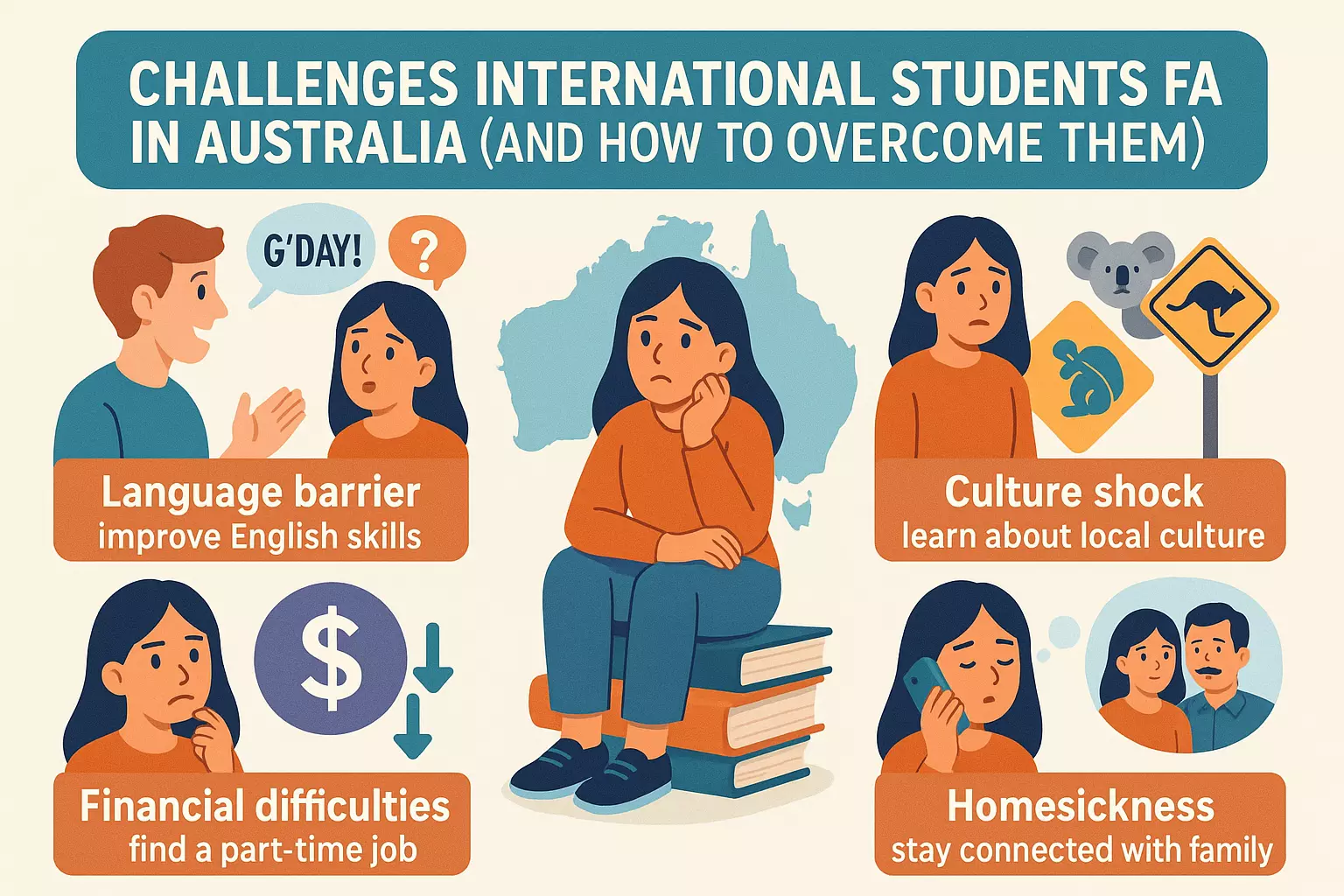
Challenges International Students Face in Australia (And How to Overcome Them)
Australia is a dream destination for students worldwide. The universities are respected, the culture is diverse, and the lifestyle is vibrant. But anyone who has moved abroad knows this truth—studying in another country is not just about books and lectures. It comes with struggles, small and big.
International students in Australia often find themselves excited one moment and overwhelmed the next. And that’s perfectly normal. Let’s go through some of the common challenges, and more importantly, how you can handle them without losing your peace of mind.
1. Language and Communication
Even if you’ve studied English for years, speaking it daily in an Australian environment can feel different. The local accent, slang, or even fast conversations might leave you thinking, “Wait, what did they just say?”
How you can manage it:
- Chat with classmates whenever you can, even if your grammar slips. Nobody cares about perfection.
- Universities usually offer English support classes—join them.
- Watching local shows or sports commentary helps you catch the tone.
- And seriously, don’t shy away from asking someone to repeat themselves. People are friendlier than you might expect.
2. Missing Home
Homesickness is not something you can ignore. Some nights you’ll miss your mom’s cooking, or maybe you’ll wish you were at your cousin’s wedding back home. The feeling can hit you out of nowhere.
What you can do:
- Call your family often, but don’t spend all day online. Balance it.
- Make your room feel a bit like home—stick photos on the wall or cook your favorite meal once a week.
- Find other international students. They know exactly how it feels.
- Try joining student clubs; the more you stay engaged, the less lonely you’ll feel.
Everyone goes through this phase, but over time, your new environment starts to feel more like home.
3. Academic Pressure
Let’s be honest—Australian universities can be tough. You’re expected to research, think critically, and reference everything properly. At first, even something simple like formatting an assignment in Harvard style might make you nervous.
How to deal with it:
- Don’t skip orientation week. They usually explain the academic system.
- Make appointments with tutors or lecturers if you’re stuck.
- Take advantage of the free workshops your university provides—study tips, essay writing, or citation rules.
- And if deadlines pile up, you can always look for professional guidance through services like getassignment.com.au
4. Money Matters
Sydney, Melbourne, Brisbane—beautiful cities, but not cheap at all. Rent, groceries, transport, and tuition fees can feel like a never-ending cycle of expenses. Sometimes, students get so stressed about money that it affects their studies.
Tips to survive financially:
- Create a simple budget and actually stick to it.
- Take up part-time work (you’re allowed a certain number of hours).
- Use student cards for discounts. Trust me, they add up.
- Look for scholarships or bursaries, even the smaller ones—they help.
It’s all about being smart with money rather than just cutting down on everything you enjoy.
5. Cultural Differences
Australia is culturally rich, but adjusting to new customs can be awkward. Maybe you’re used to greeting elders differently, or perhaps group discussions in class feel strange.
Making it easier:
- Stay open-minded. Not everything has to match what you already know.
- Ask if you’re unsure about social etiquette—it’s better than overthinking.
- Take part in cultural events; you’ll learn and also get a chance to share your own traditions.
- Remember, being different is not a weakness. It’s actually what makes the whole experience interesting.
6. Health and Well-being
When you’re busy with studies and work, health often gets ignored. Some students eat instant noodles for weeks, others stay up late every night, and then stress builds up. Mental health issues like anxiety or depression also sneak in.
Practical steps:
- Cook proper meals when you can. Even a simple stir-fry is better than endless takeout.
- Take breaks. Go for a short walk instead of staring at your laptop for hours.
- Universities usually have free counselling—don’t feel awkward about using it.
- Sleep. Honestly, that one thing can change everything.
7. Balancing Job and Study
Many international students work part-time to support themselves. But when the job shifts clash with lectures, life feels like a juggling act.
How to manage it:
- Choose flexible jobs where you can swap shifts if needed.
- Never compromise on classes just to earn a bit more money.
- Keep weekends partly free for assignments.
- Learn to say no if extra work hours start affecting your studies.
You came here to study, so that should always remain priority number one.
8. Accommodation Struggles
Finding good housing can be stressful. Rents in big cities are high, and sometimes students end up living far from campus just to save money.
What to do:
- Search for housing before you arrive in Australia, if possible.
- Consider on-campus housing for safety and convenience.
- If sharing with others, meet them first to check if you’ll get along.
- Always read the rental agreement carefully before signing.
Having a comfortable and safe place to stay makes a huge difference in your study life.
Wrapping Up
Studying in Australia isn’t just about lectures and exams—it’s also about personal growth. You’ll face challenges, sure, but each one can teach you something. Whether it’s learning to manage money, handling stress, or adjusting to a new culture, you’ll come out stronger.