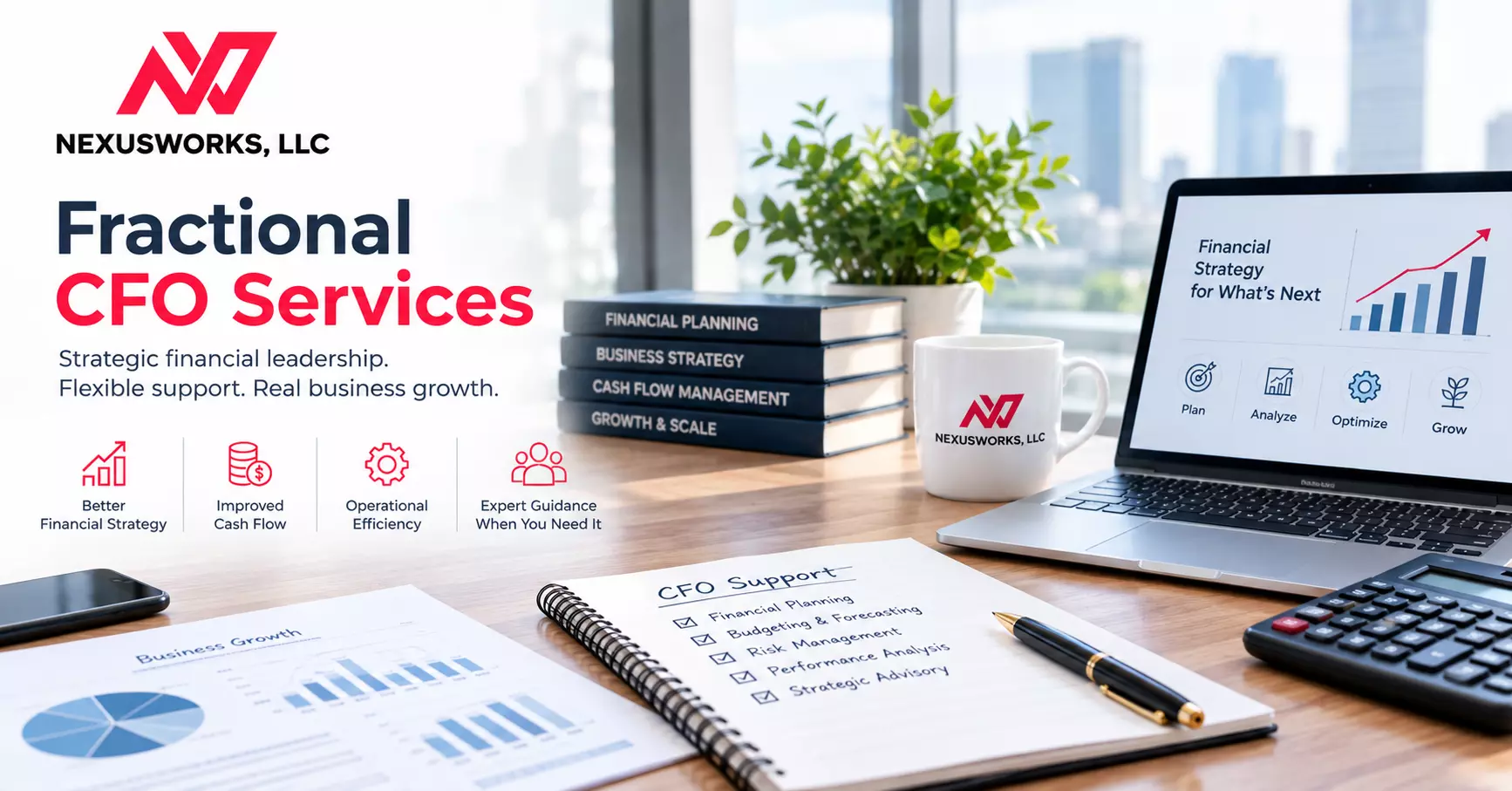
CFO Services in New York: What Growing Firms Should Know
Growing a business in New York brings exciting opportunities, but it also creates financial challenges.
As revenue increases, companies must manage cash flow, control operating costs, plan for taxes, and make informed decisions about hiring, investment, and expansion. Without a clear financial strategy, even a profitable business can struggle to maintain stability.
This is where CFO Services in New York can make a meaningful difference. Chief Financial Officer services help business owners understand their financial position, identify risks, and plan for sustainable growth.
Instead of relying only on historical reports, companies gain financial insights that support better decisions.
Hiring a full-time CFO is not always practical for a growing company. Outsourced and fractional CFO services offer access to experienced financial leadership without the cost of adding another full-time executive.
For businesses that need stronger financial planning and more reliable reporting, this approach can provide valuable support.
Understanding how CFO services work, when to consider them, and what to expect can help business owners choose the right financial strategy for their next stage of growth.
1. What Do CFO Services in New York Include?
CFO services go beyond bookkeeping and routine accounting. While bookkeeping records financial transactions and accounting helps businesses prepare accurate reports and meet tax obligations,
CFO services focus on interpreting financial information and using it to guide business decisions.
A CFO helps business owners understand what their numbers mean, where their resources are going, and what steps can improve financial performance.
Common CFO services include:
- Financial planning and forecasting: Estimating future revenue, expenses, cash requirements, and potential financial outcomes.
- Cash flow management: Monitoring incoming and outgoing funds to help ensure the business can meet its obligations.
- Budget development: Creating practical budgets that align spending with business priorities.
- Profitability analysis: Identifying profitable services, products, clients, or business units.
- Financial reporting: Turning financial data into clear reports that support management decisions.
- Growth planning: Evaluating expansion opportunities, hiring plans, equipment purchases, and other major investments.
- Risk management: Identifying financial weaknesses and preparing for unexpected changes.
For example, a New York professional services firm may generate strong revenue but experience inconsistent cash flow because clients pay invoices late.
A CFO can examine payment patterns, operating expenses, and cash forecasts to help the business plan more effectively.
The goal is not simply to produce better reports. It is to help business owners use financial information to make confident, well-informed decisions.
2. Why Growing Firms Need Financial Leadership
Financial management becomes more complicated as a company grows. A business that once operated successfully with basic accounting may eventually need more detailed forecasting, stronger internal controls, and clearer performance measurements.
Several common challenges can indicate that a company needs additional financial leadership.
Unpredictable cash flow
Revenue growth does not always mean cash is available when needed. Payroll, rent, supplier payments, insurance, and taxes can create pressure when customer payments arrive late. Cash flow forecasting helps businesses anticipate shortfalls and plan ahead.
Rising operating costs
As companies hire employees, open new locations, or invest in technology, expenses can increase faster than revenue. Financial analysis helps owners identify unnecessary spending and understand whether additional costs are generating sufficient returns.
Unclear profitability
A business may have high sales but low margins. Without detailed reporting, it can be difficult to determine which products, services, or customers contribute the most to profit.
Expansion decisions
Opening another office, entering a new market, or increasing staffing requires more than optimism. Businesses need to understand the investment required, the expected return, and the financial risks involved.
Limited financial visibility
When reports arrive late or lack useful detail, owners may make decisions based on incomplete information. Regular financial reviews can help management identify problems earlier.
Professional CFO support addresses these challenges by connecting financial data with business strategy. Instead of reacting to problems after they occur, companies can prepare for different outcomes and make adjustments before financial pressure increases.
3. Fractional CFO Services vs. Hiring a Full-Time CFO
One of the most important decisions for a growing business is determining how much financial leadership it needs.
A full-time CFO may be appropriate for a larger organization with complex operations, substantial reporting requirements, multiple business units, or frequent financing decisions. However, smaller companies may not need an executive working on financial strategy every day.
Fractional CFO services provide an alternative. Businesses receive access to experienced financial guidance on a part-time, project-based, or ongoing advisory basis.
Here is how the options compare.
Full-time CFO
A full-time CFO is generally suited to businesses that require continuous executive-level financial oversight. This may include managing a large finance department, overseeing complex transactions, or supporting frequent investor and board reporting.
The main consideration is cost. Salary, benefits, recruitment, and other employment expenses can represent a significant commitment.
Fractional or outsourced CFO
A fractional CFO works with a company according to its needs. Support may include monthly financial reviews, budgeting, forecasting, cash flow planning, and strategic advice.
This arrangement can help growing firms access senior-level expertise without committing to a permanent executive position.
Traditional accounting services
An accountant or bookkeeper remains essential for accurate financial records, tax preparation, reconciliations, and compliance.
However, routine accounting services may not include the forward-looking analysis required for major business decisions.
For many growing companies, the strongest approach combines reliable bookkeeping and accounting with CFO-level financial planning.
The right choice depends on the company's size, complexity, budget, and goals. A fractional arrangement can be a practical starting point, with the option to expand financial leadership as the business develops.
4. How CFO Services New York Businesses Can Support Growth
New York businesses operate in a competitive environment where labor, occupancy, professional services, and other operating expenses can place pressure on margins. Financial decisions must account for both immediate costs and long-term objectives.
CFO services can help companies address these challenges through several practical strategies.
Build reliable cash flow forecasts
A cash flow forecast estimates when money will enter and leave the business. It can help owners anticipate periods of lower liquidity, prepare for major payments, and decide when additional funding may be necessary.
Forecasts should be updated regularly as sales, expenses, and customer payment patterns change.
Improve budgeting and cost control
A detailed budget provides a framework for managing spending. Comparing actual results against the budget helps management identify unexpected expenses and understand whether the business is meeting its financial targets.
A CFO can also evaluate whether cost reductions will improve profitability without damaging service quality or limiting future growth.
Measure the right financial indicators
Revenue alone does not tell the whole story. Businesses should also monitor gross profit margin, operating margin, accounts receivable, cash reserves, and other indicators relevant to their industry.
For example, a consulting firm may need to understand employee utilization and project profitability, while a product-based business may focus more heavily on inventory costs and gross margins.
Evaluate expansion opportunities
Before committing to a major investment, a CFO can model different scenarios and estimate the financial implications of each option. This may include opening a new location, hiring a sales team, purchasing equipment, or launching a new service.
Scenario planning helps owners understand the potential upside as well as the financial risks.
Prepare for lenders and investors
Businesses seeking financing often need organized financial statements, credible forecasts, and a clear explanation of how funds will be used. CFO support can help prepare these materials and strengthen financial planning.
Financing approval is never guaranteed, but clear reporting and realistic assumptions can help a business present its financial position more effectively.
Together, these activities help business owners move from reactive financial management toward a more structured approach to growth.
Read: CFO for Startup: Why Every Growing Business Needs One
5. How to Choose the Right CFO Services Provider
Choosing a CFO services provider requires more than comparing prices. The right partner should understand your business model, communicate clearly, and provide advice that supports your specific objectives.
Consider the following factors before making a decision.
Relevant industry experience
Look for a provider familiar with the financial challenges faced by businesses similar to yours. A professional services company, manufacturer, and e-commerce business may require different reporting methods and performance measures.
Clear service offerings
Ask whether the provider offers cash flow forecasting, budgeting, management reporting, profitability analysis, growth planning, and financing support. Confirm which services are included in the engagement.
A practical reporting process
Financial reports should be accurate, timely, and easy to understand. Ask how often you will receive reports, which performance indicators will be monitored, and how recommendations will be communicated.
Coordination with your accountant
CFO services work best when financial strategy is supported by accurate underlying records. Your provider should be able to coordinate with your bookkeeping team, tax accountant, and other relevant advisers.
Flexible engagement options
Determine whether the provider offers ongoing fractional support, project-based engagements, or a combination of both. The arrangement should reflect your current needs and allow room for change.
Transparent fees and expectations
Understand the pricing structure, expected meeting frequency, deliverables, and responsibilities of both parties. Ask how success will be measured and when you should expect to review progress.
For businesses seeking financial guidance, NexusWorks CPA offers services focused on financial management and advisory support. You can explore its offerings at NexusWorks CPA to determine whether its approach aligns with your company's needs.
Before signing an agreement, arrange an initial discussion to explain your financial challenges, business objectives, and expectations. A suitable provider should be able to explain how its services would address those priorities.
Conclusion
Growing a business requires more than increasing sales. Companies also need reliable financial information, effective cash flow management, realistic budgets, and a clear understanding of their profitability.
CFO Services in New York can help growing firms connect day-to-day financial management with long-term business goals.
From improving forecasts to evaluating expansion plans, professional financial leadership gives business owners a clearer picture of where their company stands and what it may need next.
For companies that are not ready to hire a full-time CFO, fractional services can offer a flexible way to access strategic expertise.
The key is choosing a provider that understands your business, communicates clearly, and delivers practical recommendations based on your financial data.
If your company is experiencing cash flow pressure, preparing for expansion, or struggling to turn financial reports into actionable decisions, now may be the right time to review your financial strategy.
Frequently Asked Questions
1. What are CFO services in New York?
CFO services provide strategic financial guidance to businesses. They commonly include budgeting, cash flow forecasting, financial reporting, profitability analysis, risk assessment, and growth planning. These services help business owners make informed decisions using reliable financial information.
2. How much do CFO services cost in New York?
The cost depends on the provider, business complexity, scope of work, and level of involvement required. Part-time or fractional arrangements may cost less than employing a full-time CFO. Businesses should request a proposal outlining the services, reporting schedule, and fees before committing.
3. When should a growing business hire a fractional CFO?
A business may benefit from fractional CFO support when cash flow becomes difficult to predict, profit margins are unclear, financial reporting is inadequate, or major growth decisions require detailed analysis. Companies preparing for financing or expansion may also benefit from this expertise.
4. What is the difference between a CFO and an accountant?
An accountant typically focuses on financial records, financial statements, tax preparation, and compliance. A CFO uses financial information to guide planning, forecasting, budgeting, and strategic decisions. The roles complement each other and often work best together.
5. Can CFO services help improve cash flow?
Yes. CFO services can help businesses forecast receipts and payments, review customer payment patterns, manage expenses, and plan for upcoming financial obligations. These measures can improve cash flow visibility and help owners respond earlier to potential shortfalls.
6. Are outsourced CFO services suitable for small businesses?
Yes. Outsourced CFO services can be suitable for small and midsize businesses that need strategic financial guidance but cannot justify a full-time executive. The scope of support can be adjusted to match the company's size, financial complexity, and budget.
7. Do CFO services include tax planning?
Some CFO service providers coordinate with tax professionals or offer tax planning as part of a broader advisory engagement. The exact scope varies by provider. Businesses should confirm whether tax planning, tax compliance, and tax return preparation are included or handled separately.
8. How do I choose the best CFO services provider in New York?
Evaluate the provider's industry experience, service offerings, reporting methods, communication process, pricing, and ability to work with your existing accounting team. Choose a provider that understands your goals and can explain how its recommendations will support measurable business improvements.