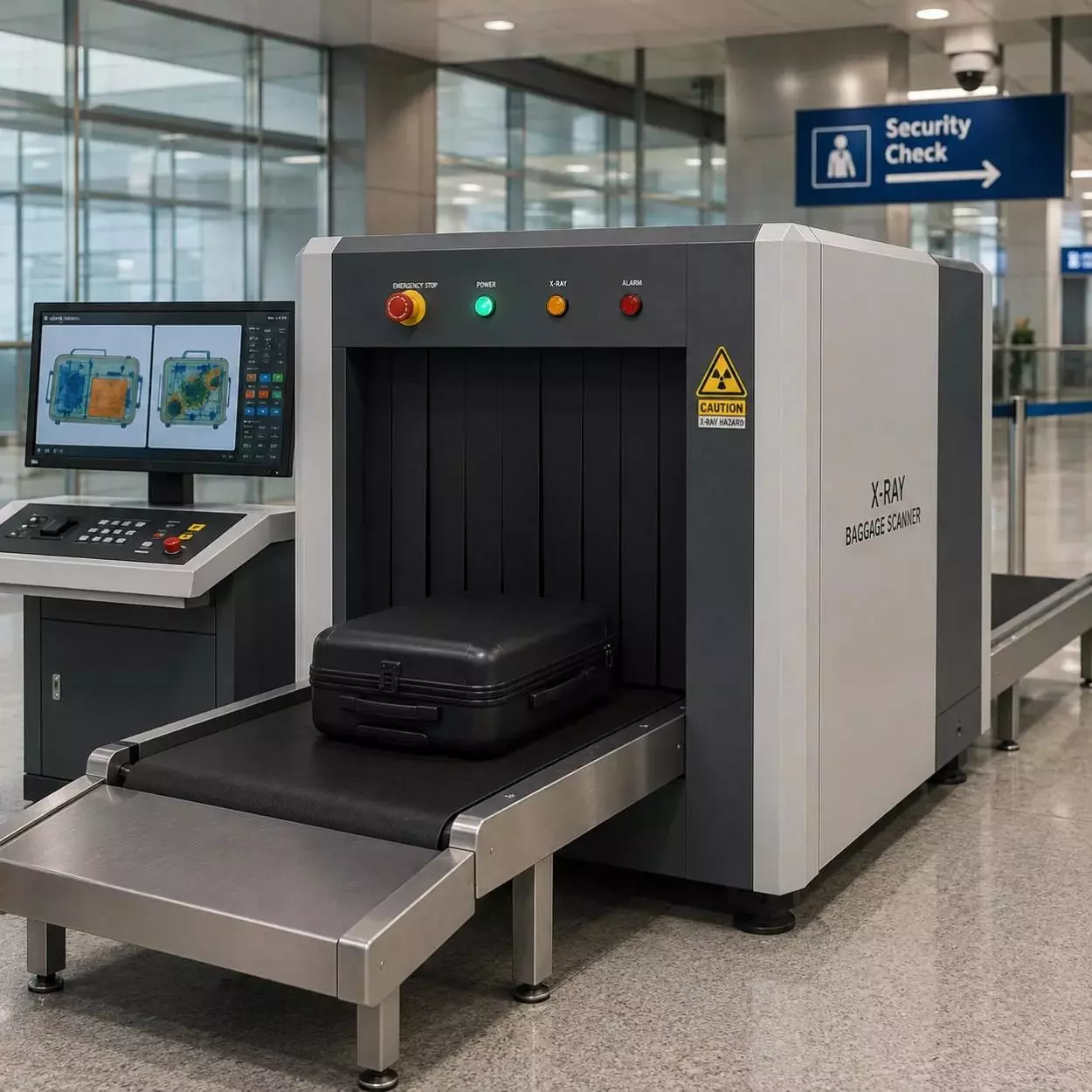
Cargo X-Ray Scanners: Improving Security in Modern Logistics and Baggage Inspection
The movement of goods across airports, warehouses, logistics centres, seaports, and industrial facilities has increased the need for effective security inspection.
Every day, businesses handle large quantities of parcels, pallets, luggage, and shipments that must be checked without unnecessarily disrupting transportation and supply-chain operations.
Traditional manual inspection can be time-consuming, particularly when packages contain multiple layers of products or tightly packed materials. This is where cargo x ray scanners play an important role.
Modern X-ray inspection equipment allows security personnel to examine the contents of shipments without routinely opening packages.
By producing detailed images of internal contents, these systems help operators identify suspicious objects and decide when additional inspection is necessary.
As security requirements evolve, organisations are also exploring advanced imaging technologies, including dual-view systems and intelligent image-analysis software, to improve their inspection capabilities.
What Are Cargo X-Ray Scanners?
Cargo X-ray scanners are non-intrusive inspection systems designed to examine the contents of packages, pallets, freight, and other shipments using X-ray technology.
Unlike manual inspection, which may require opening containers or packages, an X-ray scanner produces images that allow operators to examine internal contents while keeping the shipment intact.
A typical cargo inspection system includes several important components:
- X-ray generator: Produces the radiation required for imaging.
- Detector assembly: Captures X-rays passing through the inspected object.
- Conveyor system: Moves packages or pallets through the inspection tunnel.
- Image-processing software: Converts detector information into images for examination.
- Operator workstation: Allows trained personnel to review images and investigate suspicious areas.
Depending on the intended application, cargo inspection equipment may be designed for small packages, large parcels, palletized freight, or much larger cargo and vehicle inspection.
Selecting the right configuration is important because different cargo types require different tunnel dimensions, penetration capabilities, conveyor arrangements, and operating procedures.
Why Cargo X-Ray Scanners Are Important for Modern Logistics
Logistics operations depend on the movement of goods through multiple transportation and distribution points. Each stage can introduce security challenges, especially when shipments contain valuable products, restricted materials, or unfamiliar items.
Cargo inspection technology helps organisations establish a more structured screening process.
1. Non-Intrusive Cargo Inspection
- One of the main advantages of cargo X-ray scanners is their ability to examine internal contents without routinely opening packages.
- This can be particularly useful when inspecting sealed cartons, palletized shipments, and consolidated freight.
- Operators can examine the generated images and determine whether additional inspection is required.
2. Improved Inspection of Complex Shipments
- Cargo shipments frequently contain different products packed together. Objects may overlap, making it difficult to understand their arrangement through a single viewing perspective.
- Advanced imaging configurations can provide additional information about internal contents, helping operators assess complex shipments.
3. Support for Security Procedures
- Cargo X-ray screening can form part of a broader security programme involving access control, documentation checks, physical inspection, and other detection technologies.
The scanner does not replace these procedures. Instead, it provides additional information that supports security personnel in making inspection decisions.
4. Better Management of Inspection Workflows
- Appropriately selected equipment can help organisations establish more organised cargo-screening processes.
- Factors such as conveyor design, image quality, operator workstation arrangements, and maintenance support all contribute to effective day-to-day operation.
How Does a Cargo X-Ray Scanner Work?
The working principle of a cargo X-ray scanner is based on the different ways materials absorb X-ray radiation.
When a package passes through the inspection tunnel, the X-ray generator produces radiation that travels through the inspected object towards the detector assembly.
Different materials absorb different amounts of radiation depending on their composition, thickness, and density.
The detector captures the transmitted information, and specialised software processes it into an image displayed on the operator's monitor.
Security personnel examine the resulting image to understand the contents and identify areas requiring closer attention.
Some advanced systems also incorporate dual-energy imaging, which can provide material-discrimination information. The exact capabilities depend on the equipment and its configuration.
Different Types of Cargo X-Ray Scanners
Not every inspection environment requires the same type of equipment. The selection depends on shipment dimensions, weight, inspection volume, and the facility's security requirements.
Small and Medium Cargo Inspection Systems
- These systems are suitable for inspecting parcels, packages, cartons, and smaller freight items.
- They are commonly considered for logistics centres, courier facilities, warehouses, and selected commercial inspection points.
- Their compact design can be useful where available installation space is limited.
Large Cargo and Pallet Inspection Systems
- Large-format cargo scanners are designed to accommodate bigger packages and palletized shipments.
- They are particularly relevant in environments where multiple cartons are consolidated onto pallets before transportation.
- Important selection factors include tunnel dimensions, conveyor load capacity, image quality, and compatibility with the facility's material-handling arrangements.
- For organisations handling larger shipments, a dedicated cargo inspection system can be more appropriate than a standard baggage scanner.
Dual-View Cargo Inspection Systems
- Dual-view technology produces two X-ray images from different viewing directions.
- This additional information can help operators examine objects that overlap in one projection but may be more visible in another.
- Dual-view imaging is particularly relevant when inspecting densely packed shipments and complex baggage contents.
- However, buyers should distinguish between dual-view X-ray imaging and CT-based three-dimensional reconstruction. These are different technologies and offer different imaging capabilities.
The Role of X-Ray Baggage Scanners in Security Screening
Cargo inspection and baggage screening share a common technological foundation, but their applications and equipment requirements are not identical.
An x ray baggage scanner is generally used to examine bags, suitcases, parcels, and personal belongings at security checkpoints.
These systems are widely associated with airports, railway stations, metro facilities, government buildings, hotels, and commercial premises.
Their main purpose is to allow security personnel to inspect baggage contents without routinely opening every bag.
Common Applications of Baggage Screening
- Airport security: Passenger baggage is screened as part of established aviation-security procedures.
- Railway and metro stations: Baggage inspection can help support security arrangements at selected entry points.
- Government facilities: Offices, courts, and sensitive premises may use baggage scanners to inspect visitor belongings.
- Commercial buildings: Hotels, business centres, and other facilities may deploy X-ray equipment at controlled entrances.
Choosing the Right Baggage Scanner
When selecting baggage-screening equipment, organisations should consider tunnel dimensions, baggage size, expected throughput, imaging capabilities, operator requirements, and installation conditions.
For larger baggage or more complicated inspection requirements, additional imaging perspectives may be useful.
Krystalvision offers information about its X-ray baggage scanner solutions for organisations evaluating security-screening equipment.
How a Dual-View X-Ray Baggage Scanner Improves Image Interpretation
A conventional single-view scanner produces an X-ray image from one direction. Although this can be suitable for many applications, overlapping objects may sometimes make image interpretation challenging.
A dual view x ray baggage scanner produces two complementary images of the inspected item.
These images can help security operators examine the arrangement of objects from different perspectives.
Key Advantages of Dual-View Technology
- Additional viewing perspective: Two images can provide more information about the position and arrangement of objects inside baggage.
- Examination of overlapping contents: Objects hidden behind other items in one view may be easier to examine in the second.
- Support for operator assessment: Additional image information can help trained personnel investigate suspicious areas.
- Flexible screening applications: Depending on tunnel dimensions and system configuration, dual-view scanners can be suitable for different baggage-screening environments.
Dual-view technology does not automatically guarantee the identification of every prohibited object. Its effectiveness depends on equipment performance, image quality, operator training, and established screening procedures.
For organisations interested in this technology, Krystalvision provides details of its KV6550DV Dual View X-Ray Baggage Scanner.
Cargo Screening vs. Baggage Screening: Understanding the Difference
Although both applications use X-ray technology, cargo and baggage inspection systems are designed for different operating environments.
Comparison factor
Cargo X-ray scanners
Baggage X-ray scanners
Primary application
Freight, parcels, and palletized shipments
Suitcases, bags, and personal belongings
Typical users
Logistics operators, warehouses, cargo facilities
Airports and security checkpoints
Equipment requirements
Often larger tunnels and heavier-duty conveyors
Configurations suited to passenger baggage
Inspection priorities
Shipment contents, dimensions, and material characteristics
Baggage contents and potential prohibited items
Installation environment
Cargo terminals and logistics facilities
Passenger entrances and screening checkpoints
The appropriate system should always be selected according to the actual inspection task. A standard baggage scanner should not automatically be considered suitable for large cargo, and a cargo system may be unnecessarily large for a passenger checkpoint.
Important Factors to Consider Before Purchasing Cargo X-Ray Scanners
Investing in cargo inspection equipment requires careful evaluation. A scanner should meet present requirements while supporting reliable long-term operation.
1. Shipment Dimensions
Identify the maximum package or pallet dimensions expected during normal operations.
The scanner's tunnel opening must accommodate the intended shipments with suitable clearance.
2. Conveyor Load Capacity
Cargo and pallet inspection systems must be designed to handle the weight of the materials being transported.
Check the conveyor's rated load, loading arrangements, and compatibility with existing material-handling equipment.
3. Image Quality and Penetration
Image quality is essential for interpreting the contents of dense and complex shipments.
Ask suppliers for technical specifications and demonstrations using representative test objects.
4. Imaging Configuration
Evaluate whether single-view or dual-view imaging is more appropriate.
The decision should consider the type of cargo, expected overlap, inspection complexity, and available budget.
5. Inspection Throughput
Estimate the number of shipments that must be inspected during normal and peak operating periods.
Consider conveyor speed, loading and unloading time, image interpretation, staffing, and secondary inspection procedures.
6. Safety and Regulatory Compliance
Confirm the applicable radiation-safety requirements, installation conditions, equipment documentation, and local regulatory obligations.
Where a particular application requires regulatory approval or certification, verify that the proposed model has the relevant documentation.
7. Maintenance and Technical Support
Long-term equipment performance depends on proper maintenance and technical support.
Before purchasing, discuss warranty coverage, preventive maintenance, spare-parts availability, operator training, software support, and service response times.
Why Choose an Experienced Cargo Inspection Equipment Manufacturer?
Selecting the right supplier is as important as selecting the technology.
An experienced manufacturer can help organisations understand the differences between available inspection configurations and identify equipment suited to their operational environment.
Krystalvision Image Systems Pvt. Ltd. is an Indian manufacturer of X-ray inspection and security-screening equipment.
Its product portfolio includes cargo and pallet inspection systems, baggage scanners, and other security-screening solutions.
When evaluating a manufacturer, buyers should consider:
- Product suitability for the intended application
- Available tunnel dimensions and conveyor specifications
- Imaging capabilities and technical documentation
- Installation and commissioning support
- Operator training and maintenance arrangements
- Availability of spare parts and after-sales service
A suitable equipment solution should meet the organisation's inspection requirements without introducing unnecessary operational complexity.
The Future of Cargo Inspection Technology
Cargo-screening technology continues to develop through improvements in X-ray imaging, image-processing software, material discrimination, automation, and system integration.
These developments are helping organisations evaluate more advanced inspection arrangements for increasingly complex supply chains.
Dual-view imaging offers additional viewing perspectives, while other advanced technologies, such as computed tomography, can provide volumetric image information in suitable applications.
Artificial intelligence is another developing area, with the potential to support image analysis and help operators identify specified objects or patterns. Its capabilities and performance must be evaluated for the particular equipment and operating environment.
The future of cargo inspection will depend not on a single technology but on the effective combination of suitable hardware, validated software, trained personnel, and well-managed security procedures.
Conclusion
Cargo security is an important part of modern logistics and supply-chain management. As shipments become more varied and inspection requirements evolve, organisations need equipment that can accommodate their cargo dimensions, operating volumes, and security objectives.
Cargo X-ray scanners provide a non-intrusive way to examine shipment contents, while advanced imaging configurations such as dual-view technology can offer additional information for complex inspection tasks.
Baggage screening systems complement these solutions in airports and other security-sensitive environments, although the equipment must always be matched to its intended application.
For businesses planning to upgrade their inspection infrastructure, evaluating technical specifications, imaging capabilities, safety requirements, and after-sales support is essential.
Explore Krystalvision's cargo and pallet X-ray inspection systems, X-ray baggage scanner solutions, and dual-view baggage inspection technology to learn more about available security-screening equipment.