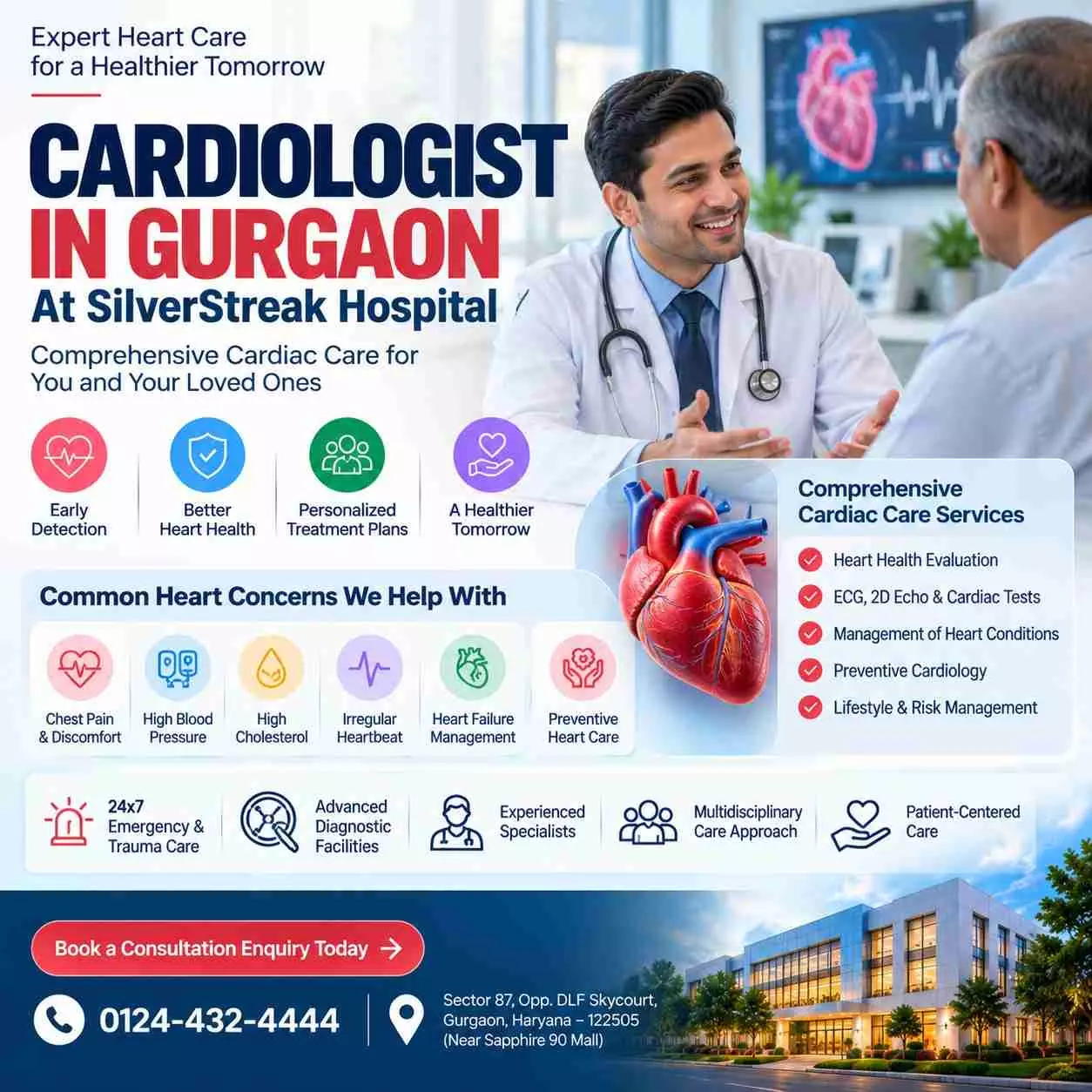
Cardiologist in Gurgaon: Heart Symptoms, Tests and When to Get Checked
You climb a flight of stairs and feel more breathless than you did last year. Maybe a faint heaviness crosses your chest and disappears before you can think about it.
Most people ignore this, but your body may be sending an early message. Knowing when to consult a cardiologist in Gurgaon can help you catch heart problems when they are easiest to manage.
Why Heart Problems Appear Earlier Now
Heart disease in young adults is no longer rare. Doctors now see cardiac problems in people in their 30s and 40s.
Common cardiac risk factors include long sitting hours, irregular sleep, high stress, fried and processed food, smoking, diabetes, high blood pressure, and a family history of early heart disease. One factor may not cause harm, but several together strain your arteries quietly over the years.
Early Heart Attack Symptoms to Know
Not every heart attack begins with sudden, crushing pain. Watch for pressure or heaviness in your chest, pain spreading to your arm, neck, or jaw, shortness of breath, cold sweats, unusual tiredness, dizziness, nausea, swollen ankles, or a racing heartbeat.
Women often notice subtler signs such as back pain and extreme fatigue. If chest pain is severe or comes with sweating, seek emergency care immediately.
Read: Meet the Best Cardiologist in Jaipur: Expert Care for Every
Heart Tests That Give You Clarity
Heart tests are quick, safe, and usually painless. A blood pressure check, cholesterol test, and ECG give your doctor a first look at your heart health.
A 2D echo test uses ultrasound to show how well your heart pumps and how its valves work. A treadmill stress test shows how your heart responds to effort. If you are over 30 and healthy, a screening every one to two years is a sensible habit.
When Medication Is Not Enough
Many heart conditions can be controlled with medicines and lifestyle changes, but some need procedures or surgery. In those cases, access to advanced cardiac treatment from a coordinated team means faster decisions and clearer communication.
Daily Habits That Protect Your Heart
Eat more vegetables, fruits, whole grains, and nuts. Walk briskly for 30 minutes on most days. Sleep seven to eight hours. Limit salt, fried snacks, and sugary drinks. Quit tobacco completely. Short breaks for deep breathing can also lower stress and blood pressure.
Take the Next Step
Your heart works nonstop, so it makes sense to check on it before it complains. If it has been a while, schedule a heart check-up in Gurgaon and get the answers you need. A little attention today can protect you for decades.