Car Air Purifier for Smoke, VOCs and Odors: 2026 Guide
Your car's cabin air filter was built to stop leaves and bugs. It was never built to stop wildfire smoke, cigarette odor, or the chemical smell leaking out of your dashboard on a hot day.
That gap is exactly why more drivers are searching for real car air purification in 2026 — something stronger than the factory filter tucked behind your glovebox.
This guide covers what actually works inside a moving vehicle, why trucks and commercial fleets are catching on faster than passenger cars, and what to check before you buy.
Dosing Context: Why Your Commute Matters More Than You Think
Air quality researchers use a concept called dosing context — how much of a pollutant you're exposed to, and for how long. A short walk past traffic exhaust is one thing.
Sitting inside a sealed metal box, breathing recirculated cabin air for an hour-long commute every single day, is a completely different exposure pattern.
This is the blind spot most people miss. Your car's interior can actually trap pollutants at higher concentrations than the outside air, especially in stop-and-go traffic, because there's so little ventilation once the windows go up.
What's Really Floating Inside Your Cabin
New car interiors off-gas VOCs from plastic, adhesives, and fabric treatments — that classic "new car smell" is largely chemical odor.
Add daily exposure to road exhaust, diesel particulate matter from surrounding trucks, and wildfire smoke drifting in through the vents, and a standard factory filter is quickly overwhelmed.
Anyone searching for the best car air purifiers is usually trying to solve one of three problems: lingering smoke smell, chemical off-gassing, or fine particles from traffic pollution. A single stock filter rarely handles all three.
Car Smoke Purifier vs. Standard Cabin Filter
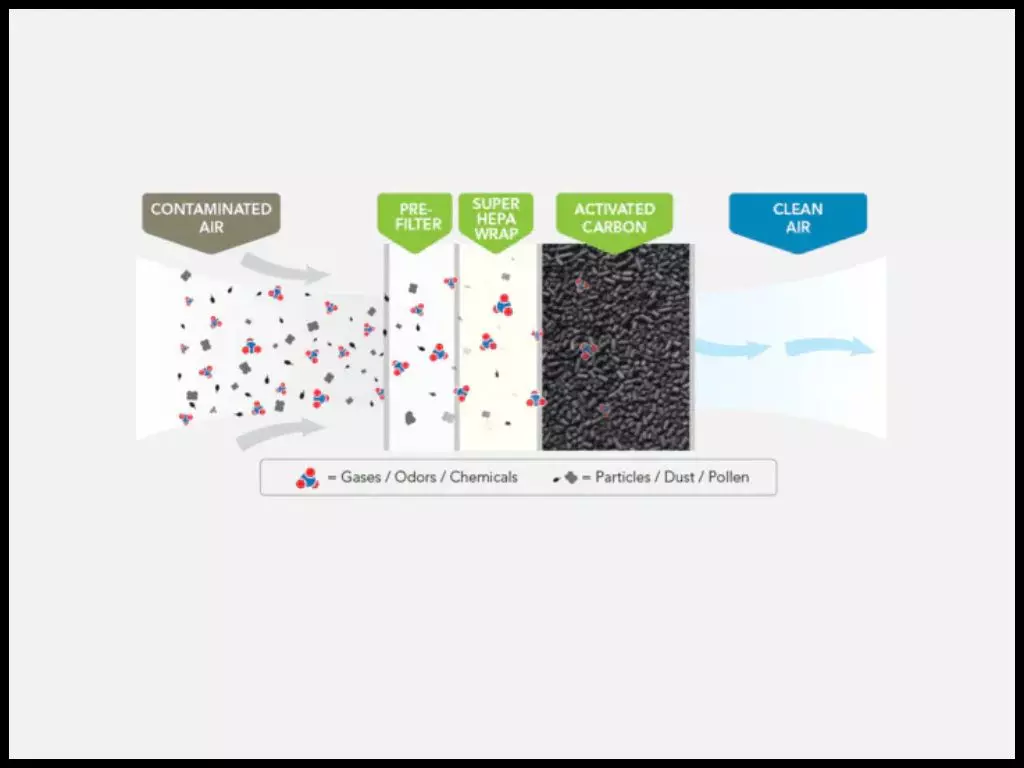
A car smoke purifier works differently from your factory-installed filter. Standard cabin filters catch larger debris — dust, pollen, some particulate — but they don't touch odor molecules or fine smoke particles. Removing smoke smell and VOCs requires two additional layers:
- Activated carbon, which adsorbs odor molecules and chemical gases the way a sponge soaks up liquid.
- Super HEPA filtration, which traps fine particulate down to a much smaller size than typical cabin filters manage.
Without both layers working together, a smoke smell can linger for weeks after a wildfire event or a single ride with a smoker.
Read: Save Fuel and Money with These Simple Car Service Tips
What to Look For in an Air Purifier Automobile Owners Can Actually Use
Not every air purifier automobile product is built for real-world driving conditions. Before buying, check for:
- 12V DC plug-in compatibility, so it runs directly off your vehicle's power without extra wiring.
- Compact, securable size that fits under a seat or in a trunk without blocking pedals or sightlines.
- True activated carbon, not a thin carbon-dusted screen that saturates within days.
- Super HEPA rated filtration, not a generic "HEPA-type" label with no micron rating listed.
- Durable, continuous-run construction, since a vehicle purifier often runs for hours at a stretch.
Why This Matters Even More for Trucks and Fleets
Search trends show a lot of drivers are specifically looking for an air purifier for semi truck cabins and even a fire truck air purifier system, and it's not hard to see why.
Commercial and emergency vehicle operators spend far more hours inside their cabin than the average commuter, often with engines idling nearby and diesel exhaust in close range.
Diesel particulate matter (DPM) is a known irritant, and short-term exposure can cause headaches, dizziness, and throat irritation. Long-term exposure raises the risk of respiratory and cardiovascular issues — a real concern for truck drivers and heavy equipment operators who log hours in a cabin daily.
Auto Air Purifier vs. Home Air Purifier: What's Different
An auto air purifier has to do the same core job as a home unit — trap particles, adsorb chemicals and odors — but in a much smaller footprint and with power drawn straight from the vehicle.
If you're comparing a car and home purifier setup, the filtration principle is identical: pre-filter, Super HEPA, then activated carbon. The difference is mainly size, power source, and mounting.
Conclusion
A clean cabin isn't just about comfort — it's about cutting down your daily dose of smoke, VOCs, and traffic pollution during hours you can't avoid spending in the car.
Look past basic cabin filters and prioritize a unit built with real activated carbon and Super HEPA filtration, matched to how many hours you actually spend behind the wheel.
Frequently Asked Questions
Can a car air purifier really remove smoke smell?
Yes, but only if it includes activated carbon. Carbon adsorbs odor molecules that standard cabin filters and basic ionizers can't capture.
Do I need a Super HEPA filter for my car, or is regular HEPA enough?
Super HEPA traps smaller particles than standard cabin filters, making it more effective against fine smoke and traffic particulate.
How is a vehicle air purifier different from my car's built-in cabin filter?
The factory cabin filter mainly blocks larger debris like dust and pollen. A dedicated purifier adds activated carbon and finer particle filtration for odors, VOCs, and smoke.
Are truck drivers more exposed to air pollution than regular commuters?
Often, yes. Truck drivers and heavy equipment operators spend extended hours in their cabin, frequently near diesel exhaust, increasing their daily exposure.
How long do car air purifier filters last?
This varies with pollution levels and driving conditions, but activated carbon filters in vehicle units are generally built for regular replacement as they reach saturation.