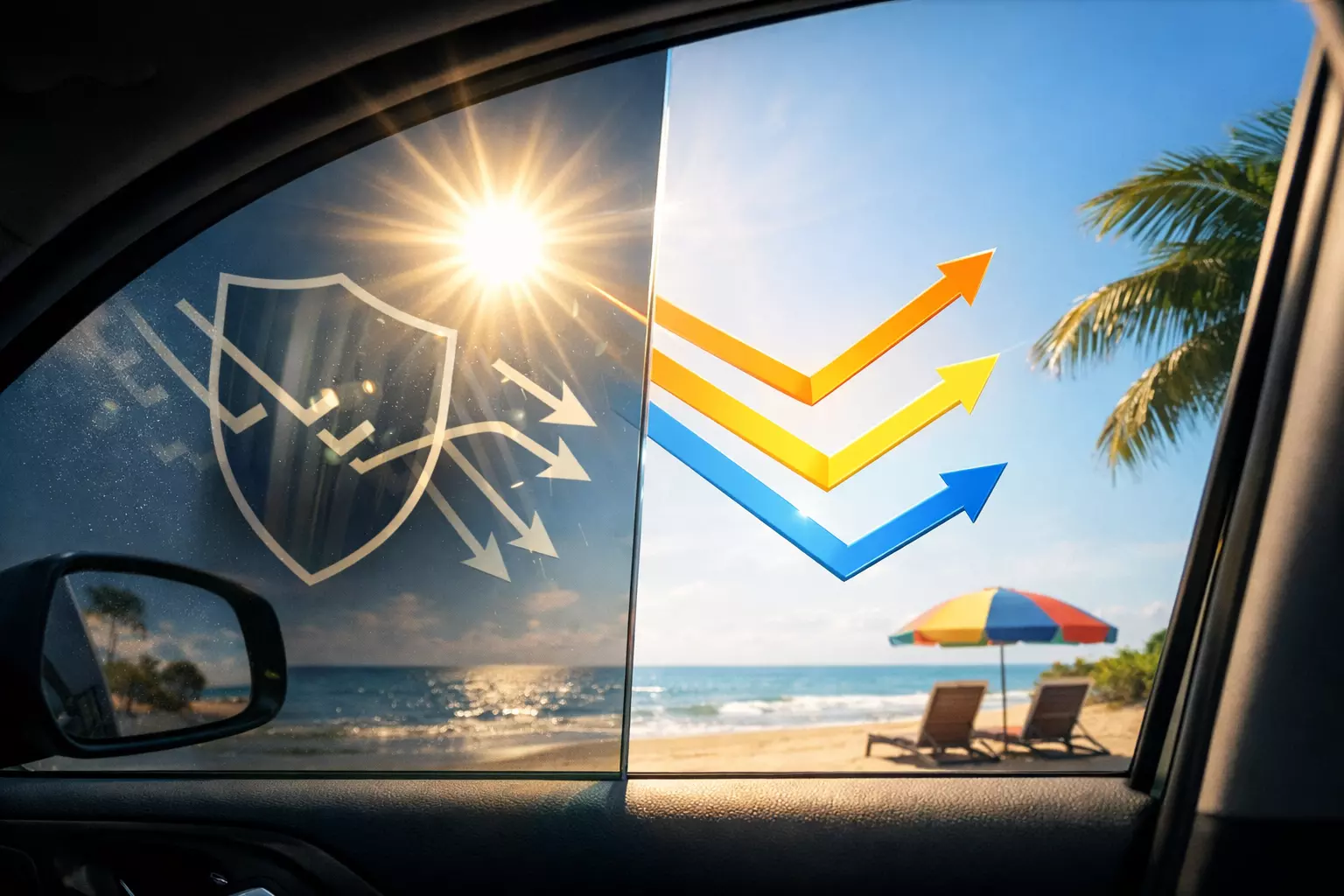
Can Window Tint Block UV Rays?
When it comes to protecting your vehicle and your health, one of the most common questions drivers ask is: Can window tint block UV rays? The short answer is yes, but not all window tint films offer the same level of protection.
Ultraviolet (UV) radiation from the sun can cause serious damage over time. It affects not only your skin but also your vehicle’s interior, leading to fading, cracking, and deterioration.
In this in-depth guide, we’ll explore how window tint works, how much UV protection it actually provides, and what type of tint offers the best defense against harmful rays.
Understanding UV Rays and Their Impact
Before diving into how window tint blocks UV rays, it’s important to understand what UV radiation is and why it matters.
What Are UV Rays?
Ultraviolet rays are a form of electromagnetic radiation emitted by the sun. There are three types:
1. UVA Rays
- Penetrate deeply into the skin
- Contribute to premature aging
- Can pass through standard window glass
2. UVB Rays
- Responsible for sunburn
- Play a major role in skin cancer development
- Mostly blocked by regular automotive glass
3. UVC Rays
- Completely absorbed by Earth’s atmosphere
- Not a concern for drivers
While most factory car windows block UVB rays, UVA rays can still pass through untreated glass, which means you’re still exposed during daily driving.
Does Window Tint Block UV Rays?
The Short Answer: Yes, High-Quality Tint Can Block Up to 99%
Most professional-grade window tint films are designed to block up to 99% of harmful UV rays, including both UVA and UVB radiation.
However, the level of protection depends on the type and quality of the tint installed.
How Window Tint Blocks UV Radiation
Window tint works by incorporating special materials into the film that absorb or reflect UV radiation before it enters your vehicle.
1. UV-Absorbing Layers
Modern films contain UV inhibitors that absorb harmful rays and prevent them from passing through.
2. Metalized or Ceramic Particles
Certain films use metallic or nano-ceramic particles that reflect UV radiation while maintaining visibility.
3. Multi-Layer Construction
Premium window films consist of multiple layers engineered to block UV, infrared heat, and glare simultaneously.
The result? Protection for both your skin and your vehicle’s interior.
Types of Window Tint and Their UV Protection Levels
Not all window tint films are created equal. Let’s compare the most common types.
1. Dyed Window Tint
- Most affordable option
- Provides basic UV protection
- Primarily reduces glare and enhances appearance
- May fade over time
UV Blocking: Moderate
2. Metalized Window Tint
- Contains microscopic metallic particles
- Reflects heat and UV rays
- Durable and scratch-resistant
UV Blocking: High
3. Carbon Window Tint
- Non-metallic
- Blocks significant UV and infrared heat
- Does not interfere with signals
UV Blocking: Very High
4. Ceramic Window Tint
- Advanced nano-ceramic technology
- Superior UV and infrared blocking
- No signal interference
- Exceptional clarity
UV Blocking: Up to 99%+
Ceramic tint is widely considered the best option for maximum UV protection.
Benefits of UV-Blocking Window Tint
Installing UV-protective window tint provides benefits beyond just comfort.
1. Skin Protection
Prolonged UV exposure while driving can increase the risk of:
- Skin aging
- Sunspots
- Skin cancer
Studies show drivers often experience more sun damage on the side of the body closest to the window. Window tint significantly reduces this exposure.
2. Interior Protection
UV rays can damage:
- Leather seats
- Dashboard surfaces
- Steering wheels
- Door panels
Over time, this leads to cracking, fading, and discoloration. Tint acts as a protective barrier, extending the lifespan of your vehicle’s interior.
3. Temperature Control
While UV rays are not the primary cause of heat, many UV-blocking films also reduce infrared radiation,
keeping your cabin cooler.
4. Reduced Glare
Tint minimizes harsh sunlight, improving driving comfort and visibility.
How Much UV Protection Do Factory Windows Provide?
Many drivers assume factory-tinted windows offer sufficient protection.
Factory Glass vs Aftermarket Window Tint
Factory windows typically:
- Block most UVB rays
- Allow significant UVA penetration
- Provide minimal heat rejection
Factory “tint” is often dyed glass rather than protective film.
Aftermarket window tint adds an additional protective layer, significantly improving UV blocking performance.
Does Darker Tint Mean More UV Protection?
This is one of the most common misconceptions.
Darkness vs Performance
The shade of window tint (measured in Visible Light Transmission or VLT percentage) does not necessarily determine UV protection level.
For example:
- A light ceramic film can block 99% of UV rays
- A dark dyed film may block far less
UV protection depends on film technology, not just darkness.
Understanding this distinction helps avoid confusion, similar to many Car Detailing Myths that circulate in the automotive world.
How to Choose the Best UV-Blocking Window Tint
Selecting the right window tint requires careful consideration.
1. Check UV Rejection Percentage
Look for films that explicitly state:
- 99% UV rejection
- 400nm UV protection rating
2. Choose Certified Installers
Professional installation ensures:
- Proper adhesion
- No bubbling
- Long-lasting durability
3. Consider Ceramic Technology
Ceramic tint provides the highest UV protection without signal interference.
4. Review Warranty Coverage
Reputable films come with manufacturer warranties against fading, bubbling, or peeling.
Is Window Tint Legal?
Window tint laws vary by region and typically regulate:
- Visible Light Transmission (VLT) percentage
- Windshield tinting restrictions
- Front vs rear window limits
UV-blocking performance is legal, but darkness levels must comply with local regulations.
Always check your local tint laws before installation to avoid fines or removal requirements.
How Long Does UV Protection Last?
High-quality window tint can last:
- 5–10 years for dyed films
- 10+ years for ceramic films
Over time, low-quality tint may:
- Fade
- Bubble
- Lose effectiveness
Proper maintenance ensures long-term UV protection.
Maintaining UV-Blocking Window Tint
To preserve performance:
- Wait recommended curing time before cleaning
- Use ammonia-free cleaners
- Clean with microfiber cloth
- Avoid abrasive materials
With proper care, your tint will continue blocking UV rays effectively for years.
Common Myths About UV Protection and Window Tint
Myth 1: UV Protection Is Only Necessary in Summer
UV radiation is present year-round, even on cloudy days.
Myth 2: Windshields Don’t Need Protection
While laminated windshields block most UVB rays, side windows often allow UVA exposure.
Myth 3: Tinted Windows Make Driving Unsafe at Night
Modern films are designed to maintain visibility while providing protection.
Can Window Tint Prevent Skin Cancer?
Window tint significantly reduces UV exposure but should not replace sunscreen entirely. It acts as an additional protective barrier, especially for frequent drivers or those with long commutes.
Dermatologists often recommend UV-blocking window films for individuals who spend extended time behind the wheel.
Is UV Protection Worth the Investment?
When considering:
- Health protection
- Interior preservation
- Improved comfort
- Long-term durability
UV-blocking window tint proves to be a smart investment for most drivers.
The cost of replacing faded interiors or treating sun damage far exceeds the price of professional window tint installation.
Read: 10 Top E Rickshaw Manufacturers Company in India
Final Thoughts: Can Window Tint Block UV Rays?
Yes, high-quality window tint can block up to 99% of harmful UV rays, providing significant protection for both your health and your vehicle’s interior. However, not all window films offer the same level of performance.
Choosing advanced options like ceramic window tint ensures maximum UV rejection without compromising clarity or legal compliance.
With proper installation and maintenance, window tint offers long-term protection, improved comfort, and enhanced vehicle value.
If you’re serious about reducing UV exposure while driving, investing in professional window tint is one of the most effective steps you can take.