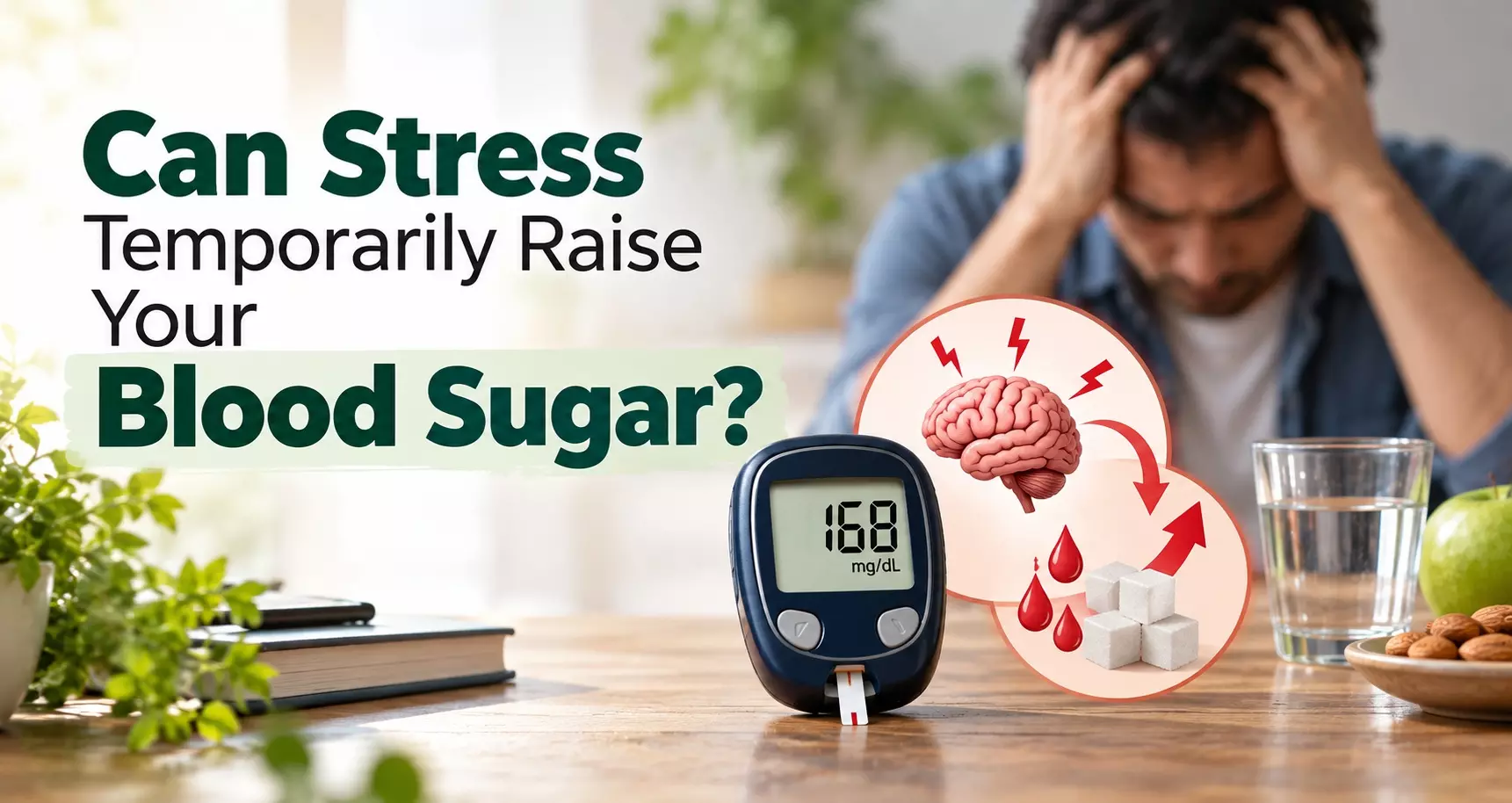
Can Stress Temporarily Raise Your Blood Sugar? What to Know
- You may have noticed something strange.
- You eat your usual meals, take your medicines as prescribed, and follow your normal routine. Yet your blood sugar is higher than expected.
- What happened?
- Stress could be one reason.
- Emotional stress, work pressure, lack of sleep, illness, pain, or even a stressful medical situation can affect blood glucose levels. Your body releases hormones during stressful situations, and these hormones can make more glucose available in your bloodstream.
- This does not mean every blood sugar rise is caused by stress. Food, physical activity, medicines, infections, dehydration, hormonal changes, and several other factors can also affect glucose levels.
- So, can stress temporarily raise your blood sugar?
- Yes. And understanding why it happens can help you manage those unexpected readings better.
How Does Stress Affect Blood Sugar?
- Your body has a built-in response to stressful situations.
- Imagine you are stuck in traffic and running late for an important meeting. Your heart starts beating faster. You may breathe more quickly. Your muscles become alert.
- At the same time, your body releases stress hormones such as cortisol and adrenaline.
- These hormones help your body respond to a perceived threat. One part of this response involves making more glucose available for immediate energy.
- The liver can release stored glucose into the bloodstream. Stress hormones can also make it harder for insulin to work properly in some situations.
- The result?
- Your blood sugar may rise.
- The CDC lists stress as one of the factors that can increase blood sugar in people with diabetes.
Why Does Your Body Release More Sugar During Stress?
It sounds counterproductive. If you have diabetes, why would your body increase blood sugar when you are already trying to control it?
The answer comes from how the body responds to stress.
Your body does not know whether the stress comes from a difficult workday, an argument, an illness, an injury, or another situation.
It simply responds to the stress signal.
During this response:
- Stress hormones increase.
- The liver can release stored glucose.
- Insulin may become less effective.
- Blood glucose can rise.
- Your usual diabetes routine may also become harder to follow.
Cortisol plays an important role here. It helps regulate how the body uses carbohydrates, fats, and proteins. During prolonged stress, higher levels of stress hormones can contribute to higher blood glucose.
There is also growing research into the connection between the brain's stress response and blood glucose regulation.
Recent American Diabetes Association research has explored how stress-related brain pathways can signal the liver to release additional glucose.
Can Stress Raise Blood Sugar Even If You Don't Have Diabetes?
- Stress can affect blood glucose even in people who do not have diabetes.
- Your body naturally adjusts glucose levels throughout the day. Stress hormones are part of that process.
- The difference is that a person with diabetes may have more difficulty bringing the glucose level back into their usual range.
- If insulin production or insulin action is already impaired, a stress-related rise can become more noticeable.
- This is one reason a person with diabetes may see an unexpectedly high reading during a stressful day.
What Types of Stress Can Increase Blood Sugar?
Stress is not limited to emotional problems.
Your body can experience physical stress too.
Common examples include:
1. Emotional stress
Arguments, financial concerns, work pressure, family problems, exams, or anxiety can trigger a stress response.
2. Lack of sleep
Poor sleep can affect hormones, insulin sensitivity, appetite, and blood glucose control. The CDC also lists losing sleep as a possible blood sugar trigger.
3. Illness and infection
When you are sick, your body releases hormones that help it respond to the illness. These changes can raise blood sugar.
4. Pain or injury
Pain is a physical stressor. It can activate the same stress response and affect glucose levels.
5. Surgery or medical procedures
The body may respond to surgery or significant medical procedures as a form of physical stress.
Mayo Clinic lists emotional stress, illness, infection, injury, and surgery among factors that can contribute to hyperglycemia.
What Does a Stress-Related Blood Sugar Spike Feel Like?
You may not feel anything.
This is one reason blood glucose monitoring is useful for people who have been advised to check their levels.
Some people may experience symptoms associated with high blood sugar, such as:
- Increased thirst
- Frequent urination
- Fatigue
- Blurred vision
- Headache
But symptoms can vary.
A temporary increase may not produce noticeable symptoms at all.
This is why you should not assume that a particular symptom always means your blood sugar is high. Testing can provide a clearer picture.
How Long Can Stress Keep Blood Sugar High?
There is no single time period that applies to everyone.
A short stressful event may cause a temporary increase. Once the stress response settles, blood glucose may move back toward your usual range.
But repeated or prolonged stress can have a different effect.
If stress continues for days or weeks, you may also sleep poorly, eat differently, skip physical activity, miss medicines, or stop checking your blood sugar regularly.
That combination can make glucose management harder.
Mayo Clinic notes that prolonged stress hormones may raise blood sugar, while stress can also make it harder to follow your usual diabetes routine.
So the question is not only, “Did stress raise my blood sugar?”
It is also worth asking, “Has stress changed the rest of my routine?”
Read: How Blood Sugar Levels Impact Your Heart?
Stress and Diabetes Can Become a Difficult Cycle
- Living with diabetes can create its own stress.
- You may worry about your readings, medicines, food choices, complications, or future health.
- Then stress itself may affect your blood sugar.
- A high reading may make you more worried.
- That worry can create more stress.
- This cycle can become frustrating.
- The CDC describes diabetes-related distress as feelings such as worry, frustration, anger, and burnout that can make the daily demands of diabetes harder to manage.
- The goal is not to remove every stressful situation from your life. That is not realistic.
- The goal is to learn how your body responds and build habits that help you handle stress better.
7 Practical Ways to Manage Stress and Blood Sugar
1. Keep track of your readings
If your doctor has advised you to monitor your blood sugar, keep a record of your readings.
You can also note:
- Sleep quality
- Meals
- Exercise
- Stressful events
- Medicines
- Illness
- Unusual symptoms
Over time, patterns may become easier to spot.
For example, you may notice that your morning readings are consistently higher after nights when you sleep poorly.
Regular testing can help you and your healthcare team identify patterns that may otherwise be missed.
2. Do not skip your diabetes medicines
- A stressful day can disrupt your routine.
- You may get busy, travel, sleep late, or simply forget your medication.
- Try to maintain your prescribed schedule.
- Do not change your medication dose on your own just because your blood sugar is higher than usual.
- If you repeatedly see unexpected readings, discuss them with your doctor.
3. Take a short walk if it is appropriate for you
- Physical activity can help with stress and blood glucose management.
- Even a short walk may help you feel calmer.
- The CDC recommends physical activity as one way to manage stress and support diabetes care.
- Your exercise plan should still match your health condition and your doctor's advice.
4. Work on your sleep routine
- One stressful night can turn into several.
- Try to maintain a regular sleep schedule.
- Reduce activities that keep you mentally active right before bedtime. Give your body some time to slow down.
- Sleep also matters for glucose management because inadequate sleep can affect insulin sensitivity and hormone balance.
5. Try simple breathing exercises
You do not need a complicated routine.
- Sit comfortably.
- Take a slow breath in.
- Then breathe out slowly.
- Repeat for a few minutes.
Meditation, relaxation exercises, and other stress-management techniques may help reduce stress and support diabetes management.
6. Eat at regular times
Stress can change your appetite.
Some people eat more when stressed. Others skip meals.
Both can make diabetes management harder.
Try to maintain regular meals and follow the eating plan recommended by your healthcare professional.
7. Talk to someone
- You do not always have to handle stress alone.
- Talking with a family member, friend, counsellor, or healthcare professional can help.
- If diabetes itself is becoming a source of constant worry or frustration, tell your healthcare team.
- That information matters.
How Can You Tell If Stress Is Affecting Your Blood Sugar?
- You cannot confirm the cause from one reading.
- Instead, look for patterns.
- For example:
- You have a stressful meeting.
- Your blood sugar is higher than usual afterwards.
- This happens several times over different stressful days.
- At the same time, your food, medication, and activity remain fairly consistent.
- That pattern may suggest that stress is playing a role.
- Still, other causes should be considered.
- Blood sugar can fluctuate because of food, physical activity, dehydration, medicines, illness, hormonal changes, sleep, and stress.
- This is why persistent changes should be discussed with your healthcare provider rather than automatically blamed on stress.
Can Chronic Stress Increase the Risk of Long-Term Blood Sugar Problems?
- Chronic stress deserves attention.
- Short-term stress is a normal part of life. Long-lasting stress is different.
- Repeated stress may keep stress-related hormone pathways active and can also affect sleep, eating habits, physical activity, and other parts of daily life.
- Recent diabetes research is exploring how repeated stress may influence glucose regulation. In research discussed by the American Diabetes Association, repeated stress was linked to changes in the body's regulation of glucose in animal models.
- This does not mean that stress alone causes diabetes.
- Diabetes has multiple risk factors.
- But managing ongoing stress is still a useful part of taking care of your overall health.
When Should You Talk to a Diabetes Specialist?
One unusually high reading does not always mean something is seriously wrong.
But repeated high readings deserve attention.
Consider speaking with a diabetes specialist if:
- Your blood sugar stays above your usual target range.
- Your readings are becoming harder to control.
- You frequently experience unexplained glucose spikes.
- You are changing your meals or activity, but the readings remain high.
- You are experiencing symptoms of high blood sugar.
- Stress or anxiety is interfering with your diabetes care.
- You are unsure whether your current treatment plan is working.
If you are searching online for the Best Diabetes Hospital in Nagpur, look beyond a simple ranking or advertisement.
Check whether the hospital or clinic provides appropriate diabetes evaluation, regular follow-up, blood sugar monitoring, medication guidance, and support for lifestyle factors.
Good diabetes care is usually not about treating one high reading. It is about understanding the pattern behind your readings and managing the condition over time.
What About Very High Blood Sugar?
Stress can raise blood sugar, but you should not automatically assume that a very high reading is “just stress.”
Very high glucose can become dangerous, especially in people with diabetes.
For example, diabetic ketoacidosis and hyperosmolar hyperglycemic state are serious complications associated with severe hyperglycemia.
If your healthcare team has given you specific instructions for high blood sugar, follow those instructions.
If you have very high readings along with symptoms such as vomiting, difficulty breathing, severe weakness, confusion, or dehydration, seek urgent medical care.
People using insulin or certain diabetes treatments may also need specific guidance about checking ketones during illness or significant hyperglycemia.
The CDC recommends following an individual diabetes care plan and contacting a healthcare professional when indicated.
Stress, Blood Sugar and Your Daily Routine
Sometimes the easiest place to start is not with a major lifestyle change.
Start by looking at your normal day.
Ask yourself:
- Did I sleep enough?
- Did I take my medication on time?
- Did I eat my usual meals?
- Was I under unusual stress today?
- Did I drink enough water?
- Was I physically active?
- Am I feeling unwell?
- Has this high reading happened more than once?
These questions can help you understand your glucose patterns.
A blood sugar reading is useful information. It is not a report card.
If a stressful day causes a temporary rise, focus on what you can control next.
Return to your normal routine, keep monitoring as advised, and speak with your healthcare team if the pattern continues.
Frequently Asked Questions
Can stress suddenly raise blood sugar?
Yes. Stress can trigger the release of hormones such as cortisol and adrenaline. These hormones can cause the liver to release more glucose and can affect insulin action, which may raise blood sugar.
Can anxiety cause high blood sugar?
Anxiety and stress can affect blood sugar. The effect differs from person to person. Anxiety can also change sleep, eating habits, physical activity, and medication routines, which may further affect glucose levels.
Can stress raise blood sugar even if I have not eaten?
Yes. Blood sugar does not come only from recently eaten food.
Your liver stores and releases glucose. During stress, hormones can signal the liver to release more glucose into the bloodstream.
How quickly can stress affect blood sugar?
It can happen during or shortly after a stressful event, but the timing and size of the rise vary between individuals.
A stressful situation may produce a temporary change, while ongoing stress may contribute to more persistent problems with glucose control.
Can lack of sleep raise blood sugar?
It can. Poor sleep may affect how efficiently the body uses insulin and can also influence hormones, appetite, and daily habits. The CDC lists inadequate sleep as one factor that can contribute to blood sugar changes.
Final Thoughts
Yes, stress can temporarily raise blood sugar.
It happens because your body responds to stress by releasing hormones that can increase glucose availability and affect insulin action.
A stressful day does not automatically mean your diabetes is getting worse.
But repeated glucose spikes should not always be blamed on stress either.
Look for patterns.
Track your readings when advised.
Pay attention to sleep, meals, activity, medicines, illness, and stressful events.
And if your blood sugar remains difficult to control, speak with a qualified diabetes healthcare professional.
Good diabetes management is built around understanding what is happening in your body and making informed changes with the right medical support.