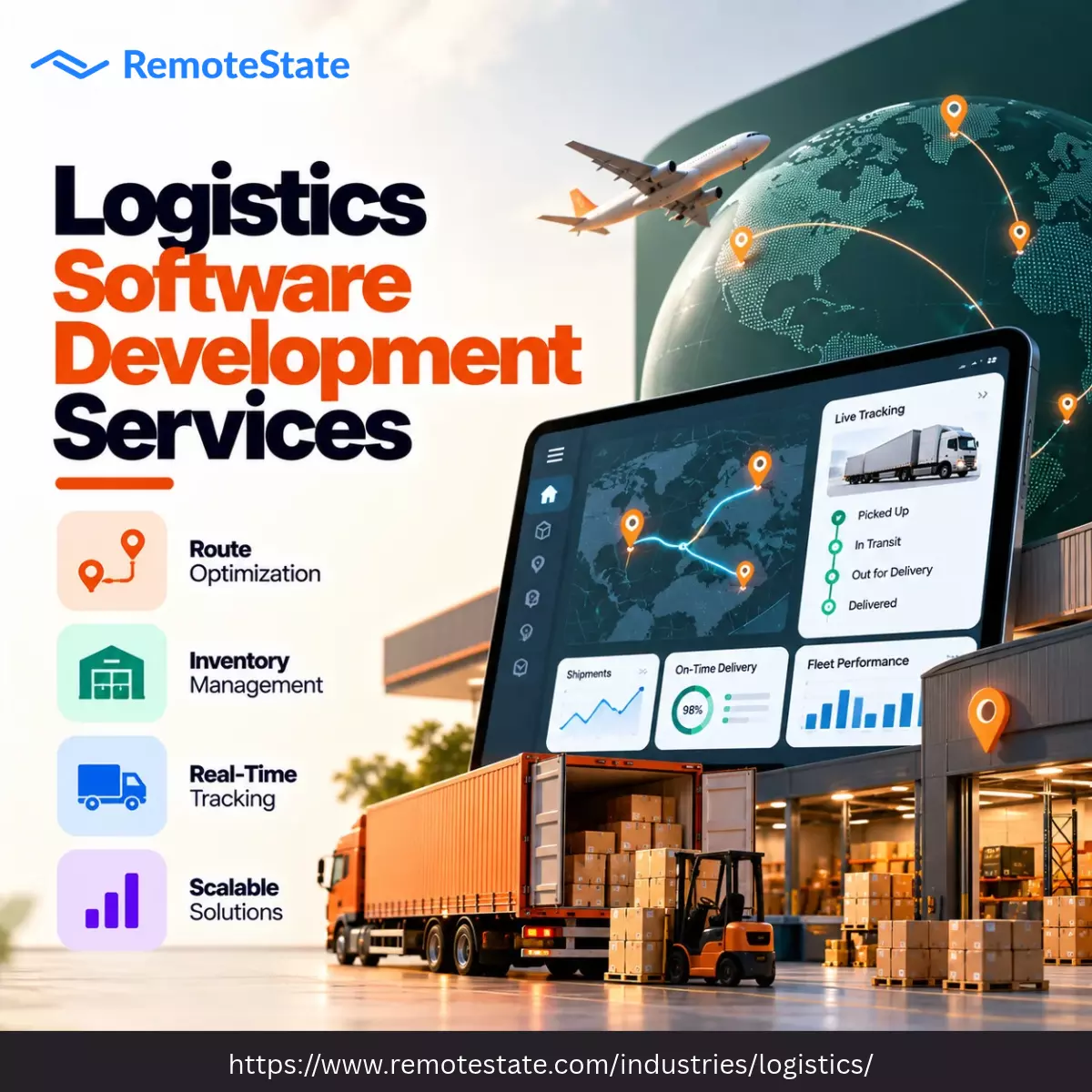
Can Logistics Software Development Services Support Real-Time Fleet and Warehouse Data Together?
Fleet tracking and warehouse management have traditionally run as separate systems, each with its own dashboard, its own data, and no real connection between them.
That separation creates blind spots: a warehouse team not knowing a delayed truck will throw off their loading schedule, or a dispatcher unaware that inventory issues are about to delay a shipment they've already scheduled.
Genuinely capable logistics software development services can bring these together, but doing it well requires more than just displaying two dashboards side by side.
What Real Integration Actually Looks Like
Shared Data Infrastructure, Not Separate Systems Bolted Together
A platform that truly unifies fleet and warehouse data pulls both into a single source of truth, not two databases that occasionally sync.
This means a warehouse manager sees live truck locations and ETAs directly alongside inventory levels, and a dispatcher sees warehouse readiness before committing a truck to a pickup window.
Real-Time Sync Without Data Lag
Fleet GPS data updates constantly, and warehouse inventory changes throughout the day as orders get picked and packed.
A system that only syncs these periodically, every 15 minutes, say, creates a gap where decisions get made on outdated information. Genuine real-time integration means both data streams update continuously and reflect current conditions the moment they change.
Why This Integration Is Harder Than It Sounds
Fleet tracking systems and warehouse management systems are often built on different underlying architectures, sometimes even from different vendors entirely.
Connecting them cleanly requires solid API design, careful data mapping between systems that structure information differently, and infrastructure that can handle both data streams without one slowing down the other.
Read: Top 12 Companies for Pickup and Delivery App
What This Actually Solves for Your Operation
- A truck running behind schedule automatically flags the warehouse team before it becomes a surprise at the loading dock
- Inventory shortages get caught before a truck arrives to pick up a shipment that isn't actually ready
- Dispatch decisions factor in real warehouse readiness, not just truck availability, cutting down on wasted trips and idle wait times
Finding a Partner Who Can Actually Build This
Not every provider claiming "real-time integration" has actually built systems where fleet and warehouse data genuinely talk to each other.
A capable logistics software development company should be able to describe specifically how they've solved this kind of integration before, not just claim the capability in general terms.
If your operation needs fleet and warehouse visibility working together instead of as separate silos, RemoteState works with logistics businesses to architect that integration properly from the start.