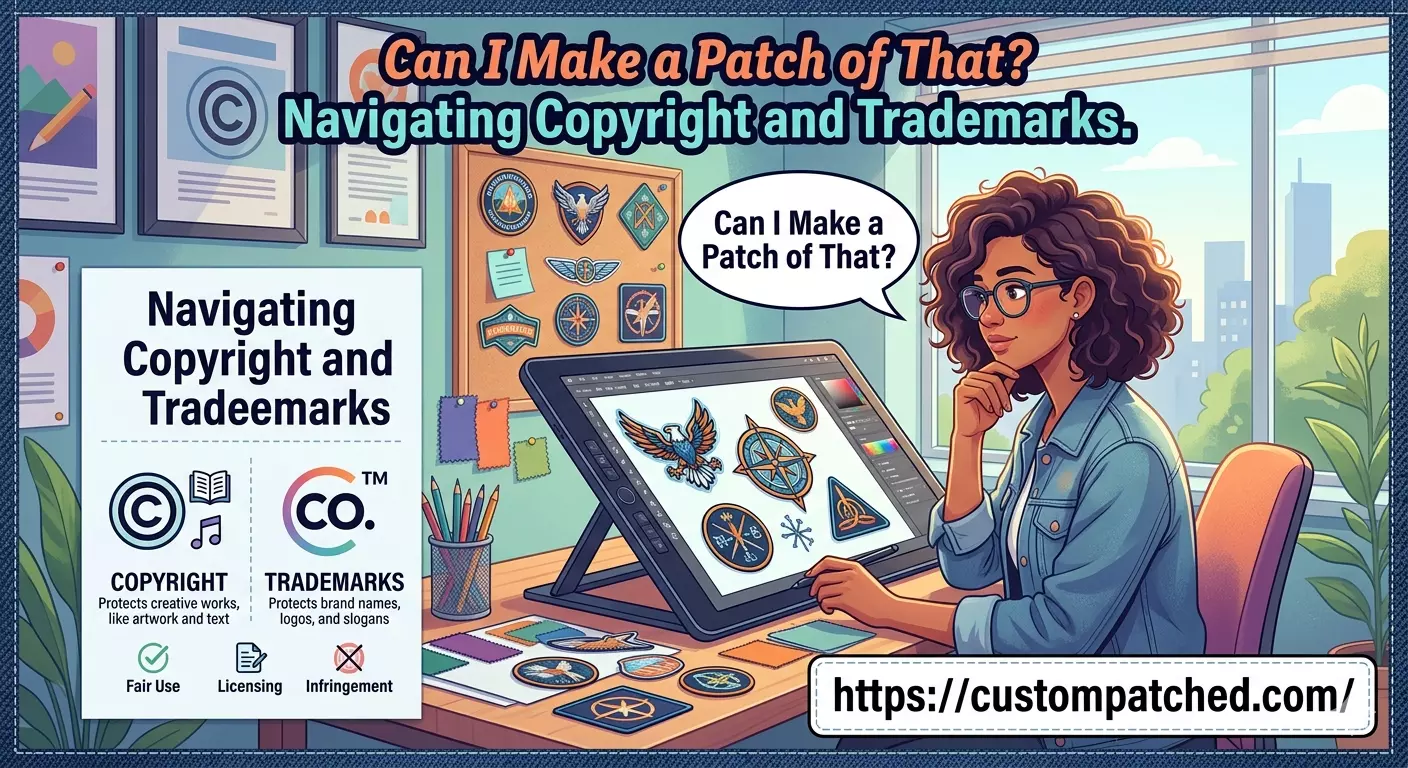
Can I Make a Patch of That? Navigating Copyright and Trademarks
The surge in DIY culture and "heritage branding" in 2026 has turned the humble patch into a powerful tool for self-expression and business identity.
Whether it’s a vintage-inspired aesthetic for a London startup or a tactical look for a US-based outdoor brand, the question "Can I make a patch of that?" is asked thousands of times a day.
However, the transition from a digital image to a physical emblem is fraught with legal landmines. In an era where AI can "hallucinate" designs that look suspiciously like existing intellectual property (IP), and "dupe culture" is under heavy fire from corporate legal teams, understanding the boundaries of copyright and trademark is no longer optional—it is a survival skill for creators.
The Fundamental Split: Copyright vs. Trademark
To navigate this landscape, you must first distinguish between the two primary forms of protection.
Copyright protects "original works of authorship." This includes the artistic expression found in a drawing, a photograph, or even a specific arrangement of shapes and colors.
If you find a cool illustration on Instagram, the artist automatically owns the copyright the moment they "fix" that work in a tangible form (like a digital file). Making a patch of that drawing without permission is, by definition, copyright infringement.
Trademark, on the other hand, is about "source identification." It protects names, logos, and slogans used to distinguish goods or services.
If you make a patch featuring the "Swoosh" or a famous university mascot, you aren't just copying art; you are potentially "diluting" a brand or causing "consumer confusion." Trademark law is particularly aggressive because brands are legally required to defend their marks or risk losing them.
The "30% Rule" and Other Dangerous Myths
One of the most persistent myths in the design world is the "30% Rule"—the idea that if you change 30% of an image, it becomes a new, legal work. In 2026, courts have repeatedly debunked this.
Legal analysis doesn't use a percentage-based slider; it looks at "Substantial Similarity." If the "heart" of the original work is still recognizable in your patch, you are likely infringing.
Another common pitfall is the "Non-Profit" excuse. Many people believe that if they aren't selling the patches, they aren't breaking the law.
While damages might be lower in a non-commercial case, the act of reproduction and distribution still constitutes infringement.
Whether you are making custom patches for clothes to sell at a boutique or just for your local hobbyist group, the legal requirement for originality remains the same.
The Grey Area: Fair Use and Parody
"Fair Use" is perhaps the most misunderstood concept in IP law. It is a legal defense used after a lawsuit has begun, not a proactive permission slip.
For a patch to qualify as Fair Use, it generally needs to be transformative. This means it must add something new, with a further purpose or different character, altering the original with new expression, meaning, or message.
Parody is a common form of transformative use, but it is high-risk. A true parody must comment on or critique the original work itself.
Simply making a "funny version" of a logo to sell more patches is often viewed as "free-riding" on the original brand's fame rather than protected commentary.
How to Legally Create Your Own Designs
The safest path to creating a high-quality physical brand is through Independent Creation. This means starting with your own sketches, your own color palettes, and your own conceptual "story." When you own the IP, you control the destiny of your brand.
For those looking to build a professional-grade physical identity without the legal headache, partnering with a reputable production house is key.
By visiting https://www.custompatched.com/, you can access expert digitizing services that help turn your original concepts into production-ready artwork.
Professional manufacturers often have "Compliance Filters" in place to help spot potential IP issues before they go to the embroidery machine, protecting both the creator and the manufacturer from future litigation.
Safe Sources for Patch Inspiration
If you aren't an illustrator, you don't have to break the law to get great designs. Here are the "Green Light" zones for 2026:
- The Public Domain: Works whose copyright has expired (generally those published before 1931 as of 2026) are free for everyone to use.
- Creative Commons (CC0): Many artists intentionally release their work for free public use. Always check the specific license terms.
- Licensed Assets: Buying a "Commercial Use" license from a stock site or an independent artist gives you the legal right to reproduce that work on physical goods.
- Commissioned Work: Hiring a designer and ensuring you have a "Work for Hire" agreement means you own the copyright to the final design.
The "Human-Made" Signal in 2026
As AI-generated "dupes" flood the market, recruiters, investors, and customers are looking for "Verified Origin" signals. A patch that looks like a cheap knock-off of a famous brand signals a lack of originality and a high risk of legal instability.
Conversely, a patch with a unique "Single Twist" design signals that your brand is innovative, credible, and here to stay.
Conclusion: Respect the Craft, Protect the Brand
In the world of custom apparel, the physical patch is the ultimate "Stamp of Approval." It represents hours of digitizing, thousands of stitches, and a commitment to quality.
To ensure that your brand’s legacy isn't cut short by a legal dispute, treat intellectual property with the same respect you treat your own creative work.
The rule of thumb for 2026 is simple: If you didn't draw it, and you didn't pay for the right to use it, don't patch it.
By sticking to original designs and leveraging professional resources to bring them to life, you ensure that your brand’s "Tactile First" strategy is built on a bedrock of legal integrity.