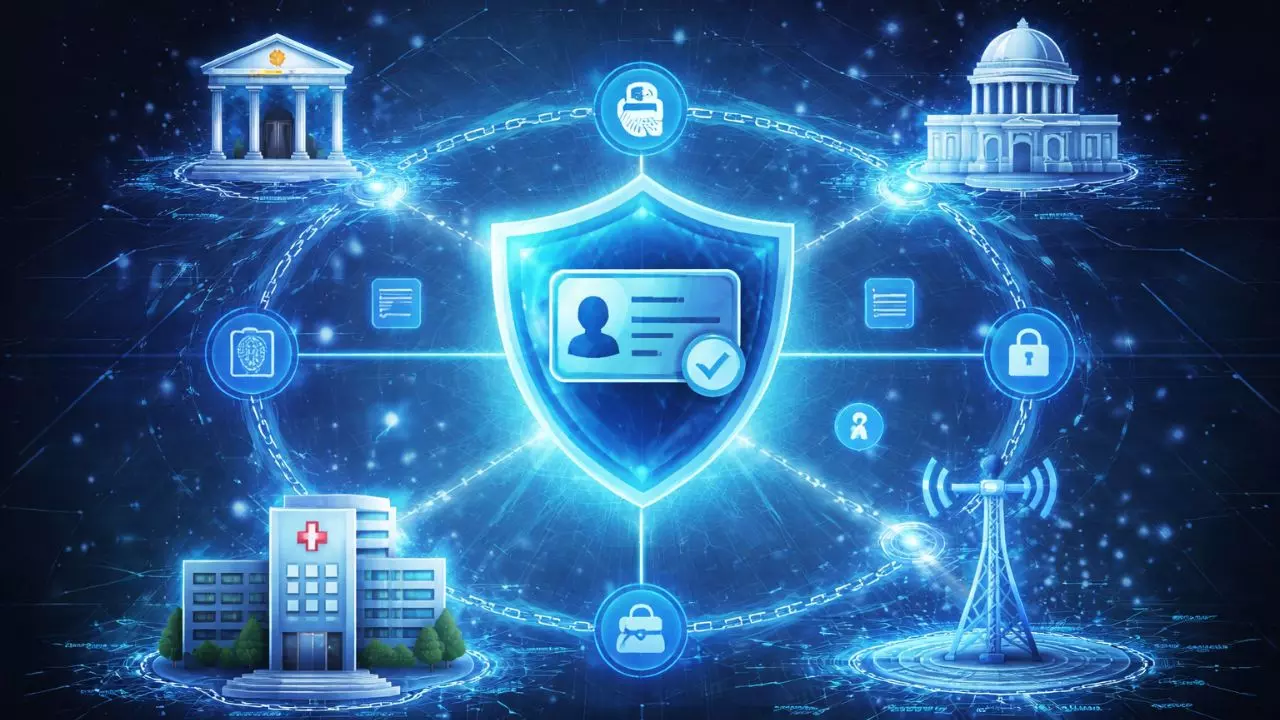
Blockchain Identity Verification Use Cases in Banking, Healthcare, Telecom, and Government
Blockchain identity verification is becoming a serious consideration for enterprises facing rising fraud, compliance pressure, and growing customer expectations around privacy.
According to the Federal Trade Commission, identity theft complaints in the United States consistently exceed one million reports per year, with billions of dollars in associated losses.
Financial institutions, hospitals, telecom operators, and government agencies are all dealing with the same core issue: how to verify identity securely without creating new risks.
Traditional centralized databases have made identity verification faster, but they have also created attractive targets for attackers. A single breach can expose millions of records.
Organizations now need systems that reduce duplication, improve transparency, and support regulatory compliance without slowing operations.
The Growing Need for Secure Digital Identity Systems
Identity fraud is no longer limited to stolen passwords. Synthetic identities, SIM swap fraud, fake medical claims, and forged documents are increasing across sectors.
At the same time, regulations such as KYC and AML requirements in finance, HIPAA in healthcare, and strict telecom verification rules demand accurate and auditable identity checks.
Centralized identity systems create several problems:
- Repeated verification across institutions
- High onboarding costs
- Large data silos vulnerable to breaches
- Limited user control over personal information
Organizations are looking for alternatives that strengthen security while improving efficiency.
What Blockchain Identity Verification Means for Enterprises
At its core, blockchain identity verification replaces centralized storage of identity data with cryptographically secured credentials anchored on a distributed ledger.
Instead of repeatedly submitting documents to different service providers, individuals can share verified credentials when needed.
Key components typically include:
- Decentralized Identifiers that allow users to control their digital identity
- Verifiable credentials issued by trusted authorities
- Cryptographic signatures to confirm authenticity
- Immutable audit trails that prevent record tampering
For enterprises, this approach reduces duplication, strengthens data integrity, and improves compliance reporting.
Blockchain Identity Verification Use Cases in Banking and Financial Services
Banks and financial institutions face some of the strictest regulatory requirements. Customer onboarding must comply with KYC and AML rules, and reporting must withstand regulatory audits.
Faster KYC and AML Compliance
Customer onboarding is expensive and time consuming. Each institution verifies documents independently, even if another regulated entity has already completed the process.
With reusable digital credentials:
- Customers complete identity verification once
- Banks validate credentials cryptographically
- Onboarding time decreases significantly
Some global banking consortia are already exploring shared identity frameworks to reduce duplication and cost.
Fraud Prevention and Transaction Security
Financial fraud often begins with compromised identity information. By using tamper resistant credentials and cryptographic verification, institutions can reduce identity manipulation risks.
Blockchain based identity records also create clear audit trails, which are useful for compliance investigations and dispute resolution.
Cross Border Banking and Digital Payments
Cross border transactions involve multiple institutions and regulatory frameworks. A shared identity layer allows verified customer data to move securely between approved parties.
This reduces friction in international payments and strengthens trust among financial institutions.
Healthcare Identity Management and Patient Data Security
Healthcare providers struggle with duplicate patient records, inconsistent documentation, and identity mismatches. These issues can lead to billing errors and, more importantly, clinical risks.
Accurate Patient Identity Matching
When patient data is fragmented across systems, errors occur. A blockchain anchored identity system allows healthcare providers to validate patient credentials securely.
Benefits include:
- Reduced duplicate records
- Improved care coordination
- Lower administrative overhead
Secure Access to Medical Records
Patient privacy is central to healthcare operations. Blockchain enabled credentials allow patients to grant selective access to medical records without exposing unnecessary data.
This model supports HIPAA compliance by limiting unauthorized access and improving data tracking.
Telehealth and Remote Verification
Telemedicine adoption has grown rapidly. Remote identity verification ensures that patients and providers are properly authenticated without in person visits.
Secure digital credentials reduce fraud risk in virtual consultations and online prescription services.
Telecom Sector and Digital Subscriber Verification
Telecom operators verify millions of users through SIM registration and eKYC processes. Fraudulent registrations and SIM swap attacks remain persistent threats.
Secure SIM Registration and eKYC
Blockchain backed identity systems can streamline subscriber onboarding by validating credentials through trusted issuers.
This helps:
- Reduce fake registrations
- Improve regulatory compliance
- Strengthen customer verification processes
Reducing Identity Misuse in Mobile Services
SIM swap fraud often relies on weak identity checks. Cryptographically verifiable credentials make unauthorized account changes more difficult.
Telecom providers also gain better visibility into verification history, supporting internal audits.
Cross Network Identity Trust
Shared identity frameworks allow telecom operators to validate credentials across networks while maintaining data privacy. This improves roaming experiences and speeds up service activation.
Government Applications and Public Sector Identity Programs
Governments manage large scale identity programs that require transparency and public trust.
National Digital Identity Systems
Blockchain anchored credentials can support secure digital ID programs by preventing document forgery and unauthorized modifications.
Citizens retain control over how their data is shared, while agencies maintain verification integrity.
Welfare Distribution and Benefit Programs
Fraud in public benefit systems can result in significant financial losses. Verified digital credentials reduce duplicate claims and improve tracking.
Transparent audit records also enhance accountability.
Border Control and Immigration Services
Secure digital identity frameworks allow agencies to validate travel documents and immigration records more efficiently.
Tamper resistant credentials reduce reliance on paper documentation and improve cross agency collaboration.
Common Implementation Challenges Organizations Must Address
While the benefits are clear, implementation requires careful planning.
- Integration with legacy IT systems
- Regulatory alignment across jurisdictions
- Interoperability between different blockchain networks
- User education and adoption
Organizations must evaluate technical infrastructure, compliance obligations, and long term governance models before deployment.
Key Benefits Across All Industries
Despite sector differences, the advantages are consistent:
- Reduced identity fraud
- Faster onboarding processes
- Improved regulatory reporting
- Stronger data privacy controls
- Lower long term administrative costs
These outcomes directly impact operational efficiency and risk management.
Read: What Are the Essential Security Features for a New Crypto Wallet
How Businesses Can Get Started
Organizations considering blockchain identity verification should begin with a structured approach.
First, assess current identity workflows and identify pain points such as repetitive KYC checks or high fraud rates.
Second, review compliance requirements and data protection laws applicable to your sector.
Third, pilot a limited use case before scaling enterprise wide.
Businesses exploring secure blockchain identity solutions can review practical implementation strategies through providers offering enterprise grade frameworks, such as Exobloc’s dedicated approach to blockchain identity verification.
If your organization is evaluating identity modernization initiatives, now is the time to assess whether decentralized credentials can reduce risk and operational cost while strengthening compliance posture.
Blockchain Identity Verification as a Long Term Strategy
Blockchain identity verification is not a short term experiment. It represents a structural shift in how organizations verify, manage, and protect digital identities across banking, healthcare, telecom, and government sectors.
As regulatory expectations grow and identity fraud evolves, enterprises need systems that combine transparency, security, and efficiency.
Decentralized identity frameworks provide a practical path forward when implemented thoughtfully and in alignment with compliance standards.
For organizations ready to modernize their identity infrastructure, Exobloc offers structured solutions designed to support enterprise level adoption with security and regulatory alignment at the forefront.