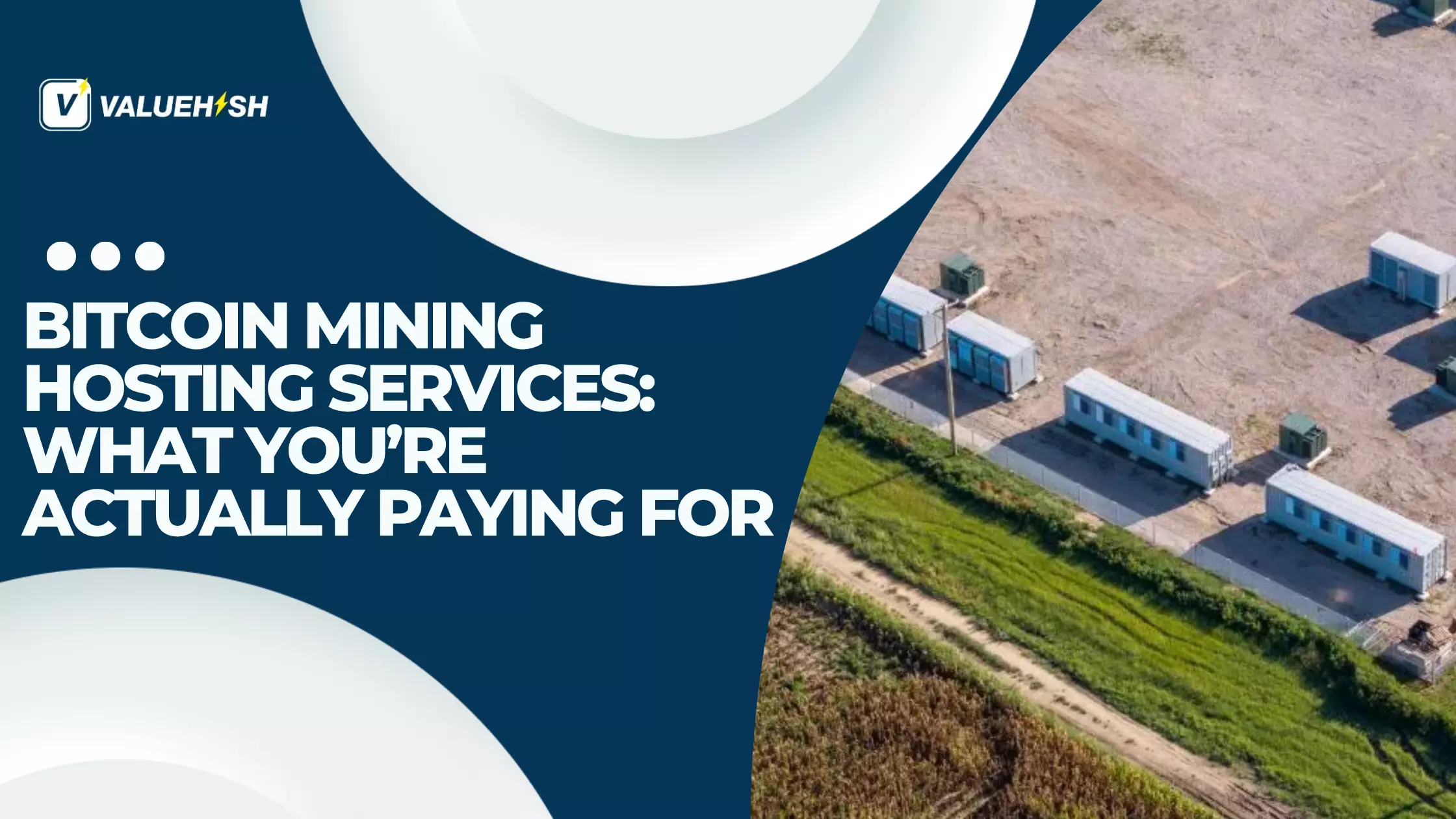
Bitcoin Mining Hosting Services: What You’re Actually Paying For
Most people searching for bitcoin mining hosting focus on a single number: the electricity rate. It’s easy to compare $0.07/kWh with $0.08/kWh and assume the cheaper option is the smarter choice. But that approach often leads to disappointing results. Many miners discover too late that the lowest advertised rate doesn’t reflect the true cost of running their machines.
If you’re planning to host ASIC miners, it’s worth understanding what you’re really paying for—and what might be missing from the deal.
The Difference Between Headline Rates and Real Costs
At first glance, a hosting provider offering $0.055/kWh seems like a bargain compared to one charging $0.07. But that number alone rarely tells the full story.
Some providers separate costs into multiple layers charging extra for rack space, maintenance, monitoring, or even basic connectivity. What looks cheap on paper can quickly become expensive once all fees are added.
A reliable hosting arrangement usually bundles everything into one clear, all-in rate. That includes electricity, cooling, space, and system monitoring. Without that transparency, it becomes difficult to predict your monthly expenses accurately.
In most established U.S. facilities, realistic electricity pricing tends to fall between 6 and 7.5 cents per kWh, depending on scale and contract terms. Some large-scale operations may offer lower rates, but those often come with conditions tied to volume or long-term commitments.
What a Proper Hosting Service Should Include
A strong hosting contract goes far beyond just supplying power. It should cover the essential components that keep your miners running efficiently around the clock.
Power and Cooling
ASIC miners generate a significant amount of heat. Without proper cooling systems, performance drops and hardware lifespan shortens. Industrial-grade cooling whether air-cooled or immersion-based—is critical to maintaining consistent hash rates.
If a facility cuts corners here, you’ll feel it in reduced output and increased repair costs.
Security and Monitoring
Your mining hardware is a valuable asset, often worth thousands of dollars per unit. That equipment needs to be protected with physical security measures such as surveillance, controlled access, and secure infrastructure.
In addition, real-time monitoring should be standard. A good system allows you to track hashrate, uptime, temperature, and earnings from a dashboard. Without this visibility, you’re essentially operating blind.
Maintenance and Repairs
Hardware failure is inevitable in mining. Fans wear out, hashboards fail, and power supplies degrade over time.
What matters is how quickly those issues are resolved. Some providers include maintenance in their service, while others charge extra or rely on third-party repair centers that can take weeks.
Every day a miner sits offline is lost revenue. Fast, on-site repair capability can make a noticeable difference in long-term profitability.
Pool Flexibility
You should always have control over where your hash power is directed. Being able to switch mining pools easily allows you to optimize returns based on fees, payouts, and network conditions.
If a hosting provider restricts your pool choices or locks you into a specific one, it’s worth questioning why. That limitation can directly affect your earnings.
Bringing Your Own Miner vs. Buying Through a Provider
Another factor many overlook is how you acquire your mining hardware.
Some hosting providers allow you to ship your own ASICs, while others require you to purchase equipment directly through them. Each approach has its pros and cons.
If you already own miners, flexibility is important. You shouldn’t be forced to replace working equipment just to qualify for hosting.
On the other hand, buying and hosting through the same provider can simplify setup and reduce deployment time especially for beginners entering the space.
Whichever route you choose, always verify that the hardware is genuine and comes with a valid warranty. Cutting corners here can lead to expensive problems later.
Understanding the Cost Structure
Electricity makes up the majority of mining expenses typically between 75% and 85%. That’s why the power rate gets so much attention.
But it’s not the only cost that matters.
To estimate your monthly expense, you can use a simple calculation:
- Take your miner’s wattage
- Divide by 1,000 to convert to kilowatts
- Multiply by 24 hours and 30 days
- Then multiply by your all-in kWh rate
For example, a 3,000-watt machine running at $0.07/kWh costs roughly $150 per month in electricity alone.
Now multiply that across multiple machines, and the numbers scale quickly.
This is why it’s essential to calculate profitability before committing not after.
Read: Cheap Reseller Web Hosting to Start Profitable Hosting
Contract Terms That Matter
A hosting agreement isn’t just about pricing it’s also about terms.
Most contracts run for at least one year, which means you’re exposed to market changes over time. Bitcoin price fluctuations and increasing network difficulty can both impact your returns.
Here are a couple of key things to review carefully:
Rate Stability
Some contracts lock in your electricity rate for the full term, while others allow adjustments with notice. A variable rate can significantly affect your long-term costs.
Downtime Policies
Not all providers handle downtime the same way. Some charge for power regardless of whether your machine is running, while others only bill for active usage
.
That difference becomes important if your hardware needs repairs during the contract period.
Rethinking “Cheap” Hosting
The lowest rate doesn’t always mean the lowest cost.
A facility with frequent downtime, slow repairs, or hidden fees can end up costing more over time than one with slightly higher pricing but better reliability.
What really matters is your cost per bitcoin mined, not just your cost per kilowatt-hour.
Factors like uptime, repair speed, transparency, and infrastructure quality all play a role in that final number.
Final Thoughts
Choosing a bitcoin mining hosting provider isn’t just about finding the cheapest electricity. It’s about understanding the full picture what’s included, how the operation is managed, and how risks are handled.
A well-structured hosting service should offer:
- Clear, all-in pricing
- Reliable uptime
- Strong security
- Fast maintenance support
- Full operational transparency
Some providers in the market like Value Hash highlight these features more clearly than others, offering bundled services and scalable infrastructure options across multiple locations. Those are the kinds of details worth paying attention to.