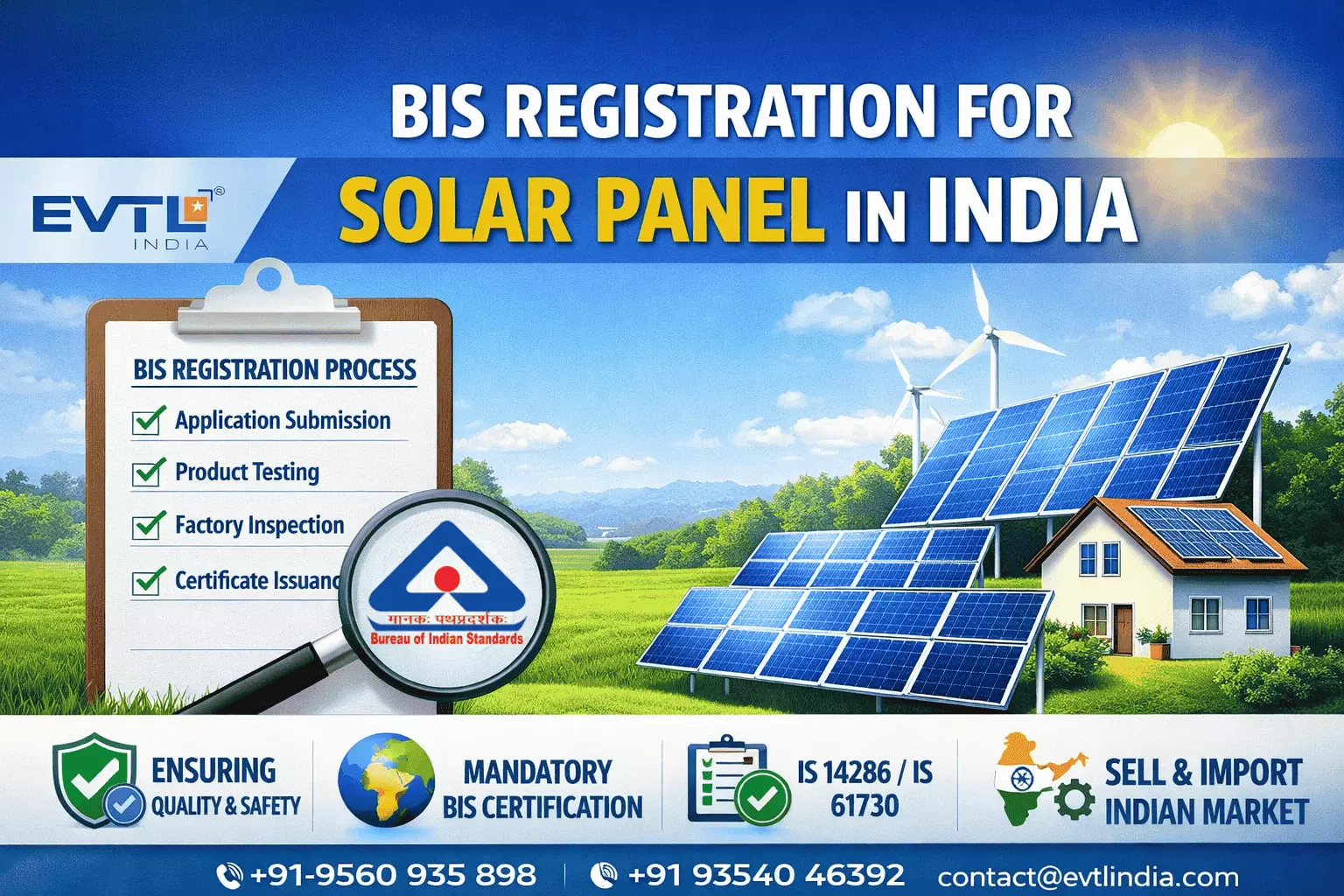
BIS Certification for Solar Panel : Complete Compliance Guide
India’s growing focus on renewable energy has significantly boosted the demand for solar panels and power panels. With this rapid expansion, regulatory compliance has become essential for ensuring product safety, performance, and reliability.
The Bureau of Indian Standards (BIS) plays a crucial role in setting quality benchmarks that manufacturers must follow before introducing their products into the Indian market.
BIS certification for solar panel not only ensures adherence to national standards but also enhances product credibility and consumer trust, making it a vital requirement for both domestic and international manufacturers.
What is BIS Certification for Solar Products?
BIS certification is a mandatory approval process that verifies whether a product meets specific Indian Standards.
In the case of solar panels and power panels, certification ensures that the equipment performs efficiently under different environmental conditions and meets safety requirements.
For solar panels, certification primarily evaluates:
- Energy efficiency and output performance
- Resistance to environmental factors like heat and humidity
- Electrical safety and insulation
For power panels, it focuses on:
- Safe electricity distribution
- System protection and reliability
- Compliance with electrical safety norms
BIS Registration under Compulsory Scheme
The Indian government has introduced mandatory compliance through regulatory frameworks to maintain quality standards. Under this system, manufacturers must obtain certification before selling their products.
The registration process ensures:
- Uniform product quality across the market
- Prevention of substandard imports
- Enhanced consumer protection
This requirement applies to both Indian manufacturers and foreign companies exporting solar products to India.
Step-by-Step Certification Process
Obtaining BIS certification involves a structured procedure that ensures thorough evaluation of the product:
1. Application Submission
Manufacturers must submit an application with complete product specifications and company details.
2. Product Testing
Samples are tested in BIS-recognized laboratories to verify compliance with applicable standards.
3. Documentation Review
BIS authorities review technical documents, test reports, and manufacturing details.
4. Grant of Certification
Once all requirements are fulfilled, the BIS certificate is issued, allowing the manufacturer to use the Standard Mark.
This systematic process ensures that only high-quality products enter the market.
Testing and Quality Requirements
Testing is one of the most critical components of the certification process. Solar panels must undergo rigorous evaluation to ensure durability and efficiency over time.
Key testing parameters include:
- Electrical performance testing under varying conditions
- Mechanical load testing for structural strength
- Environmental testing for temperature and humidity resistance
- Safety testing to prevent electrical hazards
These tests are conducted in approved laboratories to ensure accurate and reliable results.
Certification for Imported Solar Panels
Foreign manufacturers must comply with Indian regulations to access the market. This includes:
- Appointing an Authorized Indian Representative (AIR)
- Conducting product testing in BIS-approved labs
- Submitting necessary documentation
Without proper certification, imported solar panels and power panels cannot be legally sold in India.
Role of BIS Consultant and Agent
Navigating the BIS certification process can be complex, especially for new manufacturers or foreign companies. A professional consultant or authorized agent can simplify the process by:
- Managing documentation and application filing
- Coordinating with testing laboratories
- Ensuring compliance with updated standards
- Minimizing delays and errors
Read: Harness the Power of the Sun with Solar Panels in Albanvale
Importance of BIS Certification
Obtaining BIS license for solar panel offers several strategic benefits:
- Legal Compliance – Mandatory for selling in the Indian market
- Market Credibility – Builds trust among customers and stakeholders
- Quality Assurance – Ensures consistent product performance
- Competitive Advantage – Certified products are preferred in the market
Non-compliance, on the other hand, can result in penalties, product recalls, or restrictions on imports.
Latest Regulatory Developments
The government periodically updates certification requirements to align with technological advancements and safety standards. Manufacturers must stay updated with these changes to ensure continuous compliance and avoid disruptions in operations.
Regular monitoring of regulatory notifications is essential for maintaining certification validity and adapting to new requirements.
Read: Harness the Power of the Sun with Solar Panels in Albanvale
Conclusion
BIS certification is a critical requirement for solar panels and power panels in India’s rapidly expanding renewable energy market.
It ensures that products meet stringent safety and quality standards while enabling manufacturers to access the market legally.
By following the correct certification process and staying updated with regulatory changes, businesses can ensure smooth operations and long-term success. Partnering with experienced consultants further simplifies the journey, helping manufacturers achieve compliance efficiently.
EVTL India is one of the leading BIS consultants in India, helping manufacturers obtain their BIS licences hassle-free.
FAQs
1. Is BIS certification mandatory for solar panels?
Yes, it is mandatory for specific categories under government regulations.
2. How long does the certification process take?
The process usually takes a few weeks, depending on testing and documentation.
3. Can foreign manufacturers apply for BIS certification?
Yes, but they must appoint an Authorized Indian Representative.
4. What is the validity of BIS certification?
Typically, certification is valid for a limited period and must be renewed.
5. Why is BIS certification important?
It ensures product safety, quality, and legal compliance in the Indian market.