Beyond the Basics: Why Reproductive Medicine Training Matters More Than Ever
Once upon a time, people in need of information about infertility saw it as mostly a matter of a woman's age or her menstrual history or her history of conceiving naturally.
Not so any more. Fertility care is now a specialised field of medicine encompassing reproductive endocrinology, embryology and andrology, genetics, ultrasound, assisted reproductive technology and, more and more, tailored individual treatment.
For a young doctor entering this field, that change brings both opportunity and responsibility.
Reproductive medicine is not something you can learn from reading up on IVF and watching a few cycles. It's about knowing the science of infertility, understanding what is happening in the clinic, the ability to talk to patients and to make decisions for each individual case.
And this is where a structured Fellowship in IVF and Reproductive Medicine could offer valuable insights.
Reproductive medicine is more than IVF
When people think of reproductive medicine, IVF comes to mind instantly. Of course, IVF is an essential element of reproductive medicine, yet it does not account for the entire scope of fertility practice.
The story of a patient coming to a fertility clinic is going to differ entirely from that of another person sitting in the waiting room of the same clinic.
While one couple may have been trying to conceive for many years already, another one may have had multiple miscarriages.
There could also be patients with diminished ovarian reserve, male-factor infertility, endometriosis, PCOS, tubal factors, unexplained infertility and failed IVF cycles in the past.
It's not one treatment that works for everybody.
That is why it is important in reproductive medicine for doctors to go beyond the procedures and actually work out what is causing the infertility.
Being able to assess a case, recognise the potential reasons, and decide on the right investigations and when assisted reproduction is necessary, are all as essential as knowing how the IVF cycle functions.
The growing need for specialised infertility training
Doctors get a good grounding from their medical training. But when it comes to reproduction medicine, there is nothing like practical experience for a doctor.
It might be that the doctor is aware of the process of ovulation, hormone control, and fertilization, but infertility case management is more than this. Several pieces of information need to be integrated in order to come up with an infertility management strategy.
This is one of the reasons online infertility courses in India has become increasingly relevant for doctors who want to develop a focused career in fertility care.
With specialised training, doctors can develop their clinical judgement in practice, going beyond conceptually driven knowledge. It also gives them the chance to learn from others who have seen the many questions that reproductive medicine can pose.
What happens between the first consultation and an IVF cycle?
This was the most helpful lesson a doctor learns by doing the job. IVF doesn't start at ovarian stimulation. It starts well before.
At the initial consultation, the doctor considers the patient couple's reproductive history, what treatments they have undergone before, potential reasons for infertility and which investigations are truly necessary. Then the doctor must interpret the information and talk the patient through potential options.
There can be times when the best option is to keep trying naturally or choose an easier treatment. Or it might be to consider intrauterine insemination (IUI).
For some of you, IVF is going to be the best next step, for others there might be options such as fertility preservation or other more specialised choices.
The ability to do the right thing is an essential part of training to be a good doctor in reproductive medicine. That is why good training on IVF should be more than just procedures.
Read: Choosing the Best Infertility Course in India for a
The laboratory and the clinic cannot work separately
Another important aspect of reproductive medicine education is understanding the relationship between clinical and laboratory teams.
IVF procedure comprises much more than just the fertility expert. The contribution of embryologists, andrologists, nurses, technicians and other health care professionals is made to various steps of the treatment procedure.
The specialist in reproductive medicine must appreciate what is transpiring in the embryology laboratory in the same way that the embryology laboratory needs to know what the clinical situation is.
For an aspiring Fellow in Reproductive Medicine, exposure to this sort of multidisciplinary setting can be quite advantageous. This will help them link their clinical decisions with laboratory procedures and understand assisted reproductive technology better.
Why hands-on learning changes the experience
It is one thing to learn how an intervention occurs. It is another to understand how it occurs within the context of a real clinical situation.
The book can describe the steps of follicular monitoring. The classroom can describe the protocol of ovarian stimulation. The presentation can show the steps of embryo transfer. Seeing them in action enables the trainee to appreciate the reasoning behind them.
Why was a particular protocol selected? Why was treatment modified? What happens when the response is not as expected? How is a patient counselled when the outcome is uncertain? What happens after an unsuccessful cycle? These are the kinds of questions that become clearer with clinical exposure.
For this reason, practical training, case discussions, observation and mentorship should be important components of any serious infertility training in India.
Medline academics is dedicated to specialised medical education in reproductive medicine and related fields, offering a model of professional training with an emphasis on academic and practical expertise.
Its programmes enable healthcare professionals to strengthen their knowledge base in fields like infertility, IVF, embryology and assisted reproductive technology.
With expert tuition, case-based dialogue, simulation-focused learning and insights into the clinical environment of reproductive medicine, students will learn the real-world application of the subject. It's not only about the course itself, but instilling the knowledge, ability and clinical outlook for a doctor to pursue a dedicated reproductive medicine fellowship and further study.
For doctors thinking about pursuing a Fellowship in Reproductive Medicine, this type of professional, mentor-supervised learning structure can be a valuable stepping stone in their career.
Learning from real patients is different from learning from case studies
There's nothing like the patient. They give the trainee an opportunity to debate a number of options concerning differential diagnoses, treatment plans and success rates in a controlled setting.
But an actual patient offers up what a case study can never fully imitate: ambiguity. The patient might not entirely fall into a textbook diagnosis. The tests might not reveal everything. The treatment might not work the way we expect.
The reproductive medicine doctor thus needs both scientific knowledge as well as listening skills. This patient communication assumes importance in infertility treatment due to the emotional nature of the treatment.
The patients will come into the clinic with many ideas already in their heads that they got from social media or the internet forums and advice from people around them.
They might think that something will definitely cure them, such as IVF being successful for everyone. What the trained fertility doctor must do is explain to them all this in a manner in which they feel some hope as well.
The importance of choosing the right clinical environment
In terms of preparing oneself for a career in fertility medicine, the training environment counts just as much as the course itself.
An association with a reputable IVF clinic in Bangalore would enable the students to experience first-hand the various phases of fertility treatment through the working system of a clinical setup. As Bangalore is a key hub for healthcare and IT, it has also become a preferred destination for fertility patients.
Working in a clinical setting allows trainees to see what is done during consultations, investigations, monitoring, procedures, laboratory work, and follow-up. It helps them see what they cannot always be taught in the lecture room: how a fertility centre works as a team.
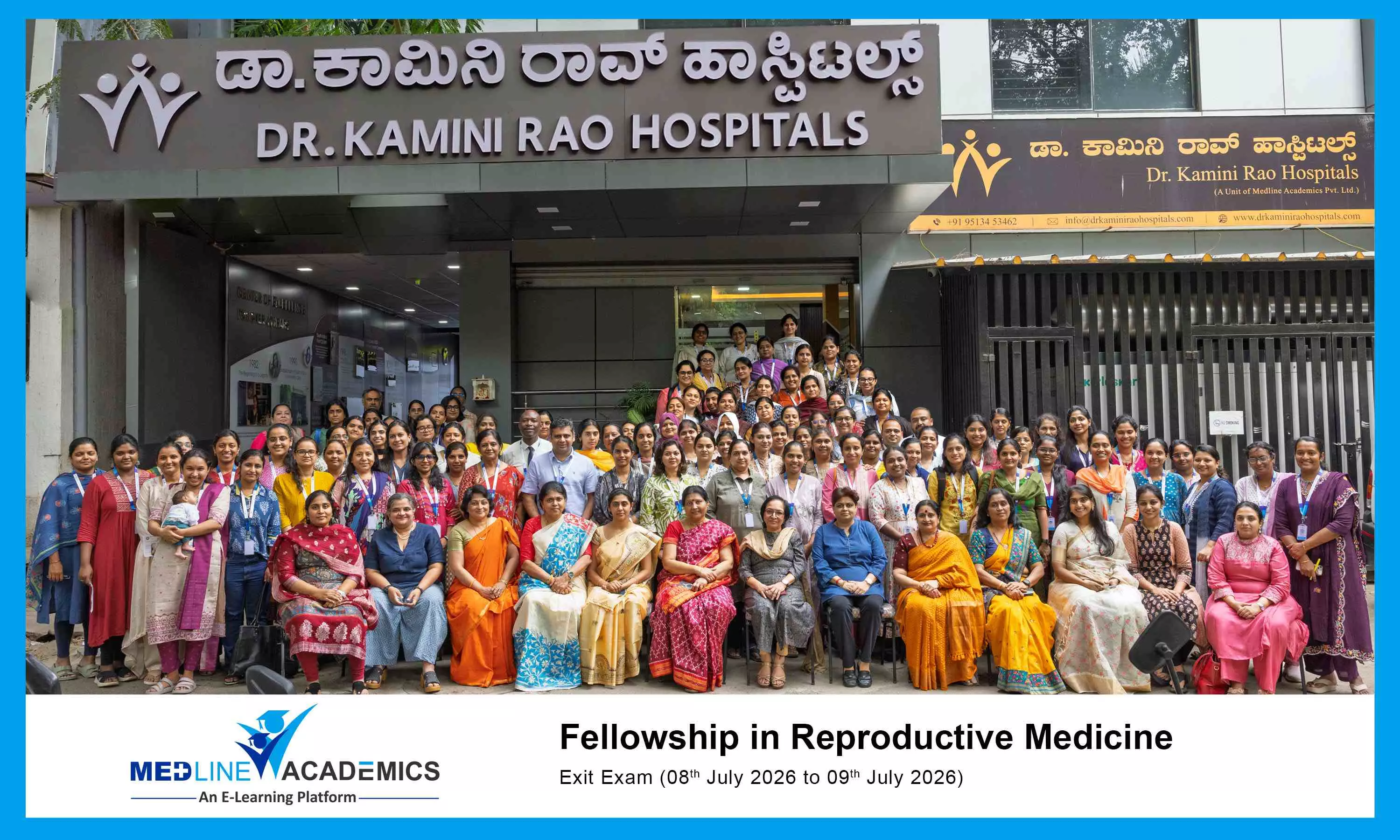
Dr. Kamini Rao Hospitals is linked with the domain of women’s health and reproductive medicine, offering a clinical setup that is involved in the joint efforts of fertility experts along with other healthcare workers in the treatment process.
For medical students who are pursuing their specialized training, being familiar with this sort of a setting can prove helpful in understanding the practicalities of fertility management.
Clinics Provide Perspective Another point the clinic setting demonstrates is that fertility treatment success is seldom down to a single person.
It's a team effort from the doctor to the lab team, nurses and other practitioners working with the patient throughout her journey. Such experiences can give trainees a new understanding of what it takes to work in today's fertility practice.
A fellowship is not simply another qualification
A fellowship can easily be viewed as yet another certificate that will be added to the resume. However, a specialized training program in medicine must have something else to offer. What really counts is the experience that will be gained during the program.
The chance to meet with doctors who have a different perspective on managing infertility, debrief challenging cases with experienced faculty, get an idea of an IVF process, and have a better understanding of where their potential interests are within reproductive endocrinology.
Some individuals may take a keen interest in IVF and assisted reproduction. Others may gain a great interest in infertility evaluation, reproductive endocrinology, fertility preservation, or academic medicine. Fellowship can offer such individuals the exposure required to realize their path.
Where is reproductive medicine heading?
It is a fast-moving arena. Progress in the laboratory, reproductive genetics, fertility preservation, embryo culture, imaging and data-driven medicine are all driving our understanding and management of infertility.
We cannot afford to let ourselves off the hook by being content with the knowledge gained during training in reproductive medicine.
The future will be those clinicians who are willing to continue to learn, view technology with a critical eye and-ultimately-continue to place the patient's individual needs and interests firmly at the centre of any recommendations.
However, for those working in the field today, the training cannot be merely training in the techniques of today. It must be training in the skills to adapt as reproductive medicine changes.
The choice of specialised training is one that requires serious consideration for a physician who is contemplating joining the field of infertility medicine. The ideal course will strike a balance between science, clinical experience, and mentorship.
Fertility Can be one of those missing pieces The Fellowship in Reproductive Medicine could make it happen by bringing the fertility puzzle pieces together into one learning, teaching opportunity.
Reproductive medicine is more than devices, protocols and techniques. At the core of every fertility practice is a patient or couple in need of direction.
A reproductive medicine specialist is here to help you do just that - using evidence, empathy and experience, to answer all those questions.
This is exactly why right training for infertility is essential in India and exactly why an institution's approach can be transformative for a life-changing career in reproductive medicine.