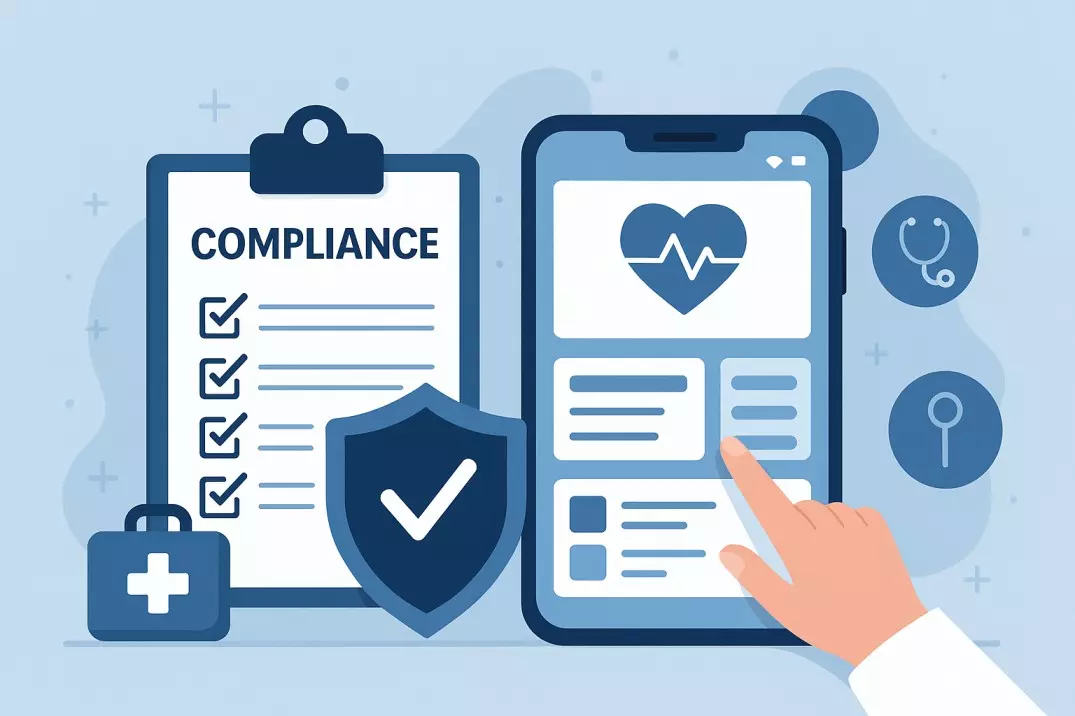
Beyond Security: The Role of Compliance in Successful Healthcare Mobile App Development
The healthcare industry has been rapidly digitizing, with mobile apps playing a critical role in improving accessibility, efficiency, and patient outcomes. However, as data breaches and privacy concerns grow, security alone is no longer enough. True success in healthcare app development now hinges on regulatory compliance, the foundation of patient trust and operational integrity.
Let’s explore how compliance transforms a secure app into a legally sound, patient-centric healthcare solution.
Why Compliance Matters More Than Ever
Modern healthcare apps handle vast amounts of sensitive data from electronic health records (EHRs) and lab results to wearable device data. While encryption and authentication keep information secure, compliance ensures that data handling meets strict legal frameworks like HIPAA, GDPR, and HITECH.
Compliance isn’t just a checkbox. It defines how data is collected, stored, shared, and even deleted. A compliant system prevents misuse, builds user confidence, and avoids costly penalties that can cripple startups and enterprises alike.
Healthcare organizations are realizing that non-compliance risks extend far beyond fines they threaten brand reputation, patient loyalty, and operational credibility.
Understanding HIPAA: The Backbone of Healthcare Compliance
One of the most critical regulations in the United States is the Health Insurance Portability and Accountability Act (HIPAA). It governs how patient health information (PHI) is stored and transmitted.
Developers and healthcare providers looking to ensure their apps meet these standards often rely on frameworks and best practices from resources like the Develop HIPAA Compliant App guide.
This resource outlines the importance of implementing safeguards such as:
- End-to-end encryption for PHI in transit and at rest
- Role-based access control (RBAC) for different user types
- Audit trails for every data interaction
- Secure APIs for data exchange between systems
By embedding compliance requirements early in the development cycle, healthcare organizations reduce rework costs and improve regulatory readiness before deployment.
Compliance Shapes Every Stage of Development
Compliance should be integrated throughout the app development lifecycle not added at the end. Let’s break down how it influences each phase:
- Planning & Requirement Analysis: Identify relevant regulatory frameworks (HIPAA, GDPR, FDA, or regional laws). Create a compliance checklist that aligns with both business goals and patient privacy needs.
- Design Phase : Focus on Privacy by Design — structuring UX/UI so that users understand how their data is used. Consent forms, data minimization, and access transparency should be part of the flow.
- Development Phase : Apply secure coding practices, strong authentication, and data encryption standards. Utilize certified cloud infrastructures that comply with healthcare data regulations.
- Testing & Validation : Compliance testing ensures that all security measures, data flows, and audit trails meet the necessary legal standards before the app goes live.
- Post-Deployment Monitoring : Conduct regular audits, patch management, and vulnerability scans. Data handling policies should evolve with changing laws and emerging cyber threats.
Integrating Compliance with Usability and Performance
Many developers fear that compliance might limit functionality or slow performance but when done right, it enhances both.
Compliance ensures clear communication with users about data permissions, helping them feel safer when using your platform. Secure login sessions, encrypted health records, and transparent data-sharing practices improve user satisfaction and retention.
Moreover, compliance fosters interoperability allowing apps to integrate seamlessly with EHR systems, wearables, and cloud-based healthcare tools without legal roadblocks.
Following a Structured Development Guide
Creating a truly compliant healthcare app requires more than just technical expertise it demands adherence to proven frameworks. That’s where resources like the Healthcare Mobile App Development Guide become invaluable.
This guide dives into:
- Building scalable healthcare architectures
- Implementing real-time patient engagement features
- Integrating with third-party APIs securely
- Designing intuitive dashboards for medical staff and patients
By combining such frameworks with compliance best practices, teams can deliver apps that are not only functional but also fully aligned with healthcare industry standards.
Common Compliance Challenges in Healthcare Apps
Even experienced teams can stumble when dealing with compliance. Some of the most frequent challenges include:
- Inconsistent encryption across devices or platforms
- Third-party integrations without proper HIPAA Business Associate Agreements (BAAs)
- Neglected access logs that make audits difficult
- Over-collection of data, violating data minimization principles
The solution lies in proactive compliance planning and regular audits from certified professionals. Continuous training for developers and QA teams ensures that every code change or feature rollout remains compliant.
Future of Compliance in Digital Health
As AI and IoT continue to transform healthcare, compliance will become even more complex. Machine learning models trained on patient data must adhere to privacy laws and ethical standards. Blockchain-based medical records and remote patient monitoring solutions will demand new frameworks for validation and consent.
Forward-thinking healthcare app developers are now designing compliance-first architectures systems that embed auditability and transparency at their core.
Conclusion
In healthcare app development, security protects, but compliance empowers. It’s what turns a well-built app into a trustworthy healthcare tool that meets both patient expectations and regulatory mandates.
By integrating frameworks like HIPAA from the start and following structured development resources, healthcare organizations can confidently innovate without compromising compliance.