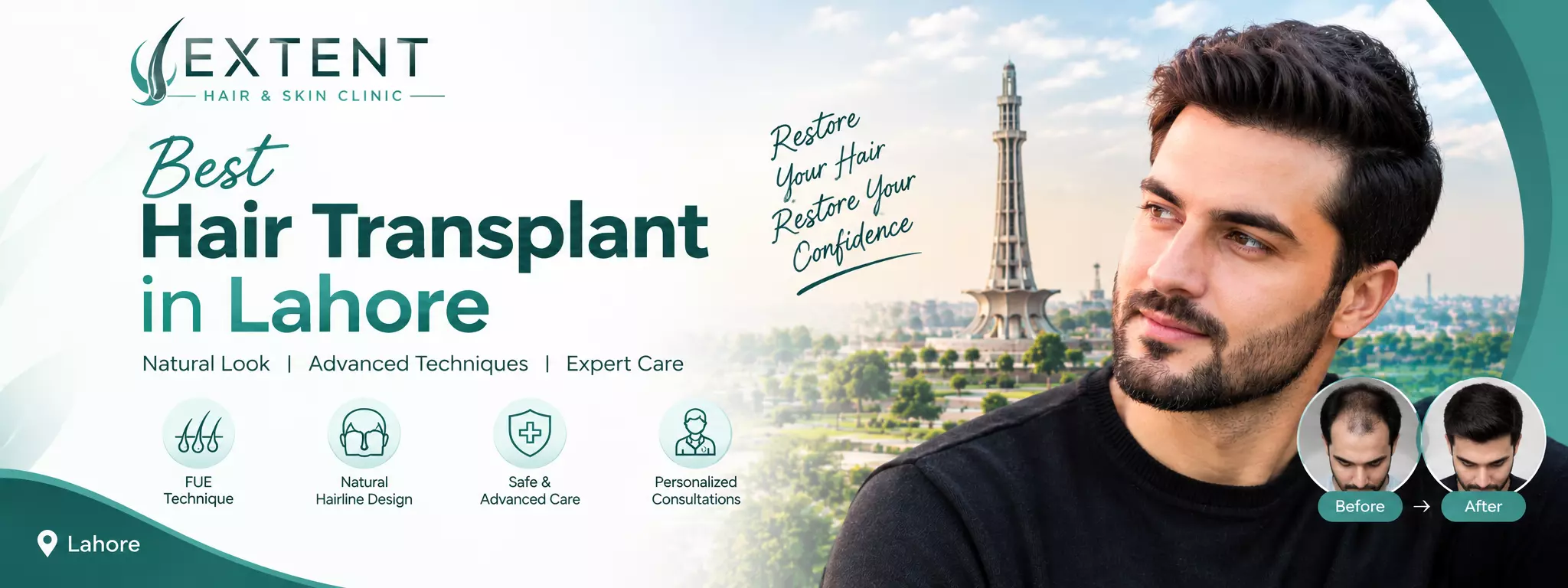
Best Hair Transplant in Lahore A Complete Guide to Natural-Looking Hair Restoration
Hair loss can affect a person's confidence, appearance, and daily life. Whether you are experiencing a receding hairline, thinning hair, or bald patches, finding the right hair restoration option is an important decision.
If you are searching for the best hair transplant in Lahore, understanding the procedure, hairline design, graft planning, and clinic selection can help you make a more informed choice.
Lahore offers different hair restoration options, including Follicular Unit Extraction (FUE), Follicular Unit Transplantation (FUT), and other treatments for selected hair-loss conditions.
However, the most suitable treatment depends on your individual hair-loss pattern, donor hair availability, scalp condition, and expectations.
Understanding Hair Transplantation in Lahore
A hair transplant is a surgical procedure in which hair follicles are moved from a donor area, usually the back or sides of the scalp, to areas affected by hair loss. The objective is to create natural-looking coverage while making responsible use of the available donor hair.
FUE is a commonly used technique in which individual follicular units are extracted and transplanted into carefully planned recipient areas.
FUT involves removing a strip of scalp from the donor area before separating the follicles for transplantation. The appropriate method depends on the patient's circumstances and the surgeon's assessment.
Before choosing a procedure, patients should understand the expected benefits, limitations, recovery process, and potential risks. A professional consultation helps determine whether a transplant is appropriate.
I Am Malik Izhar Ahmed, Director of Extent Hair and Skin Clinic
I am Malik Izhar Ahmed, the Director of Extent Hair and Skin Clinic, and I would like to extend a warm welcome to our website.
We are committed to helping individuals explore suitable hair restoration options through personalized consultations, careful treatment planning, and a patient-focused approach. Our goal is to provide clear information so that every patient can make an informed decision about their hair transplant journey.
At Extent Hair and Skin Clinic, we believe that understanding a patient's concerns and expectations is an important part of discussing hair restoration. Every individual has a different hair-loss pattern, and a treatment plan should reflect their needs rather than follow a one-size-fits-all approach.
Why Hairline Design Matters for Natural Results
A natural-looking hair transplant involves more than filling bald areas. Hairline design plays a major role in the overall appearance of the result. An excessively low, straight, or dense hairline may not suit every face or age group.
During planning, the hairline should be considered alongside facial proportions, age, existing hair, hair characteristics, and the possibility of future hair loss. The direction and angle of transplanted follicles also influence how natural the hairline appears.
For patients with a receding hairline, the frontal area may be a priority. Others may be more concerned about thinning around the mid-scalp or crown. Discussing these priorities before treatment helps establish realistic expectations.
Graft Planning: How Many Hair Grafts Do You Need?
One of the most common questions patients ask is how many grafts are required for a hair transplant. There is no single number that works for everyone.
The required graft count depends on the size of the area being treated, donor hair density, hair thickness, the number of hairs in each follicular unit, and the desired level of coverage.
A consultation should include an assessment of both the donor and recipient areas. The aim is to distribute available grafts thoughtfully instead of focusing only on achieving a large graft count.
The donor area is a limited resource. Extracting too much hair can affect its appearance and may reduce the options available for future treatment. A responsible plan balances present coverage goals with long-term donor preservation.
Read: What is a Keratin Treatment and How Long Does it Last?
How to Choose the Right Hair Transplant Clinic in Lahore
When comparing clinics, patients should look beyond advertising claims and promotional offers. Consider the following factors before making a decision:
- Qualified medical professional: Ask about the treating surgeon's qualifications, registration, and experience.
- Clear treatment plan: The clinic should explain the proposed technique, estimated graft requirement, and expected coverage.
- Realistic expectations: Be cautious of guaranteed results or promises of identical outcomes for every patient.
- Transparent pricing: Request a clear explanation of the total cost and any additional charges.
- Aftercare support: Understand what follow-up appointments and recovery instructions are provided.
- Patient safety: Discuss possible complications, your medical history, and whether you are a suitable candidate.
A good consultation should give you time to ask questions and understand your options before deciding whether to proceed.
What Happens During a Hair Transplant Procedure?
Although the exact process varies by technique and individual case, a hair transplant generally follows several stages.
First, the medical professional assesses your hair-loss pattern and donor area. Next, the treatment plan and hairline are discussed, and the donor and recipient areas are prepared. In an FUE procedure, follicular units are extracted individually and then placed into the planned recipient sites.
The placement of grafts requires attention to their direction, angle, and distribution. These details contribute to the overall appearance of the transplanted hair.
Patients should receive instructions about protecting the grafts, washing the scalp, managing early recovery, and attending follow-up appointments.
Recovery and Expected Hair Growth
Hair transplant recovery takes place gradually. Some redness, swelling, tenderness, or small crusts may occur during the early healing period. Patients should follow the clinic's instructions and contact their medical professional if they experience concerning symptoms.
Transplanted hairs may shed during the first weeks after surgery. This can be a normal part of the process, and new growth develops gradually over the following months. Visible improvement varies from person to person, and maturation may continue for a year or longer.
Patients should avoid judging the final result too early. Follow-up appointments can help monitor healing and progress while addressing any concerns.
Who May Be Suitable for a Hair Transplant?
A hair transplant may be an option for some people with pattern hair loss who have an adequate donor supply and realistic expectations. However, not everyone is a suitable candidate.
Factors such as the cause of hair loss, age, scalp health, existing medical conditions, donor density, and the progression of hair loss can influence the decision. Some patients may benefit from medical evaluation or non-surgical treatments instead of immediate surgery.
A qualified medical professional should assess the individual's circumstances before recommending a procedure.
Frequently Asked Questions
How much does a hair transplant cost in Lahore?
The cost varies by clinic, technique, graft requirement, medical team, and the services included. Ask for a personalized quote after assessment rather than relying on a general estimate.
Is FUE better than FUT?
Neither method is automatically best for every patient. FUE extracts individual follicular units, while FUT removes a strip of scalp for graft preparation. The suitable option depends on the patient's needs and professional assessment.
How long does it take to see results?
Hair growth is gradual. Transplanted hairs may shed initially, and visible growth develops over the following months. Final results can take a year or longer to mature.
Does a hair transplant guarantee permanent results?
Transplanted follicles can provide lasting growth, but outcomes vary. Existing non-transplanted hair may continue to thin, and no clinic should guarantee a specific cosmetic result.
What should I ask during my consultation?
Ask about the treating surgeon, the recommended technique, donor-area assessment, estimated graft requirement, expected coverage, potential risks, recovery, aftercare, and the complete cost.
Conclusion
Choosing the best hair transplant in Lahore requires careful research, realistic expectations, and a personalized medical assessment. Hairline design, graft distribution, donor preservation, surgical expertise, and aftercare all deserve attention when comparing treatment options.
Before making a decision, arrange a consultation, discuss your goals openly, and make sure you understand the benefits, limitations, risks, and costs involved. A well-informed approach can help you choose a treatment plan that is appropriate for your individual needs.