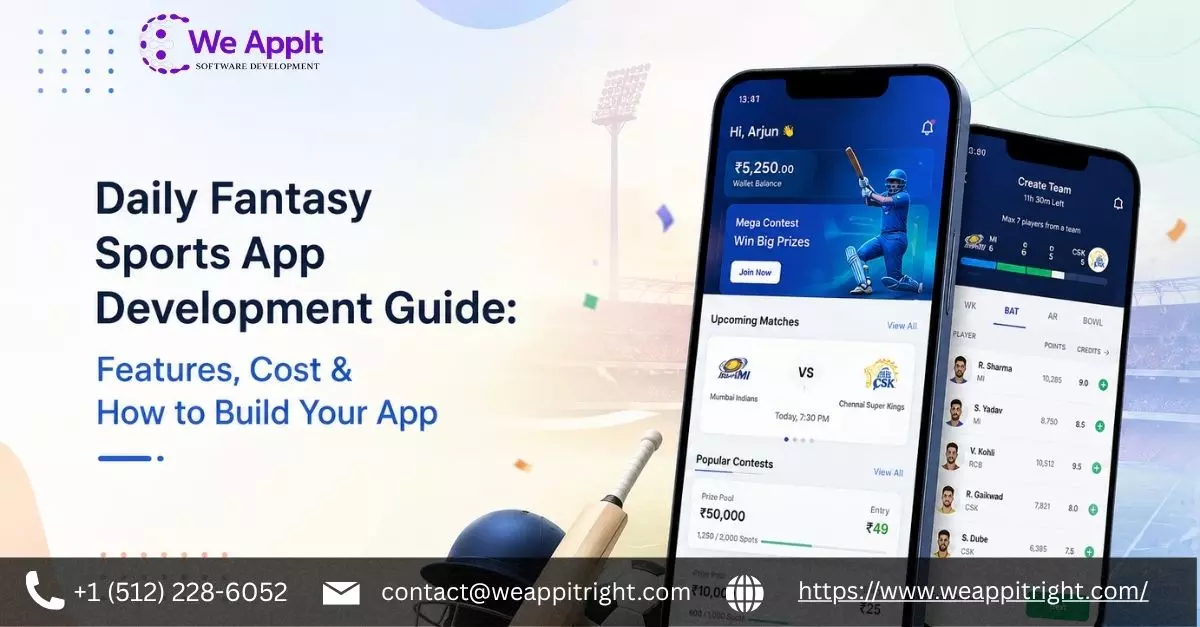
Best DFS App Development Company in the USA (2026 Guide)
The Daily Fantasy Sports industry in the USA is growing faster than ever. With millions of users placing lineups every week across football, basketball, baseball, and more, businesses see a real opportunity to enter this space. But success in this market starts with one critical decision choosing the right development partner.
This guide breaks down what to look for in a top DFS app development company and what makes a platform truly stand out in 2026.
Why the DFS Market Is Booming in 2026
The U.S. fantasy sports market has matured significantly. Favorable regulations across most states, a growing mobile-first audience, and the rise of sports betting culture have all fueled demand for better, faster, and more engaging Daily Fantasy Sports experiences.
Users today don't just want to play — they want seamless performance, real-time stats, secure payments, and social features that keep them coming back. That's why the quality of your development partner matters more than ever.
What Makes a Great DFS App Development Company?
Not every software agency can build a competitive Daily Fantasy Sports App. The best DFS App Development Company combines technical expertise, industry knowledge, and experience in delivering scalable, high-performance fantasy sports platforms.
When choosing a DFS App Development Company, look for proven experience in sports technology, strong UI/UX capabilities, secure payment integration, and scalable app architecture.
1. Domain Experience in Fantasy Sports
A company that has built fantasy or sports-related apps before will understand the nuances from contest logic and scoring engines to real-time data feeds and player statistics. General app developers can struggle with these specifics.
2. End-to-End Daily Fantasy Sports App Development Capabilities
Look for a partner that can handle the full product lifecycle — from ideation and UI/UX design to backend architecture, API integrations, testing, and post-launch support. Fragmented teams mean fragmented products.
3. Real-Time Data Integration
Top Daily Fantasy Sports Apps rely on live player stats, injury updates, and score feeds. Your development company should have experience integrating with providers like Sportradar, Stats Perform, or similar sports data APIs.
4. Payment Gateway and Wallet Integration
Secure, fast, and compliant payment handling is non-negotiable. Look for companies experienced with platforms like Stripe, PayPal, Braintree, or dedicated gaming payment processors.
5. Compliance and Legal Awareness
Operating a Daily Fantasy Sports Platform in the USA means navigating a complex legal landscape. Your development partner should understand state-specific compliance requirements and help you build a platform that operates within the rules.
Core Features Your DFS App Needs in 2026
Whether you're building from scratch or upgrading an existing product, today's users expect a specific set of features across all Daily Fantasy Sports Platforms:
- Contest Lobby — Where users browse available contests by sport, entry fee, and prize pool
- Team Builder / Lineup Tool — Intuitive drag-and-drop lineup creation with salary cap enforcement
- Live Scoring Dashboard — Real-time point updates as games are in progress
- Wallet & Withdrawals — Seamless deposit, balance management, and payout flows
- Push Notifications — Lineup alerts, contest reminders, and result announcements
- Referral & Bonus System — Built-in tools to grow your user base organically
- Admin Panel — Full control over contests, users, payouts, and platform analytics
The Best Daily Fantasy Sports Apps in 2026 combine all of these features with a clean, fast, and mobile-first user interface.
Read: Top 10 Custom Web Application Development Companies
How to Build a DFS App — Step by Step
Building a DFS app is not just a coding project — it's a product journey. Here's how the process typically works with a professional development company:
Step 1: Discovery and Planning
This is where you define your product. A good development team will sit down with you to understand your target audience, the sports you want to cover, your contest formats, and your monetization model. The output is a clear product roadmap and feature list that guides everything that follows.
Step 2: UI/UX Design
Before a single line of code is written, designers create wireframes and interactive prototypes. This step is critical because DFS apps live or die by their user experience. The lineup builder, contest lobby, and live scoring screen all need to feel intuitive and fast on mobile devices.
Step 3: Backend Development
This is the engine of your platform. Developers build the contest management system, scoring logic, wallet infrastructure, and the real-time data pipeline. The backend must be able to handle large volumes of concurrent users — especially during peak sporting events like NFL Sundays or NBA playoffs.
Step 4: Frontend and Mobile Development
The client-facing side of your app is built for iOS, Android, and web. Most teams today use cross-platform frameworks like React Native or Flutter to build for both mobile operating systems simultaneously, which saves time and cost without sacrificing quality.
Step 5: Third-Party Integrations
Your app needs to connect with several external services — sports data providers for live stats, payment gateways for transactions, KYC (Know Your Customer) tools for identity verification, and push notification services for user engagement.
Step 6: Testing and Quality Assurance
A DFS app handles real money and real-time data, so thorough testing is essential. This includes functional testing, load testing to simulate high-traffic scenarios, security audits, and UAT (user acceptance testing) to make sure everything works as intended before launch.
Step 7: Launch and Post-Launch Support
Going live is just the beginning. A reliable development partner will monitor your platform closely after launch, fix any issues quickly, and help you roll out new features based on user feedback and market trends.
White Label vs. Custom Build — Which Should You Choose?
This is one of the most common questions businesses ask before starting development.
a. Daily Fantasy Sports White Label Solutions
A Daily Fantasy Sports White Label solution gives you a ready-made platform that you can rebrand and launch quickly. It's ideal if:
- You want to enter the market fast
- Your budget is limited
- You're testing product-market fit before investing heavily
White label platforms usually come with core features pre-built and can be customized to match your brand identity.
b. Custom Development
A fully custom build gives you complete control over features, performance, and user experience. It's the better choice if:
- You have a unique product concept
- You're targeting a specific niche or audience
- You want long-term scalability without licensing constraints
Many successful Daily Fantasy Sports businesses started with a white label and eventually transitioned to a custom build as they scaled.
How Much Does It Cost to Build a DFS App?
Cost is one of the first questions any business owner asks, and the honest answer is — it depends on what you're building. That said, here are realistic cost ranges based on the type of product:
a. White Label DFS Platform
A white label solution is the most affordable entry point. Licensing and setup costs typically range from $10,000 to $30,000, depending on the provider and the level of customization you need. Ongoing monthly fees for hosting, support, and updates usually add another $1,000 to $3,000 per month.
b. Custom MVP (Minimum Viable Product)
If you want to build a custom app with core features — contest lobby, lineup builder, live scoring, and basic wallet functionality — expect to invest between $40,000 and $80,000. This gets you a functional product you can launch and test in the market.
c. Full-Featured Custom DFS Platform
A fully featured platform with advanced contest types, multi-sport support, robust analytics, referral systems, and a polished admin panel will typically cost between $80,000 and $200,000 or more, depending on the complexity and the development team's location and rates.
d. Ongoing Costs to Plan For
Beyond the initial build, factor in ongoing expenses such as sports data API subscriptions (which can run $1,000–$5,000 per month depending on the provider), payment processing fees, cloud hosting, and regular development work to add features and maintain performance.
The key takeaway is this — cheaper isn't always better. A poorly built platform that crashes during a major game or has security vulnerabilities will cost you far more in lost users and reputation than the savings were worth.
Final Thoughts
Choosing the right DFS app development company is key to building a successful fantasy sports platform in the USA. At We AppIT, we develop scalable, secure, and feature-rich DFS applications tailored for the U.S. market.
From startups to enterprise platforms, our team delivers high-performance solutions with industry expertise, compliance knowledge, and modern technology. Whether you’re launching a new DFS app or upgrading an existing one, we help turn your vision into a competitive product.