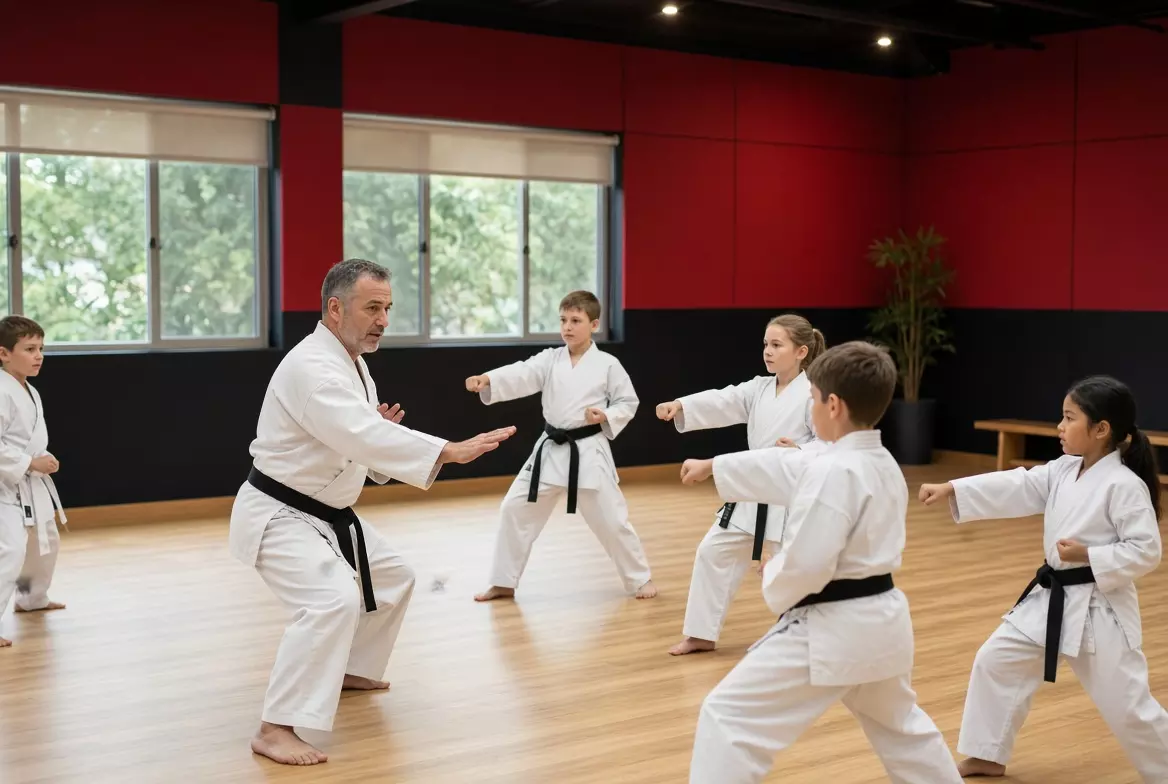
Behind the Belt: How Leadership Shapes Every Karate Club Australia Calls Home
Walk into any dojo on a Tuesday evening and you'll see the same thing — students bowing in, instructors correcting a stance, the quiet discipline that makes Shotokan Karate recognisable anywhere in the world.
What most students don't see is the structure behind that consistency: the board members, examiners and volunteers who spend years making sure a karate club Australia joins today trains to the same standard as a dojo that's been open for decades.
That's the part of martial arts that rarely gets talked about — governance. But it's exactly what separates a loosely run local class from a nationally affiliated JKA Karate organisation with real technical accountability.
Why Leadership Structure Matters in Karate
Karate is often described as a personal discipline, and it is. But at a national level, it also has to function like any serious membership organisation — with people responsible for grading standards, event coordination, dispute resolution and long-term planning.
Without that structure, technique starts to drift from club to club, gradings lose consistency, and the "traditional" part of traditional Shotokan Karate becomes harder to guarantee.
This is where a national board and a supporting committee earn their keep. A board typically sets direction — technical standards, affiliations, long-term strategy
while a working committee handles the operational side: organising seminars, coordinating between branches, and keeping communication open across states and territories.
The Role of a National Working Committee
A National Working Committee is usually made up of elected representatives, often serving fixed terms, drawn from different clubs and regions.
Their job isn't glamorous — it's logistics, coordination, and follow-through — but it's the reason a member training in one state can attend a seminar in another and find the same etiquette, the same terminology, and largely the same technical expectations.
For a karate club Australia newcomer might be considering joining, this structure is worth paying attention to.
A club affiliated with a properly governed national body — one with a board, a working committee, and documented qualifications for its instructors and examiners — offers a level of accountability that an unaffiliated class simply can't match.
What This Means for Students and Instructors
For students, it means gradings mean something beyond the local dojo — they're recognised against a broader, national standard.
For instructors, it means access to a support network: shared resources, seminars led by senior instructors, and a clear pathway for their own development within the organisation.
For clubs considering affiliation, it means joining something bigger than a single dojo — a network where technical standards, event calendars and instructor qualifications are coordinated rather than left to chance.
Read: Top 10 Martial Arts Training Centers in Dubai
A Foundation Worth Understanding
Whether you're a parent researching your child's first martial art, an experienced practitioner relocating between states, or an instructor weighing up affiliation, it's worth looking past the trophies and belts to the governance underneath.
A well-run JKA Karate organisation — with a functioning board and National Working Committee — is often the clearest signal that a club takes its training seriously for the long term.