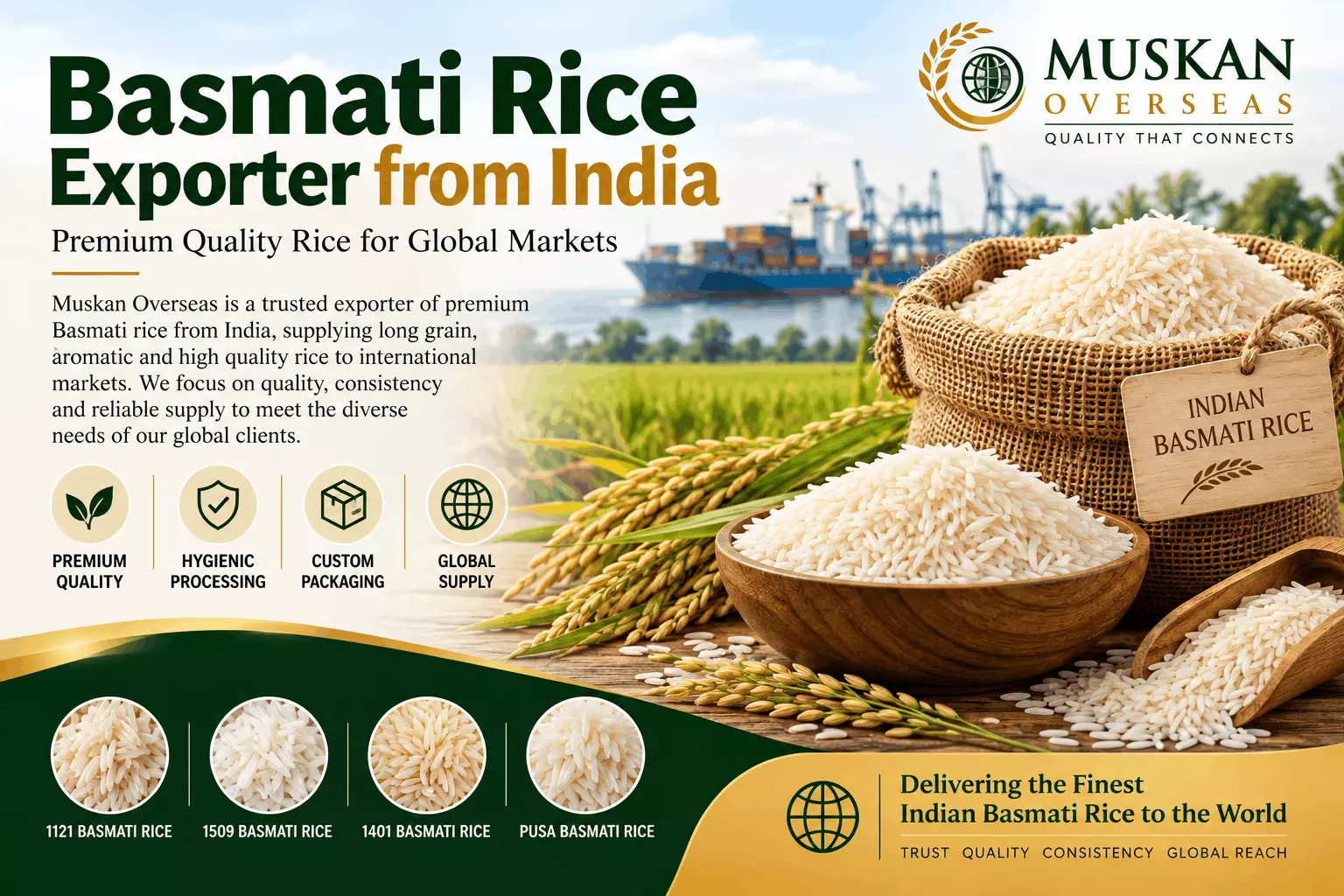
Basmati Rice Exporter from India: What Global Buyers Should Know
Why Indian Basmati Rice Has Global Demand
Basmati rice is traditionally associated with the Himalayan foothill region of the Indian subcontinent. In India, its recognized geographical area covers parts of Punjab, Haryana, Himachal Pradesh, Uttarakhand, Delhi, western Uttar Pradesh, and Jammu and Kashmir.
The rice is commonly used for:
- Biryani and pulao
- Restaurants and catering
- Retail food products
- Hotels and hospitality businesses
- Wholesale distribution
- Private-label food brands
Its aroma and cooking characteristics are particularly important to buyers who want a premium rice product rather than simply a staple grain.
What Should Buyers Look For in an Exporter?
Imagine an importer ordering several containers of Basmati rice for a retail market. The quoted price looks attractive, but after receiving the shipment, the grain quality does not match the agreed sample.
That situation can create problems with retailers and customers.
This is why experienced buyers generally check several factors before placing a large order.
Important things to evaluate
- Rice variety and specifications
- Grain length and appearance
- Broken grain percentage
- Moisture level
- Aroma and cooking characteristics
- Processing and sorting facilities
- Packaging options
- Quality testing procedures
- Export documentation
- Shipping and delivery arrangements
A reliable exporter should be able to clearly explain these details instead of providing only a price quotation.
Quality Consistency Matters
A single good shipment is not enough for a long-term business relationship.
Suppose a distributor sells a particular Basmati rice brand to supermarkets. Customers become familiar with its aroma, grain appearance, and cooking results. If the next shipment performs very differently, the distributor may face complaints even if the rice is still technically usable.
For this reason, consistency across batches is an important consideration when selecting a Basmati rice exporter from India.
Processing, grading, sorting, storage, and packaging all play a role in maintaining the expected product quality.
Read: Rice Export Company in India by Muskan Overseas
Understanding India's Basmati Export Market
India's rice export industry operates across a wide range of international markets. APEDA lists Saudi Arabia, Iran, Iraq, the UAE, Yemen, and the United States among the major destinations for Indian Basmati rice in 2025-26.
The wider Indian rice export industry is also significant. APEDA reports that India's total rice exports reached 20.19 million metric tonnes in 2024-25, with export value reaching approximately US$12.47 billion.
These figures show why buyers have many sourcing options and why exporters need to maintain dependable quality and documentation.
Muskan Overseas and Basmati Rice Supply
Muskan Overseas works with buyers looking for Indian rice for domestic and international markets. For businesses interested in sourcing Basmati rice, discussing the exact requirement before receiving a quotation can make the purchasing process much smoother.
A buyer can share:
- Required Basmati rice variety
- Quantity needed
- Destination country and port
- Preferred packaging
- Quality specifications
- Private-label requirements
- Expected delivery schedule
This information helps an exporter understand the actual requirement instead of providing a generic quotation.
A Practical Example
Consider an overseas wholesaler looking for 100 metric tonnes of Basmati rice.
Instead of selecting an exporter solely on the lowest quoted price, the buyer could compare:
- Product specifications
- Sample quality
- Packaging
- Minimum order quantity
- Quality-control process
- Export documentation
- Shipping terms
- Delivery schedule
- Communication and after-sales support
A clear comparison can help avoid unexpected costs and quality-related issues later.
Questions to Ask Before Buying
Before finalizing a Basmati rice supplier, international buyers should ask:
- Can you provide product specifications?
- Can I receive a sample before placing a bulk order?
- What packaging sizes are available?
- Can you support private-label packaging?
- What quality checks are performed?
- What export documents are provided?
- What are the available shipping terms?
- What is the expected production and dispatch timeline?
These questions help both parties understand the order clearly.
FAQs
What makes Basmati rice different?
Basmati is known for its extra-long slender grains, distinctive aroma, flavor, and soft, fluffy texture after cooking. APEDA notes that authentic Basmati can elongate to at least twice its original size during cooking.
Which countries import Indian Basmati rice?
Major destinations include Saudi Arabia, Iran, Iraq, the UAE, Yemen, and the United States, according to APEDA's 2025-26 data.
Should buyers request a sample before a bulk order?
Yes. A sample allows buyers to check grain appearance, aroma, cooking performance, and other agreed specifications before committing to a large shipment.
What should an importer discuss with an exporter?
Product variety, quantity, specifications, packaging, destination, documentation, shipping terms, and delivery expectations are useful starting points.
Conclusion
Choosing a Basmati rice exporter from India is a business decision that requires more than comparing quotations.
Product consistency, processing standards, packaging, documentation, communication, and delivery reliability all matter when building a dependable supply chain.
Muskan Overseas can work with buyers to understand their Basmati rice requirements and discuss suitable supply options.
For any international rice purchase, starting with clear specifications and a sample is a practical way to build confidence before moving to a larger order.