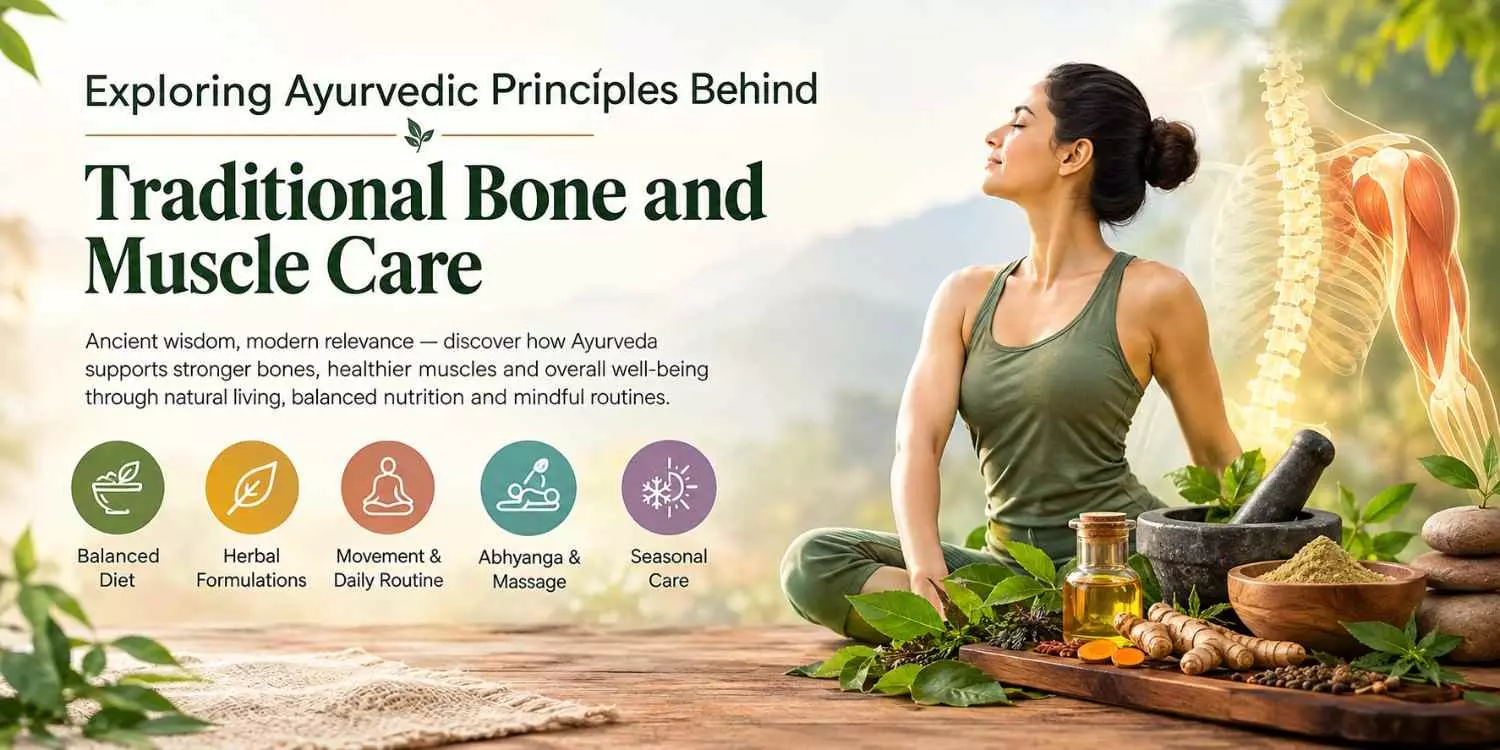
Exploring Ayurvedic Principles Behind Traditional Bone and Muscle Care
Ayurveda has a long tradition of viewing physical well-being through a combination of diet, daily routines, movement, rest, and traditional formulations.
Bone and muscle care is considered as part of this broader approach rather than as an isolated aspect of health.
When exploring Ayurvedic Medicine for Bones and Muscles, it is useful to understand the traditional principles behind these practices.
Ayurveda considers bones, muscles, digestion, lifestyle, and other body functions as connected parts of an overall system. This perspective can help readers understand why traditional Ayurvedic routines often combine several types of practices.
Understanding Bones and Muscles Through Ayurveda
Ayurvedic texts describe different tissues of the body through the concept of Dhatus. Asthi Dhatu is traditionally associated with bones, while Mamsa Dhatu is associated with muscles and related soft tissues.
These concepts provide a traditional framework for understanding how different tissues are viewed within Ayurveda. Rather than considering bones and muscles separately, Ayurvedic principles often look at their relationship with other aspects of the body and daily life.
The Role of Doshas
Ayurveda describes three doshas: Vata, Pitta, and Kapha. These are traditionally used to describe different functional patterns within the body.
Vata is commonly associated with movement and is frequently discussed when studying traditional approaches to the musculoskeletal system. Ayurvedic routines may therefore consider movement, rest, seasonal changes, diet, and daily activities when discussing bone and muscle care.
Understanding doshas can also help explain why Ayurvedic practices are often personalized according to an individual's constitution and lifestyle.
Importance of Diet in Traditional Bone and Muscle Care
Food plays an important role in Ayurvedic philosophy. Traditional dietary practices consider factors such as the qualities of foods, preparation methods, meal timing, seasonal changes, and individual requirements.
A varied diet can include foods such as grains, pulses, vegetables, fruits, nuts, seeds, and other commonly consumed ingredients. The selection and preparation of food may differ according to traditional Ayurvedic principles and individual dietary preferences.
Ayurveda therefore places dietary habits within a larger daily routine rather than treating food as a separate part of bone and muscle care.
Traditional Herbs and Formulations
Herbs have been used in Ayurvedic traditions as ingredients in different types of formulations. Depending on the preparation, herbs may be used in powders, tablets, oils, decoctions, and other traditional forms.
Different formulations contain different combinations of ingredients and may have their own traditional uses. The method of preparation, quantity, timing, and directions can also vary between products.
Anyone considering an Ayurvedic formulation should read its ingredient information and usage instructions carefully. Individual dietary requirements, existing medications, allergies, and other personal considerations should also be taken into account.
Movement as Part of Daily Care
Regular movement is an important part of maintaining an active lifestyle. Walking, stretching, yoga, and other forms of physical activity can be incorporated into daily routines according to individual ability and requirements.
From an Ayurvedic perspective, daily activities may be considered alongside rest and other lifestyle practices. The amount and type of movement can be adjusted according to age, routine, physical ability, and personal circumstances.
A consistent routine can also make it easier to maintain healthy lifestyle habits over time.
Abhyanga and Traditional Massag
Abhyanga is a traditional Ayurvedic practice involving the application of oil through massage. It has been described in Ayurvedic literature as part of personal care and daily routines.
The type of oil, method of application, duration, and frequency may vary according to traditional practices and individual preferences.
Massage is generally considered within the context of a broader routine that can include movement, rest, dietary habits, and other personal-care practices.
Seasonal Changes and Ayurvedic Routines
Seasonal changes are another important consideration in Ayurveda. Traditional practices may recommend adjusting food choices, daily activities, sleep routines, and personal-care practices according to changes in the environment.
For bone and muscle care, this may involve paying attention to activity levels, rest, nutrition, and everyday routines during different times of the year.
Understanding seasonal routines can provide additional context for how Ayurveda approaches lifestyle management.
Read: Can Sarpagandha Improve Overall Well-Being? Here's What
The Holistic Perspective of Ayurveda
A key feature of Ayurvedic philosophy is its broader view of the body. Nutrition, digestion, movement, sleep, daily activities, personal care, and seasonal routines may all be considered when discussing physical well-being.
This approach means that traditional bone and muscle care is not necessarily centered around one ingredient or one practice. Instead, several lifestyle elements can be considered together as part of an individual's routine.
Making Informed Choices About Ayurvedic Products
When choosing an Ayurvedic formulation, it is useful to review the ingredient list, formulation type, directions for use, and other product information.
People should also consider their individual circumstances, including dietary requirements, allergies, existing health conditions, and medications.
When there are questions about using a particular formulation, consulting a qualified Ayurvedic practitioner or healthcare professional can provide appropriate guidance.
Conclusion
Traditional Ayurvedic bone and muscle care is based on a combination of principles involving diet, movement, daily routines, seasonal awareness, massage practices, and traditional formulations.
Understanding these principles can make it easier to explore Ayurvedic approaches in an informed way.
Shree Shanker Ayurvedic Pharmacy provides Ayurvedic products that can be explored alongside an understanding of traditional Ayurvedic practices and individual requirements.