Automotive Embedded System Market Accelerating Toward 2033
Introduction
Automotive embedded systems—integrated devices that oversee functions like safety, infotainment, engine control, and connectivity—have become the core of modern vehicles. These systems leverage sensors, software, and ECUs to deliver seamless performance, safety, and user experience. As vehicle production scales globally and smart technologies proliferate, this market is set for rapid expansion.
Market at a Glance
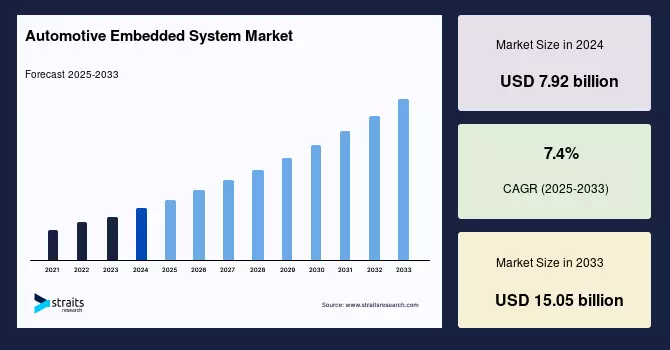
- 2024 Market Size: USD 7.92 billion
- 2025 Estimate: USD 8.52 billion
- 2033 Forecast: USD 15.05 billion
- CAGR (2025–2033): 7.4%
These figures reflect a near doubling of market value, propelled by rising demand for connected, safe, and efficient vehicles.
Accelerators of Growth
Rising Vehicle Production & Electrification
Global auto sales increased from 79.7 million in 2020 to 92.7 million in 2023, pushing the need for embedded technologies. Electric and autonomous vehicles, in particular, demand sophisticated systems—for battery management, navigation, and advanced safety controls.
ADAS Expansion
Features such as collision warning, adaptive cruise control, and lane keeping are increasingly standard. These rely on AI, sensor arrays, and real-time processing—all powered by embedded systems.
Regulatory Pressure & Safety Mandates
Global mandates—like tire pressure monitoring systems (TPMS), airbags, and anti-lock brakes—drive embedded system integration. Standards such as the U.S. TREAD Act and safety regulations in the EU ensure embedded systems are not a luxury but a necessity.
REQUEST SAMPLE: https://straitsresearch.com/report/automotive-embedded-system-market/request-sample
Key Market Restraints
Embedded Security Concerns
Most systems lack secure and routine firmware updates, creating vulnerabilities over time. Embedded devices, often designed for long lifespans, are difficult to patch—posing a risk in the era of connected vehicles.
Strategic Opportunities
Electric Vehicle (EV) Leadership
Embedded systems play a pivotal role in EVs—managing energy distribution, thermal controls, and automation. As countries push for greener mobility, embedded system demand in this segment is surging.
Regional Spotlight
- Asia-Pacific leads in market share, thanks to manufacturing hubs in China, India, Japan, and Australia, and rising EV adoption.
- North America is the fastest-growing region, backed by its expertise in electronic architectures, rising EV infrastructure, and regulatory advancement.
Market Segmentation Highlights
- Component Type: Sensors dominate, crucial for infotainment, safety, and system monitoring. Embedded software also plays a leading role—enabling real-time control, diagnostics, and updates.
- Vehicle Type: Passenger cars lead the embedded system pull, fueled by urbanization, rising incomes, and demand for safety and convenience.
Conclusion
With the global automotive embedded system market strengthening from USD 7.92 billion in 2024 to USD 15.05 billion by 2033, the future looks promising. A steady CAGR of 7.4% underscores this upward trajectory. Driven by vehicle electrification, regulatory safety mandates, and technological innovation, embedded systems will continue to define the automotive landscape—making rides smarter, safer, and more connected.
REQUEST SAMPLE: https://straitsresearch.com/report/automotive-embedded-system-market/request-sample