ASL Translator – The Future of Communication Between Deaf and Hearing Worlds
Language is more than words—it’s the foundation of human connection. For Deaf and hard-of-hearing individuals, American Sign Language (ASL) is a vital means of communication that expresses not only meaning but also culture and identity.
However, most hearing individuals don’t know ASL, which creates a communication barrier in everyday life.
This gap is being closed by the emergence of ASL Translators—both human interpreters and innovative AI-based digital tools that translate between English and ASL. From classrooms and hospitals to websites and mobile apps, ASL translators are reshaping accessibility and inclusion in powerful ways.
In this article, we’ll explore what ASL translators are, how they work, their importance, technology, and the promising future they hold.
What Is an ASL Translator?
An ASL Translator (or interpreter) converts spoken or written English into American Sign Language, and sometimes vice versa.
Traditionally, human translators perform this role in person or through video calls. However, technological innovation has introduced digital ASL translators, capable of translating text or speech into sign language using animations, videos, or AI-powered avatars.
Simply put, an ASL translator acts as a bridge between two languages—the visual grammar of ASL and the spoken/written grammar of English.
Understanding American Sign Language (ASL)
Before understanding ASL translators, it’s crucial to understand ASL itself.
American Sign Language (ASL) is a complete, independent language used primarily by the Deaf community in the United States and parts of Canada. It’s not a visual version of English but a separate language with its own grammar, syntax, and idioms.
Key Features of ASL:
- Hand shapes and movements: Core building blocks of meaning.
- Facial expressions and body movement: Add grammar, emotion, and context.
- Spatial use: Signers use space to show relationships, directions, and concepts.
- Grammar structure: ASL follows “topic-comment” sentence order, not English syntax.
For example:
English – “I am going to the store.”
ASL – “STORE I GO.”
This complexity makes ASL translation unique—and challenging—for both humans and machines.
Types of ASL Translators
1. Human ASL Translators
Human translators, also known as sign language interpreters, are professionals fluent in ASL and English. They are certified and trained to convey spoken content accurately into ASL and vice versa.
They work in:
- Schools and universities: Supporting Deaf students in mainstream education.
- Hospitals: Assisting patients and doctors in communication.
- Courtrooms: Ensuring fair legal access and understanding.
- Events and meetings: Enabling participation in conferences, seminars, and workplaces.
Advantages:
- Contextual accuracy and emotional depth.
- Cultural understanding of Deaf norms.
- Ability to adapt to complex or emotional topics.
Limitations:
- Availability and cost.
- Scheduling constraints.
- Not always feasible for quick, casual communication.
2. Digital ASL Translators
Digital ASL translators are software systems that use AI and computer vision to interpret English (spoken or written) into ASL signs—or vice versa.
They come in several types:
a. Text-to-ASL Translators
You type an English sentence, and the system shows ASL signs using animated avatars or video clips.
b. Speech-to-ASL Translators
These tools convert spoken English into sign language in real-time using speech recognition technology.
c. Sign-to-Text Translators
Using a webcam or phone camera, the system recognizes hand gestures and converts them into written or spoken English.
One excellent example is SLTranslator.com, a web-based tool where users can instantly translate text into sign language using visual animations. It’s free, user-friendly, and ideal for learners or everyday communication.
How Do Digital ASL Translators Work?
Creating a working ASL translator requires combining several advanced technologies:
1. Computer Vision
This allows systems to detect and interpret hand shapes, movements, and facial expressions captured by a camera.
2. Machine Learning
The software learns from large datasets of ASL gestures, enabling it to recognize patterns and accurately identify signs.
3. Natural Language Processing (NLP)
NLP helps the system understand English grammar, meaning, and sentence structure to produce accurate ASL equivalents.
4. 3D Animation and Avatars
Many ASL translators use 3D avatars to demonstrate signs. The avatars perform realistic movements based on AI-generated data.
5. Speech Recognition
For voice input, ASL translators use speech-to-text technology to convert spoken words into text before translating them to ASL.
6. Gesture Recognition Algorithms
These algorithms track hand and body movements, distinguishing between different signs—even subtle ones that look similar.
Benefits of ASL Translators
ASL translators—both human and digital—bring massive benefits to individuals, organizations, and society as a whole.
1. Enhancing Accessibility
They make communication between Deaf and hearing people smoother in workplaces, schools, hospitals, and daily life.
2. Empowering the Deaf Community
ASL translators ensure Deaf individuals can express themselves and understand others clearly, leading to social and economic empowerment.
3. Cost-Effective Communication
Digital ASL tools provide an affordable solution where professional interpreters aren’t available.
4. Education and Learning
Students learning ASL can use digital translators to practice vocabulary and sentence formation interactively.
5. Promoting Inclusion
By removing language barriers, ASL translators foster empathy, understanding, and inclusion between Deaf and hearing communities.
Challenges and Limitations
Despite their importance, ASL translators—especially automated ones—still face several challenges.
1. Grammar Complexity
ASL grammar differs greatly from English, so direct word-for-word translation often leads to inaccurate results.
2. Non-Manual Cues
Facial expressions, head tilts, and body posture are part of ASL grammar, and computers often fail to interpret these accurately.
3. Regional Variations
Just like spoken languages, ASL has dialects and regional variations that complicate translation.
4. Real-Time Recognition
Fast or overlapping gestures can confuse AI-based systems, reducing accuracy.
5. Emotional and Cultural Context
Machines cannot fully grasp tone, sarcasm, or emotion—something human interpreters excel at.
6. Data Limitations
AI models require large datasets to train effectively. Many ASL datasets are still limited or not diverse enough.
Popular ASL Translator Tools and Apps
Here are some popular and reliable ASL translator tools currently available:
1. SLTranslator.com
A free online ASL translator that converts English text into animated sign language visuals. It’s ideal for students, educators, and anyone interested in learning or using ASL.
Features:
- Fast, user-friendly interface.
- Supports instant text-to-ASL conversion.
- Works on all modern browsers.
- Great for education and casual use.
2. Hand Talk
A mobile app featuring a 3D avatar named “Hugo” who translates text and speech into ASL and Brazilian Sign Language (Libras).
3. SignAll
An advanced AI system using multiple cameras and motion sensors to interpret sign language in real-time.
4. Lingvano
A learning platform for ASL learners, offering lessons, quizzes, and an interactive dictionary.
5. Google AI Experiments
Google researchers are exploring sign language recognition models that can understand gestures from webcam footage.
Each of these tools brings us closer to a world of seamless, inclusive communication.
The Role of Artificial Intelligence in ASL Translation
AI is the core driver of modern ASL translation systems. Here’s how it helps:
1. Deep Learning Models
AI models analyze thousands of videos of ASL signs to learn visual patterns and improve recognition accuracy.
2. Neural Machine Translation (NMT)
These systems translate English text into ASL grammar using advanced neural networks.
3. Motion Capture Technology
Captures detailed human movement to create realistic signing avatars.
4. Contextual Understanding
AI learns not just to recognize gestures, but also to understand their meaning based on context, improving natural translation.
5. Real-Time Processing
Combining computer vision and NLP, AI can now perform near-instant translations, making live conversations more feasible.
Educational Impact of ASL Translators
ASL translator also serve as powerful educational tools for both Deaf and hearing learners.
- For hearing people: They make it easier to learn ASL vocabulary and grammar.
- For Deaf students: Translators help them access written or spoken educational material.
- In classrooms: Teachers can use translators to communicate lessons visually.
By integrating digital ASL translators into education, schools can create more inclusive learning environments.
Social and Cultural Importance
ASL translators are not just technological innovations—they are tools for social equality and cultural preservation.
They ensure Deaf individuals can participate fully in society—watching news, attending meetings, and accessing information online.
Moreover, they preserve Deaf culture by making ASL more visible and respected in digital spaces, increasing awareness among hearing communities.
Future of ASL Translators
The future of ASL translation is incredibly promising. Researchers and developers are constantly improving recognition accuracy, realism, and speed.
Upcoming Innovations:
- 3D holographic interpreters: Project ASL interpreters in real environments.
- Augmented reality (AR) devices: Translate sign language instantly through AR glasses.
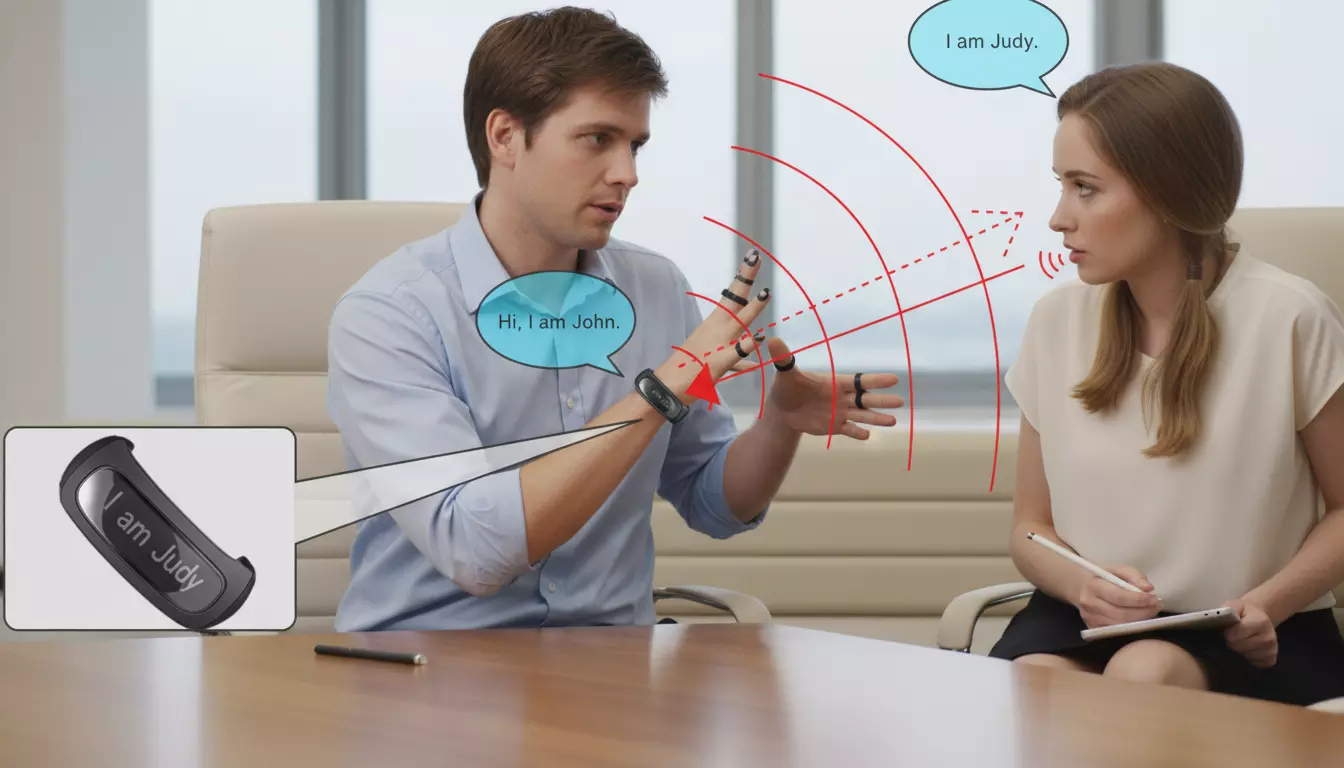
- Wearable tech: Smart gloves that capture hand motion to interpret ASL into text.
- Emotion-sensitive AI: Systems that read facial emotion for more accurate meaning.
- Integration with virtual assistants: ASL-enabled chatbots or smart home devices.
As these technologies evolve, we are moving toward a world where communication barriers between Deaf and hearing people will completely disappear.
Read: Top Finnish translators shaping global literature
Why ASL Translators Matter
At its heart, the purpose of ASL translation is inclusion. Communication should never depend on hearing ability. Every individual deserves equal access to information, education, and opportunities.
ASL translators embody this vision by empowering the Deaf community, helping hearing individuals learn, and making communication universal.
In workplaces, hospitals, schools, and digital platforms, they ensure everyone’s voice—whether spoken or signed—is heard and understood.
Conclusion
The ASL Translator stands as a symbol of human innovation and compassion. From skilled human interpreters to cutting-edge AI tools like SLTranslator.com, these translators are changing lives by turning silence into connection.
While technology still has room to grow, the progress so far is remarkable. Every new breakthrough brings us closer to a future where Deaf and hearing individuals communicate effortlessly—anytime, anywhere.
The journey of ASL translators is not just about technology; it’s about equality, inclusion, and the shared human desire to be understood. In this growing digital era, ASL translators remind us of one simple truth: communication is not just about words—it’s about connection.