Arthrosamid Orthopaedic Treatment: What It Actually Means for People Living with Knee Osteoarthritis
- There comes a point with knee pain where it stops feeling like “something to keep an eye on” and starts feeling like a permanent third roommate.
- Always there.
- Always inconvenient.
- Always making simple things more annoying than they need to be.
- You notice it getting out of bed.
- You notice it on stairs.
- You notice it after sitting too long.
- You notice it in the way you’ve started quietly changing your whole day around it.
- And when that happens, people usually don’t just want pain relief.
- They want a treatment plan that actually makes sense.
- That’s why more people are now asking about Arthrosamid orthopaedic treatment.
- Not because they’re chasing the newest thing.
- Because they’re tired of the cycle of “manage it, flare up, rest, repeat.”
- And honestly? That’s a very fair place to be.
The phrase sounds technical, but the question behind it is very human
- When people search Arthrosamid orthopaedic treatment, what they’re really asking is:
- “Is there something meaningful I can do for my knee before life gets smaller?”
- That’s the real question.
- Not “What’s the trendiest injection?”
- Not “What’s the fastest fix?”
- Just:
- “What are my sensible options if my knee keeps getting in the way?”
- That’s where this kind of treatment comes into the conversation—especially for people dealing with osteoarthritis who want to understand what sits between basic pain relief and major surgery.
So what is Arthrosamid, exactly?
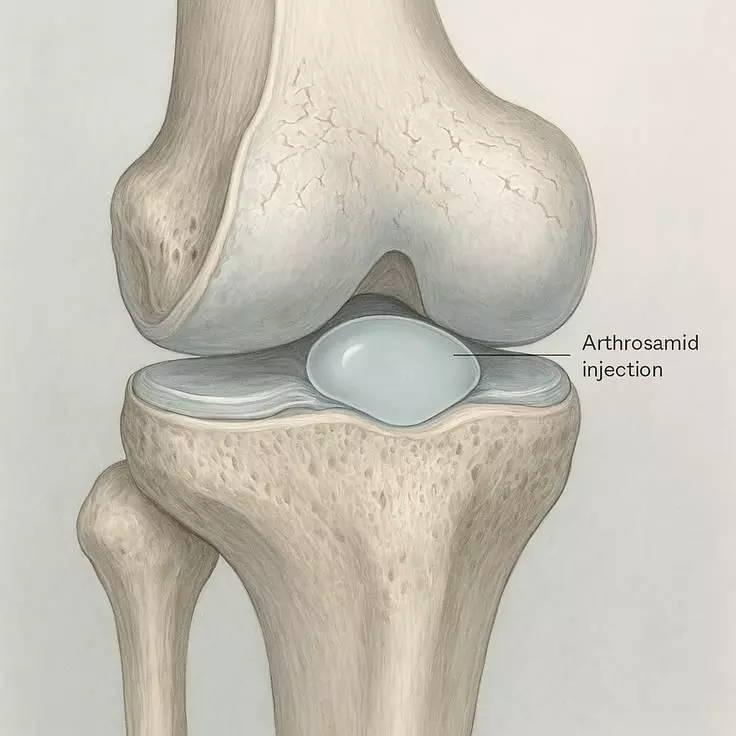
- In simple terms, Arthrosamid is an injectable hydrogel treatment used for knee osteoarthritis.
- That’s the medical version.
- The simpler version?
- It’s an injection placed into the knee joint and used to help reduce pain and improve function for some people whose knee arthritis is making everyday life harder than it should be.
- That’s the important part.
- This is not random “wellness” fluff.
- It’s not a spa treatment in a lab coat.
- And it’s not pretending to magically erase arthritis.
- It’s an orthopaedic treatment option for a very real and very common problem.
Why people are paying attention to it
Because a lot of adults are stuck in the same frustrating sentence:
“My knee is not bad enough for surgery… but it’s definitely bad enough to affect my life.”
That sentence describes a lot of people.
And if that’s you, you’ve probably already tried the obvious things:
- painkillers
- anti-inflammatory tablets
- physiotherapy
- exercises
- braces or supports
- “taking it easy”
- telling yourself to just push through a bit longer
Sometimes those things help. Sometimes they help just enough to keep you delaying a bigger decision.
But if your knee keeps coming back with the same nonsense, you eventually stop wanting temporary relief and start wanting a more structured orthopaedic plan.
That’s where Arthrosamid orthopaedic treatment starts making sense to explore.
Knee pain is rarely dramatic at first — that’s why people underestimate it
- This is one of the biggest traps.
- Knee osteoarthritis often doesn’t arrive like a crisis.
- It arrives like a slow inconvenience.
- A little stiffness here.
- A little ache there.
- A little more caution going downstairs.
- A little less confidence on long walks.
- Then one day you realise your knee has quietly started making decisions for you.
- That’s when people usually begin looking at things like Arthrosamid orthopaedic treatment.
- Not because they’re overreacting.
- Because they’ve finally realised this is not “just a niggle” anymore.
The part people often misunderstand
- Arthrosamid is not a cure for osteoarthritis.
- That matters.
- It does not regrow cartilage.
- It does not reverse years of wear and tear.
- It does not turn a damaged knee into a brand-new one with one injection and a positive mindset.
- What it may do is help improve pain and function for the right patient.
- That’s still significant.
- Because when your knee is affecting how you walk, work, stand, travel, or participate in normal life, even moderate improvement can feel huge.
- That’s why realistic expectations are not “negative.” They’re useful.
What makes this an orthopaedic conversation, not just an injection conversation?
This is a really important distinction.
A lot of people accidentally approach treatments backwards.
They ask:
“Which injection should I get?”
A better question is:
“What kind of knee problem am I actually dealing with, and what fits into a proper orthopaedic plan?”
That’s a much smarter way to think.
Because not all knee pain is the same.
It can come from:
- osteoarthritis
- cartilage wear
- meniscus issues
- ligament-related instability
- inflammation
- biomechanics or overload
- referred pain from elsewhere
That’s why proper assessment matters so much.
If you’re considering Arthrosamid injection London, the goal should not be to collect treatments like Pokémon.
The goal should be to figure out whether this treatment actually fits your knee and your life.
That’s what orthopaedic care is supposed to do.
Who tends to ask about Arthrosamid?
Usually people who sound like this:
- “My knee pain is becoming more regular.”
- “I can still function, but I’m definitely limited.”
- “I don’t feel ready for surgery.”
- “I want to stay active if I can.”
- “I need something more useful than just coping.”
That’s the exact stage where Arthrosamid orthopaedic treatment often becomes worth discussing.
Not because it’s dramatic.
Because it’s proportionate.
And honestly, proportionate treatment decisions are usually the smartest ones.
The question people really care about isn’t “Does it work?”
It’s this:
“Will it help enough to make everyday life easier?”
That’s the real question.
Because treatment is not just about your scan.
It’s about whether you can:
- walk more comfortably
- stand longer
- move more confidently
- do stairs with less dread
- stop planning your whole life around your knee
That’s what people mean when they say they want “results.”
Not perfection.
Just relief that actually changes something.
The non-obvious advice that helps more than people expect
Before choosing any orthopaedic treatment, define your personal goal in normal language.
Not vague language.
Specific, useful language.
For example:
- “I want to walk 30 minutes comfortably.”
- “I want to travel without stressing about pain.”
- “I want to delay surgery if possible.”
- “I want to stay active enough to keep up with work or family.”
That clarity changes everything.
Because once you know what you’re actually trying to get back, it becomes much easier to decide whether something like Arthrosamid for knee pain belongs in your treatment plan.
That’s the kind of thinking that saves people from random, expensive decision-making.
When should you stop DIY-ing and get orthopaedic advice?
If your knee is doing any of the following, it’s worth getting properly assessed:
- pain on most days
- stiffness after sitting
- trouble with stairs
- reduced walking distance
- swelling or aching after activity
- declining confidence in movement
- poor response to exercises, physio, or medication
That doesn’t automatically mean surgery is next.
But it does mean you probably need more than trial-and-error now.
And there’s no prize for waiting until your knee becomes unbearable before taking it seriously.
Read: Arthrosamid for Knee Pain: A Realistic Option for People
My honest take? Arthrosamid appeals to people who want a plan, not a miracle
- That’s really the heart of it.
- People aren’t usually asking about Arthrosamid orthopaedic treatment because they want a magical fix.
- They’re asking because they want something sensible, structured, and proportionate to where their knee is right now.
- That’s a smart instinct.
- Because not every painful joint needs the biggest intervention immediately.
- Sometimes what people need most is a treatment conversation that meets them where they are—while they still have room to make calm, practical choices.
- And that’s often where the best decisions start.
One last thing before you keep “managing” it for another year
- You do not need to earn treatment by suffering longer.
- That’s a terrible system.
- If your knee is already changing how you move, plan, participate, or enjoy normal life, that already matters.
- A lot.
- And sometimes the smartest thing you can do is stop proving how much discomfort you can tolerate and start asking what would actually help.
- That’s not dramatic.
- That’s just good orthopaedic thinking.