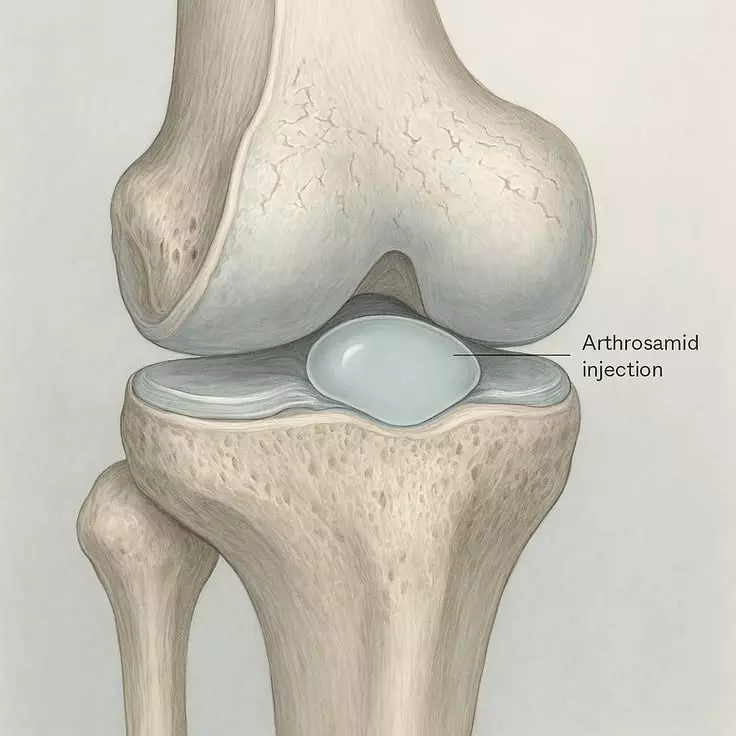
Arthrosamid Injection London
There’s a stage of knee pain that’s especially annoying because it doesn’t feel dramatic enough for surgery… but it’s definitely too disruptive to ignore.
You can still get through the day.
Mostly.
But your knee has become one of those rude little background problems that keeps showing up:
- when you stand too long
- when you walk too much
- when you use stairs
- when you get up after sitting
- or when your body decides to remind you that cartilage apparently has opinions now
That’s often when people start searching for Arthrosamid Injection London.
Not because they’re trying to do something extreme.
Usually, they’re just asking a very reasonable question:
“Is there anything between painkillers and surgery?”
And honestly, that’s exactly the kind of question more people should be asking sooner.
The Frustrating Middle Ground Nobody Talks About Enough
A lot of knee pain lives in this awkward in-between zone.
You’re not necessarily at:
“I need a full knee replacement tomorrow.”
But you’re definitely past:
“Oh, it’ll probably sort itself out.”
That middle ground is where people often get stuck for way too long.
They keep doing versions of:
- rest
- painkillers
- braces
- heat
- physio now and then
- avoiding whatever makes the knee grumpy
And to be fair, those things can help.
But if you’ve been repeating the same coping routine for months or years, there comes a point where you stop feeling “managed” and start feeling… limited.
That’s where treatments like Arthrosamid Injection London start becoming part of the conversation.
What Most People Actually Want Is Pretty Simple
Nobody is sitting around dreaming about injections for fun.
People usually want:
- less pain walking
- less stiffness
- fewer flare-ups
- more confidence moving around
- a way to stay active without constantly paying for it later
That’s it.
They don’t need a miracle.
They just want their knee to stop running the schedule.
And for people who are not ready for surgery — or may not need it yet — non-surgical options can feel like a very welcome middle path.
Let’s Be Honest: “Just Live With It” Is Not a Treatment Plan
A surprising number of people are basically told, directly or indirectly, to just keep getting on with it.
And that advice usually sounds like:
- “It’s wear and tear.”
- “It happens with age.”
- “Try not to overdo it.”
- “You may need surgery one day.”
Helpful. Inspiring. Deeply underwhelming.
The problem is, people hear this and assume they have only two choices:
Option A:
Do nothing except cope.
Option B:
Eventually get surgery.
But for many patients, there may be a more useful conversation in between — especially if knee osteoarthritis or ongoing joint pain is affecting daily life but surgery isn’t the right next step.
That’s why more people are exploring treatments like Arthrosamid injection in London as part of a broader pain management plan.
Because “not ready for surgery” should not mean “good luck.”
The Real Appeal? It’s About Time, Comfort, and Function
A lot of people searching Arthrosamid Injection London are not necessarily looking for the fanciest treatment.
They’re looking for breathing room.
They want:
- time before surgery, if possible
- improved comfort with everyday movement
- a treatment option that feels less invasive
- and a way to function more normally again
That’s what makes this category of treatment so appealing.
It’s not about pretending your knee is brand new.
It’s about asking whether your knee can become more livable again.
And honestly, that’s a pretty valuable goal.
A Small But Important Shift: Stop Measuring Your Knee Only by Pain
This one catches people out.
A lot of patients judge their knee by one question:
“How much does it hurt today?”
But pain alone doesn’t tell the full story.
A better set of questions is:
- How much am I avoiding because of this knee?
- How often do I plan around discomfort?
- How much confidence have I lost in movement?
- How often does my knee decide what I can or can’t do?
That’s usually where the real impact shows up.
Because knee problems don’t just hurt.
They slowly reduce your freedom in very boring, irritating ways.
And that matters more than people often admit.
This Is Usually for People Who Are Done Guessing
If you’ve already tried random “solutions” like:
- supplements that promised too much
- braces you now emotionally depend on
- exercises you found online but never knew were right for you
- anti-inflammatory gels with suspiciously dramatic packaging
…you are not alone.
The internet has made joint pain weirdly noisy.
And when you’re in pain, it’s very easy to keep bouncing between:
“Maybe this will help.”
That gets expensive and emotionally tiring fast.
That’s why structured, medically guided treatment options tend to feel like a relief. Even before anything changes physically, there’s comfort in finally having a real plan.
Here’s the Part People Need to Hear: Not Every Painful Knee Needs Surgery Right Away
This is important.
A good orthopedic specialist should not make you feel like every painful knee is one awkward consultation away from an operation.
Depending on your situation, non-surgical treatment may still play a very useful role.
That may include:
- physiotherapy
- strengthening work
- activity changes
- weight management
- pain relief strategies
- and injections where appropriate
That’s why a proper assessment matters so much.
Because the question is not:
“What’s the most serious treatment?”
It’s:
“What makes sense for my knee right now?”
That’s a much smarter way to approach pain.
A Non-Obvious Tip: Watch How You Move When Nobody’s Looking
This sounds random, but it’s useful.
Pay attention to what your body does automatically.
Do you:
- shift weight off one leg?
- avoid bending fully?
- hold stair railings more than before?
- stand up more slowly?
- choose the shorter route without thinking?
That stuff matters.
Because your body often reveals how much your knee is affecting you before your words do.
And once you notice those patterns, it becomes a lot easier to stop minimising the problem.
When You Should Stop DIY-ing and Book a Proper Consultation
You should probably seek proper orthopedic advice if:
- your knee pain keeps returning
- walking and stairs are becoming more frustrating
- stiffness is affecting your daily routine
- you’ve tried the usual conservative stuff but still feel limited
- your knee is affecting your confidence, activity, or independence
- you’re not ready for surgery, but you also know doing nothing isn’t working
That last category is exactly where many people start asking about Arthrosamid for knee pain and other non-surgical options.
And honestly, that’s a smart place to start — because waiting until things get unbearable is rarely the most elegant plan.
If you’re trying to understand whether non-surgical treatment may fit your situation, learning more about Arthrosamid for ongoing knee pain management can be a helpful next step.
Read: Arthrosamid for Knee Pain: A Realistic Option for People
So… Is Arthrosamid Injection London Worth Looking Into?
If your knee pain is no longer minor, but you’re not at the point of wanting surgery — then yes, Arthrosamid Injection London is absolutely worth exploring.
Not because it’s trendy.
Not because it promises fantasy-level results.
But because many people are simply looking for a way to move through life with less pain and less compromise.
And that’s a very sensible thing to want.
Before You Spend Another Few Months “Seeing How It Goes”…
Just ask yourself this:
Is my knee actually improving… or am I just getting better at living smaller because of it?
That question tends to cut through a lot of denial very quickly.
And if the answer makes you uncomfortable, that’s probably useful information.
Because pain does not need to become unbearable before it deserves proper treatment.
Sometimes the smartest thing you can do is stop waiting for your knee to magically behave and finally give it a better plan.