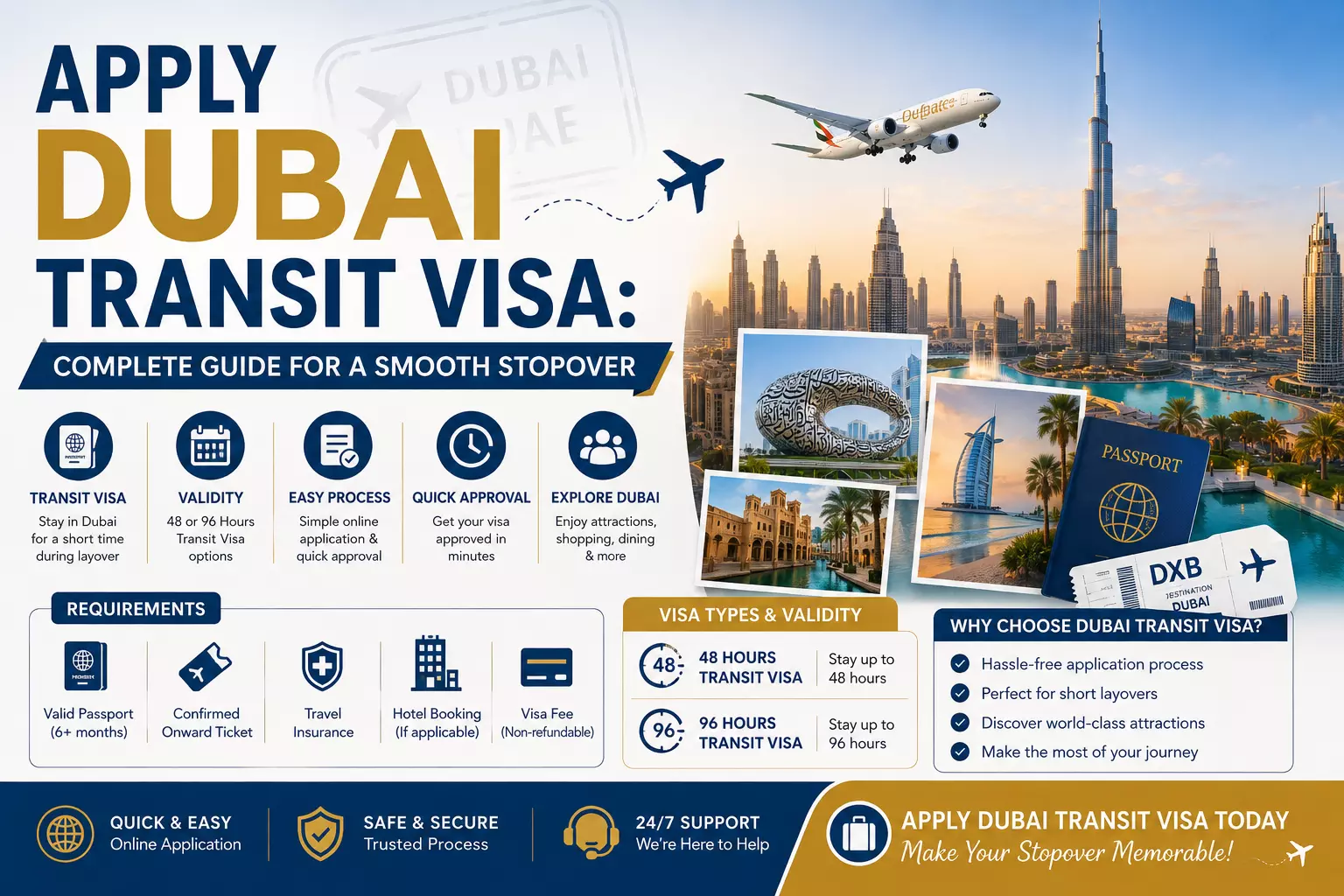
Apply Dubai Transit Visa: Complete Guide for a Smooth Stopover
Dubai is one of the world's busiest travel hubs, making it a common connecting point for passengers travelling between different countries.
If your flight includes a long stopover in Dubai and you want to leave the airport before continuing to your destination, understanding the transit visa process is important. Before you Apply Dubai Transit Visa, you should check your nationality, flight route, onward ticket, and the length of your planned stopover.
A Dubai transit visa is designed for eligible travellers who are passing through the UAE while travelling to another destination.
Unlike a regular tourist visa, it is intended for a short stay during a connecting journey. Depending on your travel plans, the available transit options can include 48-hour and 96-hour stays.
What Is a Dubai Transit Visa?
A Dubai transit visa allows eligible passengers travelling through Dubai or another UAE airport to enter the UAE during a stopover and leave the airport for a limited period before continuing their journey.
For travellers with a lengthy connection, this can be useful because you may have enough time to rest at a hotel, meet someone, explore selected parts of Dubai, or simply spend your layover outside the airport.
The main difference between a transit visa and a tourist visa is the purpose of travel. A transit visa is connected to an onward journey to another destination, while a tourist visa is intended for travellers whose main purpose is to visit Dubai or the UAE.
Before applying, travellers should confirm whether they actually need a transit visa. Some nationalities may qualify for visa-free entry or visa-on-arrival arrangements, depending on their circumstances and current UAE entry rules.
Who May Need a Dubai Transit Visa?
Whether you need a transit visa depends on several factors, including your nationality, passport, airline, itinerary, and whether you intend to pass through immigration and leave the airport.
A transit visa may be relevant if:
- You have a confirmed connecting flight through Dubai.
- Your journey continues to a third country.
- You have a long enough layover to leave the airport.
- You do not already qualify for visa-free entry or visa on arrival.
- You want to stay at a hotel during your stopover.
- You need to spend some time in Dubai before your onward flight.
If you are simply changing flights and remaining within the airport's permitted transit area, your requirements may be different. Therefore, checking your specific route before travelling is essential.
48-Hour vs 96-Hour Dubai Transit Visa
One of the most important decisions when applying is selecting the appropriate transit duration. Dubai transit visa options commonly include 48-hour and 96-hour periods.
48-Hour Transit Visa
A 48-hour option may be suitable when your connection is relatively short and you only need limited time outside the airport.
It can work well for travellers who want to:
- Rest at a nearby hotel.
- Spend a short period in Dubai.
- Handle a brief personal meeting.
- Have a quick stopover before continuing their journey.
It is generally not suitable if your itinerary requires more time than the permitted period.
96-Hour Transit Visa
The 96-hour option provides more time and may be better for travellers with a longer stopover.
It can be useful when you want to arrange a hotel stay, have additional time for sightseeing, or simply have a more comfortable gap between connecting flights.
The correct choice should always be based on your actual arrival and departure schedule. Choosing a duration that does not match your flight timing can create unnecessary complications.
Read: Everything About the Turkey Visa from Mexico
Documents Required to Apply Dubai Transit Visa
Preparing your documents correctly can make the application process easier. Requirements may vary depending on your nationality, airline, route, and current immigration procedures, so travellers should confirm the applicable requirements before submission.
Commonly requested documents include:
Passport Copy
A clear colour copy of your passport bio page is generally required. Make sure the details are readable and that your passport has sufficient validity for the intended travel.
A blurry, cropped, or incomplete passport copy can cause problems during processing.
Recent Passport Photograph
A recent passport-size photograph may be required. The photograph should clearly show your face and should not be excessively edited or unclear.
Arrival Flight Ticket
Your arrival ticket should show your journey into Dubai or another UAE airport.
Confirmed Onward Ticket
An onward ticket is particularly important for a transit visa because it demonstrates that Dubai is a stopover rather than your final destination.
Your onward journey should be to another destination and should fit within the permitted transit period.
Providing your arrival and onward tickets together can make it easier to verify your travel itinerary.
How to Apply Dubai Transit Visa
The application process should begin once your flight itinerary is confirmed. Planning ahead gives you time to correct document issues or clarify requirements before your departure.
Share Your Travel Details
Start by preparing your passport copy, photograph, arrival ticket, onward ticket, and intended stopover duration.
Your flight details are important because the transit visa is directly connected to your connecting journey.
Check the Appropriate Duration
Review the time between your arrival and onward departure. Determine whether the 48-hour or 96-hour option is appropriate for your itinerary.
Do not select a duration simply because it provides more time. The visa should correspond with your actual travel requirements and eligibility.
Submit the Required Documents
Once the documents and visa option have been checked, the application can be submitted through the appropriate channel.
Make sure your name and passport information match your flight booking exactly. Even small discrepancies can require clarification.
Receive Your Visa Update
After submission, applicants can receive an update regarding their application. If approved, the visa documentation should be kept safely with your passport and travel documents.
Always check the approved visa details before travelling.
Dubai Transit Visa Fees and Processing Time
The cost of a Dubai transit visa can vary depending on several factors. The selected duration, application channel, airline requirements, travel date, and service support can all influence the total amount payable.
Processing time can also vary. Applications with complete and clear documents are generally easier to process than those requiring corrections or additional information.
Factors that can affect processing include:
- Incorrect passport details.
- Blurred passport copies.
- Unclear photographs.
- Name differences between passport and ticket.
- Missing onward flight information.
- Airline processing requirements.
- Public holidays.
- Peak travel periods.
- Urgent travel dates.
For this reason, it is better to arrange your transit visa after confirming your flights rather than waiting until the last moment.
Planning Your Dubai Stopover
Obtaining a transit visa is only one part of planning your stopover. You should also carefully manage your time outside the airport.
Before leaving the airport, keep your passport, visa copy, onward ticket, and other essential travel documents easily accessible.
If you plan to stay at a hotel, check its location and estimated travel time from the airport. Dubai traffic can vary considerably, so avoid creating an itinerary that leaves only a small amount of time before your next flight.
If sightseeing is part of your plan, select activities that are realistic for your available time. Remember that airport immigration, baggage collection, transportation, check-in, and security screening can all take time.
Return to the airport well before your onward flight rather than trying to use every available minute of your transit period.
Common Mistakes to Avoid
Many transit visa problems can be prevented by checking your documents and itinerary carefully before submission.
One common mistake is providing a poor-quality passport scan. Make sure the entire bio page is visible and readable.
Another issue is a mismatch between the passenger's name on the passport and the flight ticket. Verify your booking details before submitting the application.
Travellers should also avoid applying without a confirmed onward journey. A transit visa is intended for passengers continuing to another destination, so the onward flight is an important part of the application.
It is also important not to confuse a transit visa with a tourist visa. If Dubai is actually your main destination and you intend to stay for a holiday or family visit, a regular UAE visit visa may be more appropriate.
Finally, avoid making your application too close to your departure date. Early preparation provides additional time to resolve document or itinerary issues.
Why Professional Assistance Can Help
The Dubai transit visa process may look simple, but choosing the appropriate option and preparing the correct documents can be confusing, particularly for travellers unfamiliar with UAE visa procedures.
Professional visa assistance can help you review your flight itinerary, check your documents, understand the difference between transit durations, and identify potential issues before submission.
A travel agency can also help travellers understand what information is needed based on their individual stopover plans.
For passengers with complicated itineraries or tight travel schedules, this guidance can make the preparation process more convenient.
Dubai Transit Visa FAQs
1. What is a Dubai transit visa?
A Dubai transit visa is a short-stay visa for eligible passengers travelling through the UAE before continuing to another destination.
2. Can I leave Dubai airport with a transit visa?
If your transit visa is approved and you satisfy the applicable UAE entry requirements, you may leave the airport during the permitted transit period.
3. How long can I stay with a Dubai transit visa?
Common transit options include 48-hour and 96-hour periods. The appropriate option depends on your itinerary and eligibility.
4. What documents are generally required?
Common documents include a passport copy, recent photograph, confirmed arrival ticket, and confirmed onward ticket to another destination.
5. Is a transit visa the same as a Dubai tourist visa?
No. A transit visa is intended for a short stopover while travelling onward, whereas a tourist visa is designed for travellers visiting Dubai or the UAE as their main destination.
6. Do I need an onward ticket?
An onward ticket is an important part of a transit visa application because it demonstrates that you are continuing your journey to another destination.
7. Can I apply before travelling to Dubai?
Eligible travellers should arrange the required transit visa before entering the UAE if their circumstances require one. It is advisable to prepare the application after confirming your flights.
8. Can I extend a Dubai transit visa?
Transit visas are designed for short stays and are generally not intended for extension. Your onward flight should fit within the permitted transit period.
Conclusion
A Dubai stopover can be much more convenient when your visa, flights, accommodation, and airport schedule are properly planned. Before you Apply Dubai Transit Visa, review your passport requirements, confirmed arrival and onward flights, and the duration of your planned stay.
Whether you need a short 48-hour stopover or additional time with a 96-hour option, choosing the right transit arrangement can help you make better use of your time in Dubai. Preparing your documents early, checking your itinerary carefully, and avoiding last-minute applications can also reduce unnecessary complications.
For travellers passing through Dubai on their way to another destination, a properly planned transit visa can turn a long layover into a comfortable and well-organised part of the journey.