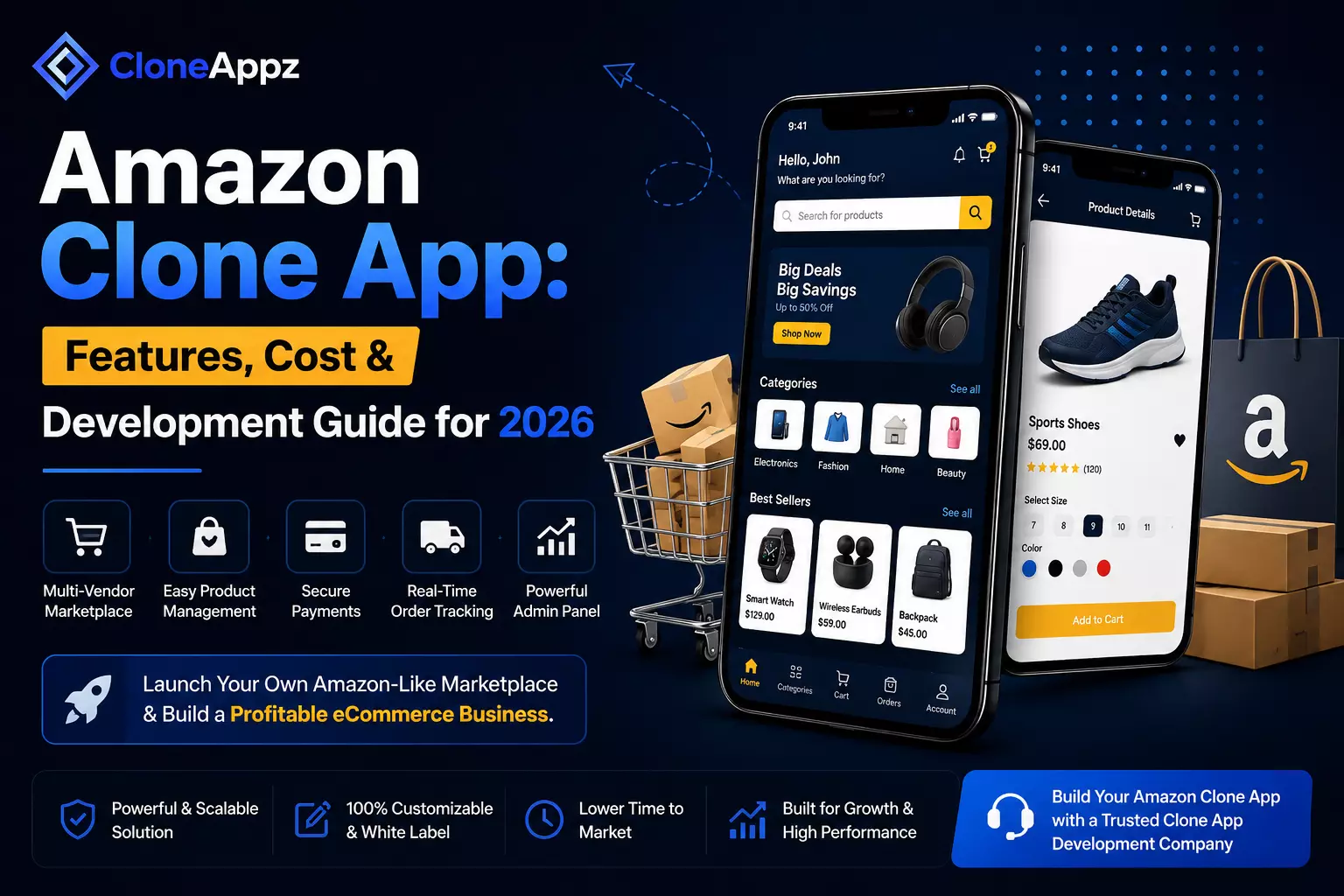
Amazon Clone App: Features, Cost & Development Guide for 2026
The eCommerce market continues to grow as more people prefer shopping online for everyday products, electronics, fashion, groceries, beauty products, and more.
This has created a strong opportunity for entrepreneurs who want to launch their own online marketplace.
Building a large eCommerce platform from scratch can take significant time and money. An Amazon clone app offers a faster way to start. It provides a ready-made marketplace structure that can be customized with your brand, design, features, and business model.
Whether you are a startup founder, retailer, or established business, an Amazon-style marketplace can help you enter the eCommerce market with a scalable solution.
What Is an Amazon Clone App?
An Amazon clone app is an eCommerce marketplace solution inspired by the core functionality of major online shopping platforms.
It allows businesses to create their own branded marketplace where multiple sellers can list products and customers can browse, order, pay, and track deliveries.
A modern Amazon clone app can include separate panels for customers, sellers, delivery partners, and administrators. This makes it easier to manage the complete buying and selling process from one platform.
The app does not have to be an exact copy of Amazon. A good solution should be customized around your business goals and target market.
Why Build an Amazon Clone App in 2026?
Competition in eCommerce is high, but there is still room for focused marketplaces.
Instead of trying to sell everything, a new marketplace can focus on a specific category or audience. For example, you could build a platform for fashion, electronics, organic products, local sellers, beauty products, or home essentials.
An Amazon clone app can help you:
- Launch an online marketplace faster
- Connect multiple sellers with customers
- Create your own brand identity
- Generate revenue through different business models
- Expand into new locations
- Add new features as your business grows
The ready-made approach also allows entrepreneurs to spend more time on marketing and customer acquisition instead of starting the technical development process from zero.
Read: How to enhance your grocery business with an Instacart clone
Key Features of an Amazon Clone App
The features you choose will have a direct impact on the customer experience. Your first version should focus on features that make shopping simple and reliable.
1. Customer Registration
Customers should be able to register quickly using email, phone numbers, or social login.
A personal account can store addresses, order history, payment preferences, wishlists, and other information.
2. Product Search and Filters
A large marketplace needs a powerful search system.
Users should be able to search for products by name and filter results based on price, category, brand, ratings, availability, and other attributes.
Good search functionality can reduce the time customers spend looking for products.
3. Product Listings
Sellers should have the ability to add product images, descriptions, prices, stock information, specifications, and variations.
A clean product page can give customers the information they need before placing an order.
4. Shopping Cart and Checkout
Customers should be able to add multiple products to their cart and review their orders before payment.
The checkout process should be simple, fast, and mobile-friendly. Unnecessary steps can lead to abandoned carts.
5. Multiple Payment Options
A marketplace can support different payment methods depending on its target market.
These may include cards, digital wallets, bank transfers, and cash on delivery.
Secure payment integration is important for building customer trust.
6. Order Tracking
Customers want to know where their orders are.
Real-time or status-based tracking can show stages such as order confirmed, packed, shipped, out for delivery, and delivered.
7. Seller Dashboard
A seller panel allows vendors to manage their online stores.
Sellers can add products, update inventory, manage orders, view sales information, and track earnings from one dashboard.
8. Admin Dashboard
The admin panel gives the business owner control over the marketplace.
Admins can manage users, sellers, products, payments, commissions, orders, reviews, promotions, and reports.
This centralized control makes marketplace management much easier.
How Does an Amazon Clone App Make Money?
There are several ways to monetize an eCommerce marketplace.
Seller Commission
The platform can charge sellers a percentage of each successful sale.
Seller Subscription
Businesses can offer different seller plans with monthly or yearly fees.
Featured Product Listings
Sellers can pay to promote their products and appear in more visible positions.
Advertising
Brands can purchase promotional space within the marketplace.
Delivery Fees
Depending on the business model, customers or sellers can be charged delivery fees.
Using more than one revenue stream can help create a stronger business model.
Amazon Clone App Development Cost in 2026
The cost of developing an Amazon clone app depends on the features, design, technology, integrations, number of platforms, and level of customization.
A basic marketplace with essential features will normally require less investment than a large platform with advanced analytics, AI-based recommendations, multiple payment systems, complex seller tools, and advanced logistics.
The main cost factors include:
- UI/UX design
- Mobile app development
- Backend development
- Seller and admin panels
- Payment gateway integration
- Delivery integration
- Cloud infrastructure
- Security
- Testing
- Maintenance and updates
A ready-made or white-label solution can reduce the initial development time because the core marketplace structure is already available.
White Label vs Custom eCommerce Development
A white-label solution is useful for businesses that want to launch quickly with a branded product.
The same concept is used in other industries. For example, a white label fitness app allows gyms, trainers, and fitness startups to launch their own branded fitness platform without developing every feature from scratch.
For eCommerce, the white-label model can offer similar benefits. Businesses can customize the logo, colors, interface, features, payment options, and business rules according to their requirements.
Custom development may be a better option when a business needs highly specific functionality from the beginning.
How to Choose the Right Development Partner
Your technology partner can have a major impact on the quality and future growth of your marketplace.
When choosing a clone app development company, look beyond the initial development price.
Check the company's experience, previous projects, customization options, technology stack, security practices, support services, and post-launch maintenance.
A reliable development partner should also understand your business model instead of simply providing a standard application.
Before development starts, prepare a clear list of required features, target customers, marketplace category, monetization strategy, and launch locations.
How to Launch Your Amazon Clone App Successfully
Technology is only one part of an eCommerce business.
Start by selecting a clear market niche. Research your competitors and understand what customers are missing from existing platforms.
Next, onboard quality sellers and make sure your product catalog is attractive.
Offer a smooth checkout process and reliable delivery experience. Use social media, search marketing, influencer promotions, referral programs, and special launch offers to attract your first customers.
Customer reviews can also become a powerful growth tool. A marketplace with good products, fair pricing, fast support, and reliable delivery is more likely to build repeat customers.
Final Thoughts
An Amazon clone app can be a practical starting point for entrepreneurs who want to enter the eCommerce marketplace in 2026.
Instead of spending a long time building every basic function from scratch, businesses can start with a ready-made foundation and customize it around their own brand and audience.
The right features, revenue model, user experience, and development partner can turn a simple marketplace idea into a scalable online business.
If you are planning to launch an eCommerce platform, working with an experienced clone app development company can help you reduce development time, customize the platform, and prepare it for future growth.