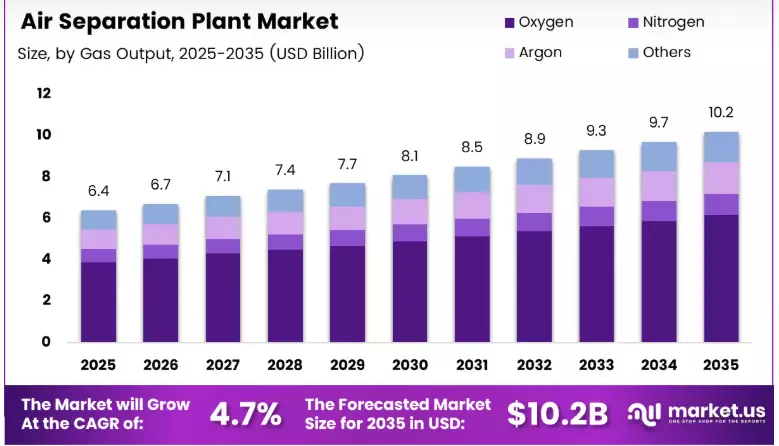
Air Separation Plant Market Competitive Landscape
Understanding Air Separation Plant Technology
The Science Behind Air Separation
Atmospheric air consists primarily of nitrogen and oxygen, along with smaller quantities of argon and other trace gases. Air separation plants utilize advanced engineering processes to isolate these elements and convert them into commercially valuable products.
The separation process typically involves cooling air to extremely low temperatures, allowing gases to be separated based on their unique boiling points. This sophisticated methodology ensures exceptional purity levels required by industrial users.
GET SAMPLE LINK: https://market.us/report/global-air-separation-plant-market/request-sample/
Major Technologies Used
Several technologies dominate the industry landscape:
Cryogenic Distillation
Cryogenic systems represent the most widely adopted technology for large-scale operations. These systems deliver superior purity levels and support high-volume gas production.
Pressure Swing Adsorption (PSA)
PSA technology is commonly utilized for medium-scale applications. It offers operational flexibility and reduced installation complexity.
Membrane Separation
Membrane systems provide efficient gas separation solutions for specific industrial requirements, particularly where moderate purity levels are sufficient.
Market Evolution and Industry Transformation
From Traditional Manufacturing Support to Strategic Infrastructure
Historically, air separation plants primarily served steel and heavy manufacturing industries. However, the market has evolved considerably over the past decade.
Today, industrial gases support a diverse range of sectors including healthcare, electronics, food processing, pharmaceuticals, renewable energy, and aerospace manufacturing. This diversification has significantly broadened the industry's growth potential.
Changing Industrial Requirements
Modern industries require greater precision, reliability, and efficiency. Air separation facilities are responding through advanced process optimization and intelligent production management systems.
These developments have transformed air separation plants from simple production facilities into highly sophisticated industrial assets.
Critical Factors Accelerating Market Growth
Expanding Industrial Production
Rapid industrialization remains one of the strongest growth drivers for the Air Separation Plant Market. New manufacturing facilities require substantial quantities of oxygen and nitrogen to support production processes.
As industrial activity increases globally, demand for air separation infrastructure continues to strengthen.
Rising Healthcare Requirements
Medical oxygen has become a critical healthcare resource. Hospitals, emergency care facilities, and specialized treatment centers depend on consistent oxygen supplies to support patient care.
Growing healthcare investments are creating substantial opportunities for market participants.
Infrastructure Development Projects
Large-scale infrastructure projects frequently stimulate demand for industrial gases. Construction activities, metal fabrication, and engineering operations require gases for welding, cutting, and manufacturing applications.
This ongoing infrastructure expansion supports long-term market growth.
Industry Applications Driving Demand
Metallurgical Operations
Steel production remains among the largest consumers of industrial oxygen. Oxygen enrichment improves furnace efficiency, enhances production quality, and supports cost optimization initiatives.
Chemical Manufacturing
Chemical processing facilities utilize industrial gases throughout numerous production stages. Nitrogen is particularly valuable for inerting, purging, and process stabilization activities.
Electronics and Semiconductor Production
The electronics industry requires ultra-high-purity gases to maintain manufacturing precision. As semiconductor demand grows, the need for advanced gas production capabilities continues to rise.
Energy and Power Generation
Power plants and energy facilities utilize industrial gases for operational optimization and emissions management. These applications contribute significantly to overall market demand.
Technological Breakthroughs Reshaping Operations
Smart Plant Integration
Digital technologies are revolutionizing plant management practices. Real-time monitoring systems provide enhanced visibility into equipment performance and production efficiency.
Operators can identify potential issues before they impact operations, improving reliability and reducing downtime.
Artificial Intelligence and Predictive Maintenance
Artificial intelligence is increasingly being incorporated into industrial facilities. Predictive maintenance solutions analyze operational data to forecast equipment failures and optimize maintenance schedules.
This approach minimizes operational disruptions while maximizing asset utilization.
Energy Optimization Technologies
Modern facilities are implementing advanced heat recovery systems, energy-efficient compressors, and intelligent process controls. These innovations significantly reduce energy consumption and operational expenses.
Market Challenges and Operational Constraints
High Capital Requirements
Developing and commissioning air separation facilities requires substantial financial investment. Equipment costs, engineering expenses, and infrastructure requirements can create barriers for new entrants.
Despite these challenges, long-term returns often justify the initial expenditure.
Energy Consumption Pressures
Air separation remains an energy-intensive process. Rising electricity costs can directly impact profitability and operational efficiency.
Manufacturers continue to invest in energy-saving technologies to address this challenge.
Supply Chain Complexities
Global supply chain disruptions occasionally affect equipment procurement and project timelines. Effective supply chain management has become increasingly important for market participants.
Read: Field Service Software vs. Spreadsheets: Why the Old Way
Regional Growth Landscape
Asia-Pacific
Asia-Pacific represents the largest and fastest-growing regional market. Rapid industrial expansion, urbanization, and healthcare development continue to drive demand throughout the region.
Countries such as China and India are leading investment activity.
North America
North America benefits from a mature industrial base and advanced technological capabilities. Market growth is supported by modernization projects and energy sector investments.
Europe
European markets prioritize sustainability, efficiency, and environmental compliance. These priorities encourage adoption of advanced air separation technologies.
Middle East and Africa
Industrial diversification initiatives and energy investments are generating new growth opportunities throughout the region.
Latin America
Steady industrial development and increasing manufacturing investments are contributing to market expansion across Latin America.
Competitive Environment and Strategic Developments
Innovation as a Competitive Advantage
Market participants are focusing heavily on technological innovation to differentiate themselves. Efficiency improvements and sustainability enhancements remain major competitive priorities.
Capacity Expansion Initiatives
To accommodate rising demand, companies are expanding production facilities and establishing new operational sites in strategic locations.
Strategic Collaborations
Partnerships, acquisitions, and joint ventures are becoming increasingly common. These arrangements help organizations strengthen market presence and accelerate growth.
Future Outlook and Emerging Opportunities
Renewable Energy Integration
Renewable energy projects are creating fresh opportunities for air separation technologies. Industrial gases play important roles in hydrogen production and clean energy development.
Hydrogen Economy Expansion
The growing hydrogen economy is expected to become a significant demand generator. Air separation plants supply critical gases necessary for hydrogen production processes.
Sustainability-Driven Investments
Environmental stewardship is becoming a central business objective. Future investments are expected to prioritize energy-efficient and low-emission technologies.
As sustainability regulations become more stringent, advanced air separation solutions will gain additional importance.
Conclusion
The Air Separation Plant Market is undergoing a period of significant transformation. Growing industrialization, increasing healthcare demand, technological innovation, and sustainability initiatives are collectively shaping the industry's future.
As global demand for oxygen, nitrogen, and argon continues to rise, air separation plants will remain indispensable to modern industrial operations. Companies that embrace innovation, efficiency, and strategic expansion are likely to be best positioned to capitalize on the substantial opportunities emerging across the global marketplace.