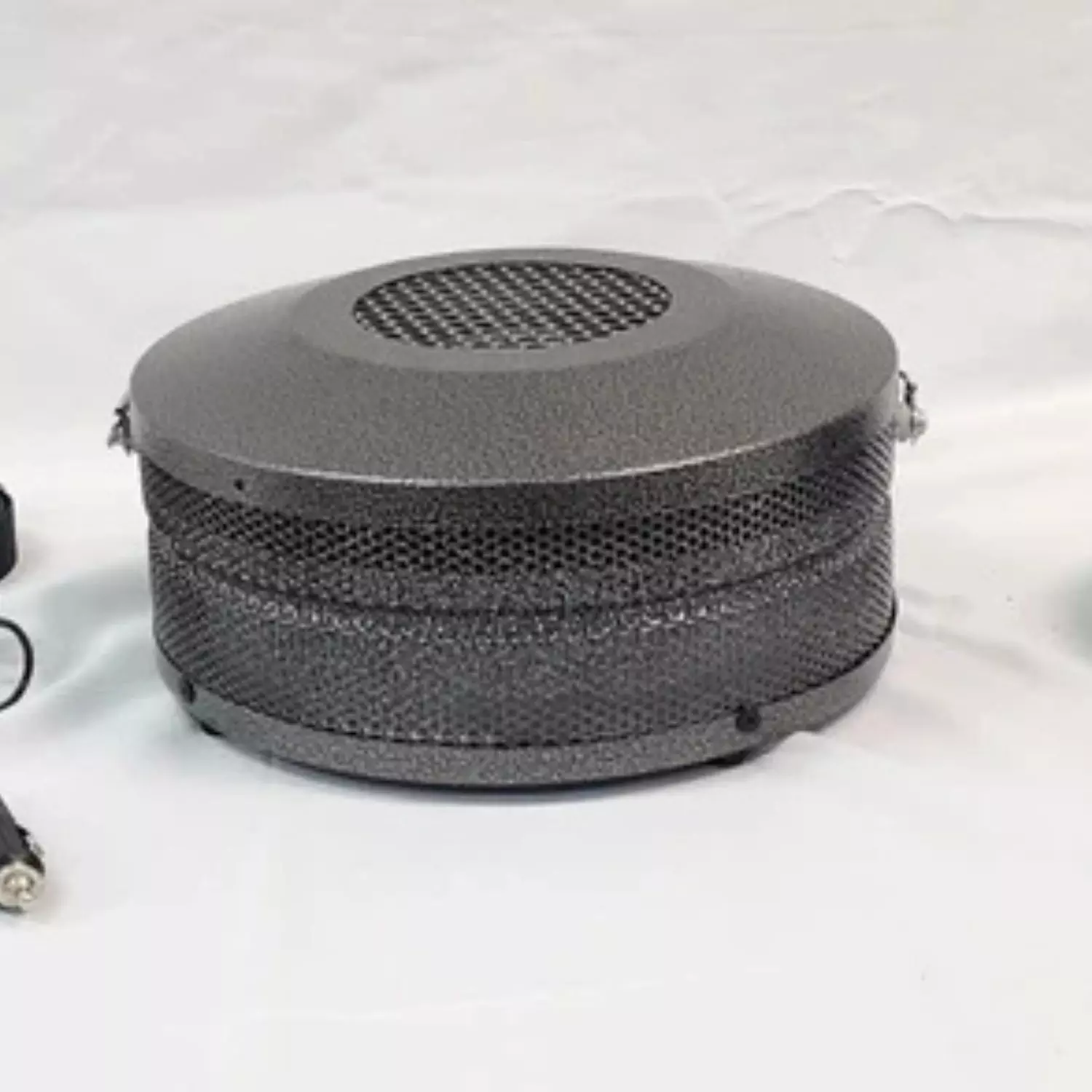
How to Use an Air Filter for Mold in Damp Basements Fast
A good air filter for mold starts cutting mold spores in a few hours. Results depend on room size and filter power.
An air filter cleans the air. It does not dry out the room. It doesn't kill mold on walls. This guide shows the best air purifiers for mold control. It covers setup, speed, and care.
How Fast Can an Air Filter Clear Mold Spores from a Damp Basement?
A HEPA air purifier cuts mold spores in a few hours. Strong results often show up in one full day.
Three things change the speed:
- Air changes per hour: More air changes mean faster, better results.
- Room size: Normal rooms clear out faster than tall, open rooms.
- Active mold: Mold on the walls makes new spores. This slows things down a lot.
Treat "a few hours" as a starting point, not a promise. HEPA filters catch tiny dust bits, so they catch most mold spores well. For effective mold air filtration, the unit must be sized correctly for the room.
Where Should I Place the Air Filter for Best Results?
Put the air purifier where the air moves freely. Keep it away from walls and boxes. Follow the setup guide that comes with it.
- Give it space: Leave 6 inches of open space near the vents.
- Near the wet spot: Place the unit close to the sump pump or crack.
- Center of the room: For spread-out mold, place the unit near the middle.
- Big rooms: Large basements need two units.
Good placement helps air purifiers for mold control circulate clean air more efficiently.
What CADR Rating Do I Need for My Basement?
Use the table below to pick your unit size. Room size and CADR are not the same thing. Match your room size to the right CADR range.
CADR stands for Clean Air Delivery Rate. It shows the air a unit cleans each minute. A higher CADR number means faster air cleaning.
Basement Size
Minimum CADR
Air Changes Per Hour
Up to 300 sq. ft.
200+
4x
300–600 sq. ft.
300+
4x
600–1,000 sq. ft.
400+
5x
1,000+ sq. ft.
Two units, or 500+ each
5–6x
Experts suggest at least 4 air changes per hour. Check the CADR number on the box, not the watts or fan speed.
Read: United States Portable Air Purifier Market Outlook 2025-2034
Does a Standard HVAC Filter Work for Mold?
A standard air filter will not catch mold spores fast enough on its own. A standalone HEPA unit works much better for this job.
- Standard filters: These mostly protect your furnace or your AC unit. They only clean duct air, so they miss still, wet spots.
- Standalone HEPA units: These pull air in from the whole room. They run on their own, day and night.
- Best plan: Run a HEPA unit in the basement, and upgrade your other filter too, if you can.
For stronger mold air filtration, choose a properly sized True HEPA unit rather than relying only on a basic HVAC filter.
Do I Also Need to Dry the Air (a Dehumidifier)?
Yes, you likely need a dehumidifier too. An air filter cannot pull water out of the air, and mold tends to come back if the room stays wet.
- An air filter's job: It catches mold spores that float in the room.
- Drying unit's job: It lowers the room's dampness, which cuts the water mold needs to grow.
- Used together: One unit dries the air while the other cleans it. Together, they act much faster.
Using a dehumidifier with an air filter for mold helps address both airborne spores and the moisture that supports mold growth.
What MERV or HEPA Rating Captures Airborne Mold Spores?
True HEPA filters tend to work best for catching mold spores. Lower-rated filters tend to miss more airborne spores.
- Low ratings: These catch large dust and some spore clumps, but miss small spores.
- Higher ratings: These catch far more mold spores and tiny spore bits.
- True HEPA: Look for the words "True HEPA" on the label. Other labels are not tested to the same standard.
Filter power can vary by brand, so check your manual for the real rating.
How Long Should I Run the Air Filter Each Day?
Run the air filter all day and all night for the first two weeks. After that, you can switch to auto mode.
- Weeks 1–2: Nonstop use gives you the fastest drop in mold spores.
- After that: Many units have sensors that speed up the fan.
- Minimum: Try to run the unit at least 12 hours each day.
Consistent use is an important part of air purifiers for mold control, especially when mold spores are actively circulating.
How Often Should I Replace the Filter?
Swap time depends on your model and your room. In damp, moldy rooms, filters often need a change much sooner.
- Pre-filters: Rinse them or swap them out each month.
- Main filters: Check them each month for stains or a musty smell.
- Carbon filters: These tend to lose their power fast in damp air.
Use the maker's guide as your base, and swap sooner if airflow drops.
How Do I Safely Dispose of a Mold-Laden Filter?
Bag the old filter before you remove it. Toss the sealed bag outside right away. Do not shake it out indoors.
- Turn off and unplug the unit before you start.
- Slide a bag over the filter, then seal it as you pull it out.
- Wipe the inside with a damp cloth, and skip dry dusting.
- Toss the sealed bag in an outdoor trash bin right away.
- Wash your hands well after you finish.
Will an Air Filter Kill Mold on Walls?
No, it will not. An air filter only catches spores floating in the air. It does not kill mold on walls or wood.
- Small spots: Clean these with soap and water, or use a listed mold product.
- Porous items: Drywall, carpet, and rugs often need to go.
- The filter's role: Run it while you clean to catch loose spores. Cleaning removes the mold, not the filter.
View an air filter for mold as an air-cleaning tool, not a replacement for proper mold removal.
When Should I Call in a Pro?
A filter plus some basic cleaning is often enough for small mold spots. Call a pro for large mold or mold that keeps coming back.
Situation
DIY Filter + Cleaning
Call a Pro
Small spot, surface only
Often enough
Optional
Large spread of mold
Not enough alone
Yes
Mold keeps coming back
Not enough alone
Yes
Musty smell, no visible mold
Helps short-term
Get it checked
Breathing or allergy symptoms
Helps short term
Yes
Mold near HVAC ducts
Not enough alone
Yes
A trained mold expert can find hidden leaks. A filter alone cannot fix that.
Quick-Start Checklist
- Match your unit's CADR to your room size.
- Place it where the air flows freely.
- Add a dehumidifier to help control moisture.
- Choose True HEPA or high-rated filters.
- Run it nonstop for the first two weeks.
- Check your manual for the right swap timing.
- Clean surface mold by hand, since filters won't remove it.
Conclusion
An air filter for mold can help reduce airborne mold spores, especially when you choose a True HEPA unit with the right CADR for your basement.
However, effective mold control also requires moisture management, proper cleaning, and professional help when mold is widespread or keeps returning. Use air purifiers for mold control as part of a complete approach, and maintain them regularly for reliable mold air filtration.