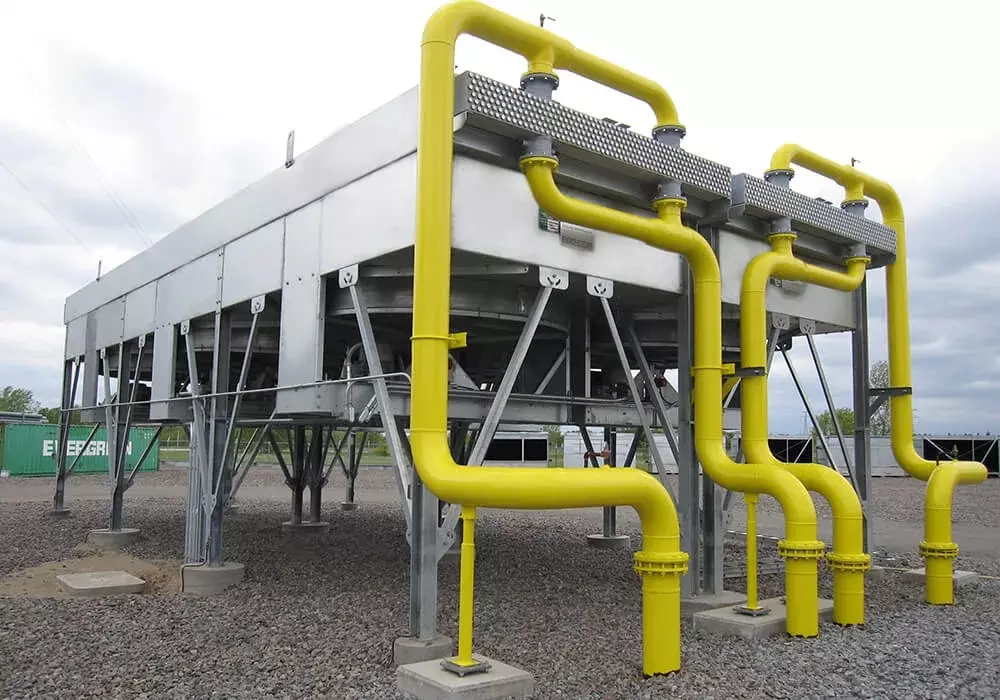
Air Cooled Heat Exchangers That Actually Hold Up Under Pressure
Where Air Cooling Makes Sense—and Where It Doesn’t
Look, air cooled heat exchangers have their place, especially in parts of the Gulf Coast where water availability, treatment cost, or discharge restrictions start becoming more trouble than they’re worth.
You’re moving heat into ambient air instead of relying on cooling towers, which sounds simple on paper, but gets complicated fast once you factor in summer temperatures in Houston.
That’s where an air cooled heat exchangers setup either works—or becomes a bottleneck you didn’t plan for.
The Reality of Ambient Conditions in Houston Plants
Anyone who’s run a unit through August in Southeast Texas knows what I’m talking about. Your design conditions might say one thing, but real-world ambient temperatures, humidity, and airflow variability tell a different story entirely.
That delta T you counted on? It shrinks. Sometimes more than you’d like.
And when it shrinks, performance follows.
Why Simplicity Isn’t Always Simple
At a glance, air cooled units seem straightforward—fans, finned tubes, airflow across a bundle. No cooling water loops, no pumps, fewer corrosion headaches. That’s the pitch most distributors stick to.
But here’s the thing—mechanical simplicity doesn’t always mean operational simplicity.
Fan failures, uneven air distribution, fouling on the air side, and vibration issues all show up eventually. And if you’ve ever tried swapping out components during a turnaround window that’s already slipping, you know how fast “simple” turns into a problem.
Matching the Equipment to the Process—Not the Catalog
You’d be surprised how often someone tries to drop an air cooled unit into a service better suited for shell and tube heat exchangers or even plate and frame heat exchangers.
It happens more than it should. Usually because someone was chasing lower upfront cost or trying to avoid water treatment upgrades.
That’s a short-term decision.
Because if your process fluid has high viscosity, or you’re dealing with tight approach temperatures, air cooling can struggle to keep up without oversized equipment—and oversized means footprint, structural steel, and power draw you didn’t budget for.
Inventory Matters More Than Brochures
Here’s something most distributors won’t tell you: lead times kill projects more often than bad specs.
Kinetic Engineering Corporation built their model around that reality. Since 1969, they’ve operated as a stocking distributor, not just a pass-through vendor waiting on factory builds.
That means when a refinery along the Gulf Coast goes down and needs replacement equipment, they’re not starting from scratch—they’re pulling from inventory or sourcing fast through established channels.
That difference shows up when the clock’s running.
When Downtime Costs More Than the Equipment
Think about a delayed crude unit startup or a chemical train sitting idle because a heat exchanger didn’t arrive on time.
You’re not just dealing with equipment cost anymore—you’re looking at lost production, missed contracts, and a lot of uncomfortable conversations upstairs.
So the question becomes pretty simple—are you buying equipment, or are you buying uptime?
Not Every Application Needs Air Cooling
There’s a reason you still see shell and tube heat exchangers everywhere across Houston industrial equipment setups. They’re forgiving.
They handle a wide range of conditions, and they’re easier to clean and maintain in certain services.
Plate and frame heat exchangers? Great for tight temperature approaches and compact footprints.
Air cooled heat exchangers? They fit best where water is limited, or where process constraints make air the better option—but only when sized and specified correctly.
The Mid-Project Pivot Nobody Talks About
Halfway through a project is the worst time to realize your selected heat exchanger won’t hit performance targets.
It happens anyway.
Maybe ambient assumptions were optimistic. Maybe process conditions shifted slightly. Or maybe the original spec didn’t account for fouling margins the way it should have (and no, that’s not something you want to figure out after the unit ships).
That’s where having access to multiple equipment types—not just air cooled units—gives you room to adjust without blowing up the entire schedule.
One Supplier, Full Equipment Coverage
Kinetic’s strength isn’t just in air cooled systems. It’s the breadth. Shell and tube, brazed plate, spiral designs, double pipe units, even fired process heaters Houston plants rely on when direct heating comes into play.
If it transfers heat, they’ve dealt with it. Probably more times than you’d expect.
And because they’re based right in Houston, serving the Gulf Coast corridor, they understand the specific operating conditions your facility is dealing with—not just what a generic spec sheet says.
That Second Keyword Moment—And Why It Matters
At some point in every project, you’re going to need a heat exchanger that actually matches real operating conditions, not ideal ones written in a design document six months ago.
That’s where experience shows up. Quietly, but clearly.
Because someone who’s been doing this for decades will catch the mismatch before it becomes a problem.
Experience You Can’t Shortcut
Fifty-five years in this business changes how you look at equipment. You stop chasing trends. You stop believing every lead-time promise.
You start asking different questions—about maintenance access, about real fouling rates, about what happens when things don’t run perfectly.
That’s the mindset you want behind your equipment decisions.
Not a catalog.
Why Engineers Come Back to the Same Supplier
There’s a reason plant engineers and maintenance leads keep going back to the same heat exchanger distributor Houston companies have relied on for decades. It’s not branding. It’s consistency.
You get straight answers. You get realistic timelines. And when something goes sideways—as it eventually will—you’re dealing with people who’ve seen it before and know how to fix it without dragging things out.
That’s worth more than a lower quote that doesn’t hold up.
Read: The Role of Cooling Coils in Modern HVAC Systems
The Logical Next Step
If you’re evaluating air cooled heat exchangers or any other industrial heat transfer Houston application, talk to Kinetic Engineering Corporation.
They’ve been here since 1969, they stock what others have to order, and they understand what’s actually at stake when your plant needs equipment fast—and right the first time.
FAQs
How do I know if air cooled heat exchangers are right for my application?
If water availability or treatment is an issue, they’re worth considering. But you need to look hard at ambient conditions, approach temperatures, and fluid properties before committing.
What’s the biggest mistake people make with air cooled units?
Undersizing for real-world conditions. Design numbers look good until summer hits, then performance drops off faster than expected.
Can I switch from air cooled to another type mid-project?
Sometimes, yes—but it depends on layout, piping, and structural constraints. That’s why having access to multiple equipment types matters early.
Why does stocking inventory matter so much?
Because lead times don’t care about your shutdown schedule. If the unit isn’t available when you need it, everything else gets pushed.