AI Search Impact on Organic Traffic: Tips to Preserve Visibility and Growth
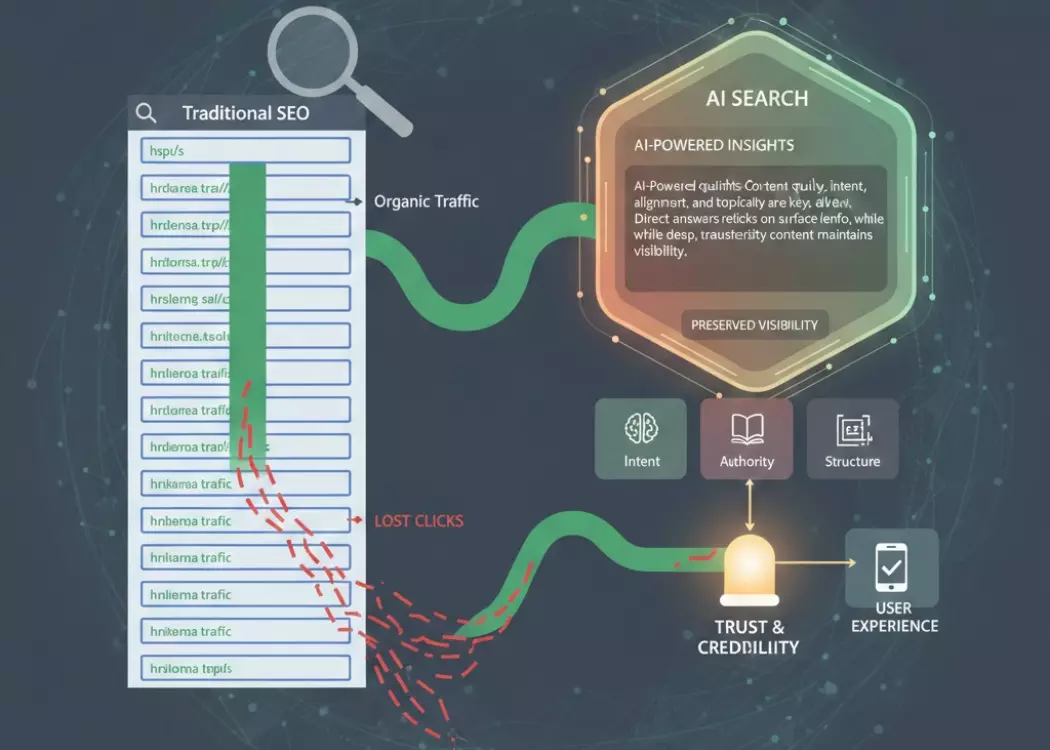
Organic traffic has always been the backbone of long-term digital growth. However, the way search engines present results is changing. AI-powered search systems now summarize answers, interpret intent more deeply, and often reduce the number of visible organic links.
This shift has caused noticeable traffic drops for some websites, even when rankings appear stable. Understanding how AI search impacts SEO organic traffic is essential for protecting visibility and maintaining growth.
How AI Search Is Changing Organic Traffic Patterns
Traditional search engines relied heavily on keyword matching and link signals. AI-driven search goes further by interpreting context, intent, and relevance. Instead of directing users to multiple pages, AI often delivers summarized responses directly on the results page.
This change does not eliminate organic traffic, but it alters how users interact with search results. Pages that offer surface-level information are more likely to lose clicks, while content that demonstrates depth, clarity, and authority continues to attract traffic.
Why Rankings Alone No Longer Guarantee Clicks
Many website owners still focus on ranking positions as the primary success metric. In AI-enhanced search results, visibility matters more than rank alone. AI summaries, featured snippets, and direct answers can appear above traditional listings, pushing organic links further down the page.
To remain competitive, content must earn visibility through relevance and usefulness. Pages that clearly answer questions, explain concepts thoroughly, and support claims with experience are more likely to be referenced or surfaced by AI systems.
Focus on Search Intent, Not Keyword Density
Search intent has become central to organic performance. AI systems evaluate whether content satisfies what users are truly looking for, not how many times a keyword appears.
Effective content aligns with intent by addressing the full scope of a topic. For example, an informational search requires explanations, context, and practical guidance. A commercial search requires comparisons, benefits, and clear decision support. Writing naturally while covering related ideas helps content remain relevant without over-optimization.
Build Topical Authority to Maintain Organic Visibility
Topical authority plays a major role in AI-driven search. Websites that consistently publish high-quality content around a focused subject area are more likely to be recognized as reliable sources.
Creating topic clusters helps reinforce authority. A strong pillar article supported by related subtopics improves internal linking and clarifies subject relevance. Over time, this structure signals trust and expertise, helping preserve organic traffic even as search formats evolve.
Optimize Content Structure for AI Search Results
Content structure influences how AI systems read and interpret pages. Clear headings, logical flow, and concise explanations improve both user experience and search visibility.
Each section should address a specific question or idea. Direct answers followed by supporting detail work well for AI extraction while remaining helpful to human readers. Avoid unnecessary filler and keep explanations focused and practical.
Strengthen Trust and Credibility Signals
Trust is a defining factor in modern search. AI systems prioritize content that appears accurate, transparent, and experience-based.
Demonstrating expertise through original insights, real examples, and updated information helps establish credibility. Clear authorship, consistent publishing standards, and factual accuracy all contribute to stronger trust signals. Content that feels reliable earns more visibility over time.
Improve User Experience to Support Organic Growth
User behavior still influences organic performance. Pages that load quickly, display well on mobile devices, and are easy to read encourage engagement. When users spend time on a page and explore related content, it reinforces relevance signals.
Simple improvements such as better formatting, shorter paragraphs, and intuitive navigation can have a measurable impact on organic traffic retention.
Read: How Corporations Turn Sustainability Into Innovative Products
Track the Right Metrics in an AI Search Environment
Traditional keyword tracking provides only part of the picture. Engagement metrics such as time on page, scroll depth, and assisted conversions offer deeper insight into performance.
Monitoring how content appears in AI summaries and featured placements can reveal new optimization opportunities. Adjusting strategy based on these signals helps maintain growth as search behavior continues to evolve.
Conclusion: Sustaining Growth as AI Search Evolves
AI search is reshaping organic traffic, but it is not eliminating opportunity. Websites that prioritize intent, authority, structure, and trust remain visible and competitive.
Long-term growth depends on serving users with clarity and depth rather than relying on outdated tactics. By adapting content strategies thoughtfully, businesses can preserve organic visibility and continue to grow in the evolving search landscape.