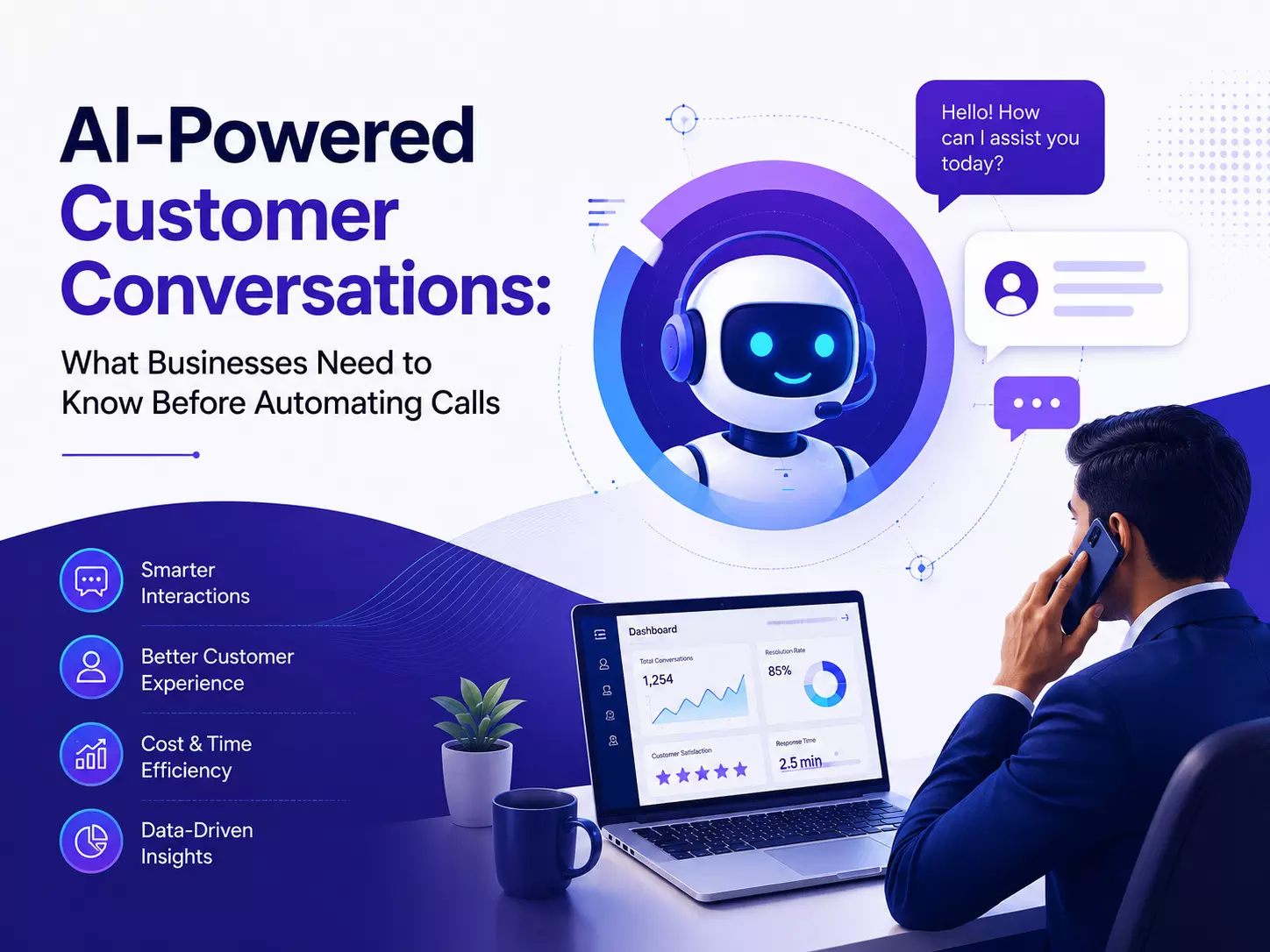
AI-Powered Customer Conversations: What Businesses Need to Know Before Automating Calls
Customer conversations are becoming an important part of business automation as companies seek faster ways to handle sales, support, follow-ups, and lead qualification. Businesses are increasingly exploring how to automate customer calls in India to manage routine interactions efficiently.
An AI calling agent can handle basic enquiries and follow-ups, while an AI voice sales agent can support lead qualification. For outreach, an AI voice agent for outbound calls can reduce repetitive work while allowing human teams to focus on complex conversations.
Why Businesses Are Exploring AI-Powered Calls
Traditional calling processes often involve repetitive activities such as confirming appointments, responding to common questions, following up with enquiries, and contacting potential customers.
These tasks can consume considerable employee time without necessarily requiring complex decision-making.
An AI calling agent can handle predefined conversations and perform routine interactions based on business rules. This allows employees to spend more time on complex customer requirements, relationship building, and high-value sales conversations.
The technology can also help businesses maintain consistent communication. Instead of relying on employees to remember every follow-up, automated systems can initiate calls according to predefined workflows.
What Businesses Should Automate First
Not every customer conversation should be automated. Businesses should begin with simple, repetitive, and predictable interactions where the required information and possible outcomes are clearly defined.
Ai Voice Agent for Outbound Calls
An AI voice agent for outbound calls can be useful for lead follow-ups, reminders, appointment confirmations, feedback collection, and basic customer surveys. These calls generally follow a structured process, making them suitable for automation.
The system can introduce the purpose of the call, ask relevant questions, record responses, and determine whether further human assistance is required.
AI Voice Sales Agent for Lead Qualification
Sales teams often spend significant time contacting leads that may have limited interest. An ai voice sales agent can support the initial qualification process by asking basic questions about customer requirements, preferences, budget, or timelines.
Qualified prospects can then be passed to sales representatives for more detailed discussions. This creates a division of work where AI manages repetitive initial conversations while people focus on opportunities that require deeper engagement.
Read: AI Voice Bot for Businesses: How to Capture Every Lead 24/7
How to Automate Customer Calls in India
Businesses researching how to automate customer calls India should first map their existing calling process. The objective should not be to automate every call but to identify specific stages where automation can provide measurable value.
Start With a Clear Call Flow
A good automated calling workflow should have a clear introduction, purpose, questions, possible responses, and next steps. The conversation should also include an easy way to reach a human representative when the customer's requirement falls outside the automated process.
Businesses should review actual customer conversations before creating these workflows. This helps identify frequently asked questions, common objections, and situations where human intervention is necessary.
Benefits of AI Voice Agents for Small Businesses in India
The benefits of AI voice agents for small businesses India are particularly relevant for companies working with limited teams. Automated calling can help reduce repetitive workloads while allowing businesses to maintain regular customer communication.
AI voice systems can support faster lead follow-ups, appointment reminders, enquiry handling, customer surveys, and basic support interactions. They can also help businesses manage larger call volumes without requiring employees to manually handle every routine conversation.
For smaller organizations, this can create additional operational capacity while allowing existing employees to focus on activities that directly contribute to customer relationships and business growth.
Understanding Voice AI in Different Industries
Voice automation can be adapted to different industries because customer conversations vary according to business requirements.
What Is Voice AI in Real Estate?
For businesses asking what is voice AI in real estate, the technology can be understood as an automated voice system capable of handling selected property-related conversations.
It can contact property leads, collect basic requirements, confirm appointments, and follow up with potential buyers or tenants.
Real estate businesses often receive enquiries from customers at different stages of the decision-making process. Automating initial communication can help ensure that enquiries receive timely attention before being transferred to a property professional.
Keeping Humans in the Conversation
Automation works best when businesses treat AI as a support layer rather than a complete replacement for human communication. Customers may ask unusual questions, raise sensitive concerns, or require personalized assistance that falls outside an automated workflow.
A well-designed system should recognize these situations and transfer the conversation to a suitable employee. This creates a smoother experience and prevents customers from becoming frustrated by repeated automated responses.
Businesses should also regularly review call outcomes, customer feedback, and unsuccessful interactions. These insights can be used to improve conversation flows and make automation more useful over time.
The Future of Automated Customer Conversations
ai-powered calling is moving beyond simple prerecorded messages toward more flexible conversational experiences.
As businesses become more comfortable with automation, voice systems can become part of broader workflows covering lead generation, sales, support, appointment management, and customer engagement.
The most effective strategy is likely to combine automation with human expertise. AI can handle repetitive conversations at scale, while employees remain responsible for decisions, complex queries, negotiations, and relationship-driven interactions.
Before automating calls, businesses should therefore focus on the purpose of automation, the type of customer interaction involved, and the experience they want to create.
When implemented thoughtfully, AI-powered customer conversations can improve responsiveness while giving employees more time to focus on work that requires a human touch.
FAQs
1. What Are AI-Powered Customer Conversations?
AI-powered customer conversations use artificial intelligence to communicate with customers through automated voice interactions. They can handle selected tasks such as follow-ups, reminders, basic enquiries, and lead qualification.
2. Can AI Voice Agents Handle Outbound Calls?
Yes, AI voice agents can be configured for outbound calls such as lead follow-ups, appointment reminders, surveys, confirmations, and other structured customer interactions.
3. What Are the Benefits of AI Voice Agents for Small Businesses?
They can help small businesses manage repetitive calls, improve response times, follow up with leads consistently, and reduce the amount of manual calling handled by employees.
4. Can Voice AI Be Used in Real Estate?
Yes. Voice AI can assist real estate businesses with lead qualification, enquiry follow-ups, appointment scheduling, and collecting basic information from potential buyers or tenants.
5. Should Businesses Completely Replace Human Calling With AI?
Not necessarily. AI is best used for repetitive and predictable interactions, while human employees should remain available for complex questions, sensitive situations, negotiations, and personalized customer support.